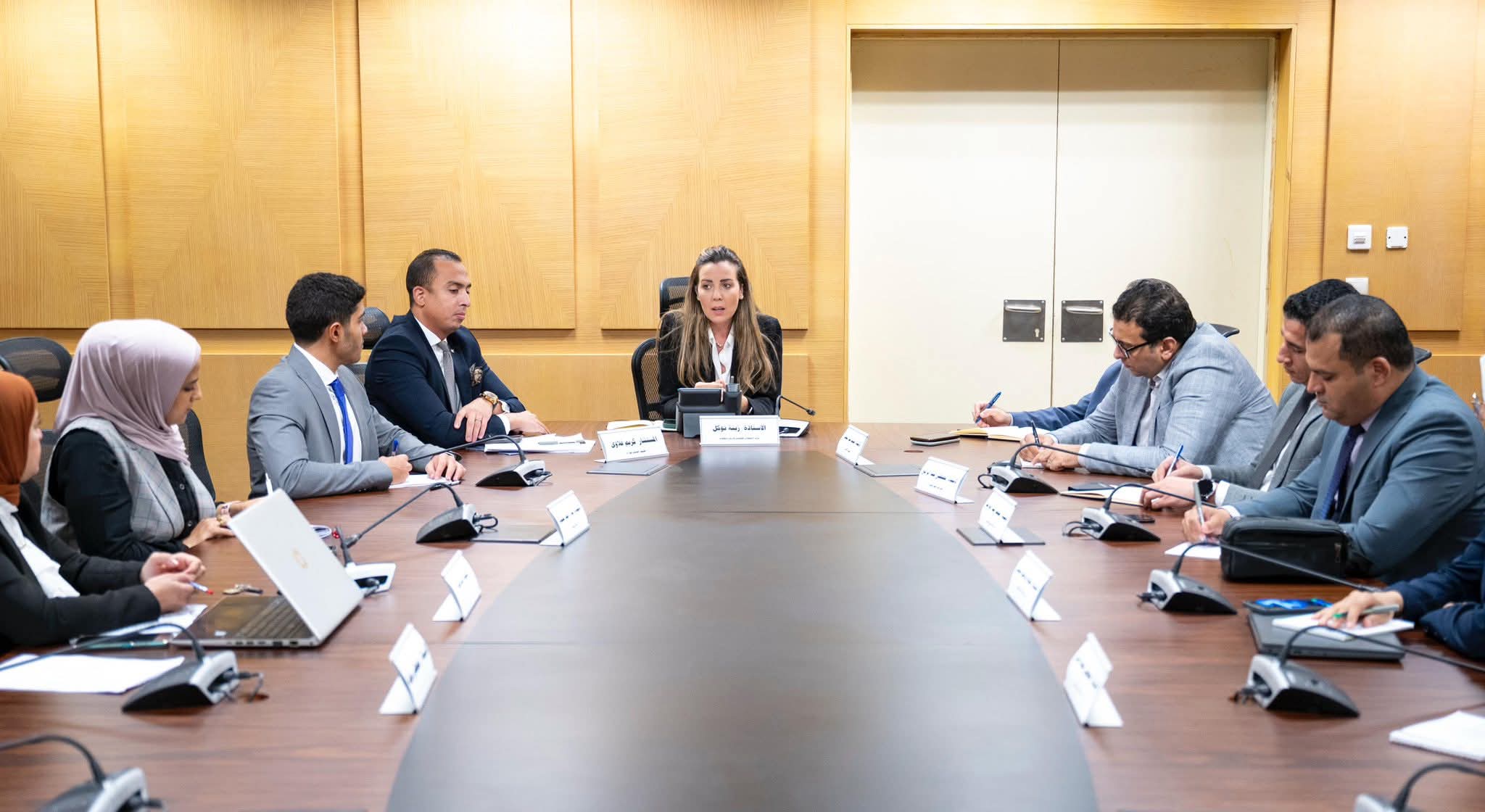

Executive Director of Egypt’s “Differently Abled” Fund, Zeina Tawakkol , led a high-level meeting this week to review the fund’s upcoming strategic roadmap and present a proposed organizational structure aimed at strengthening institutional performance and service delivery for persons with disabilities.
Held at the Ministry of Social Solidarity, the meeting brought together key stakeholders, including Counselor Karim Qallawi, Vice President of the State Council and legal advisor to the Minister of Social Solidarity, and Khalil Mohamed, Head of the Central Department for Persons with Disabilities. Representatives from various departments of the fund were also present.

Tawakkol emphasized that establishing a flexible, effective, and integrated organizational framework is a critical step toward fulfilling the fund’s mission to empower persons with disabilities across Egypt.
She highlighted that the proposed structure would prioritize interdepartmental coordination and specialization, ensuring the alignment of services with the fund’s broader goals—chief among them, achieving social justice, equal opportunity, and full integration for persons with disabilities.
A National Mandate Rooted in Law
Established under Law No. 200 of 2020, and amended by Law Nos. 157/2022 and 10/2024, the “Differently Abled” Fund was created as a national mechanism to coordinate efforts between government agencies, civil society organizations, and the private sector in support of Egypt’s disability community.
The fund’s role includes mobilizing resources to offer a comprehensive care system that spans economic empowerment, healthcare access, inclusive education, vocational training, and social protection.
Strategic Focus: Integration, Collaboration, and Impact
During the meeting, Tawakkol laid out a forward-looking action plan, stressing the importance of collaborative partnerships with both public and private sector stakeholders to maximize the reach and impact of services. The newly proposed structure and strategy will enhance operational capacity, facilitate targeted interventions, and help institutionalize equity for one of Egypt’s most underserved communities.
The meeting concluded with consensus among participants on the importance of accelerating the implementation of the new structure and aligning it with ongoing national initiatives aimed at supporting vulnerable populations.