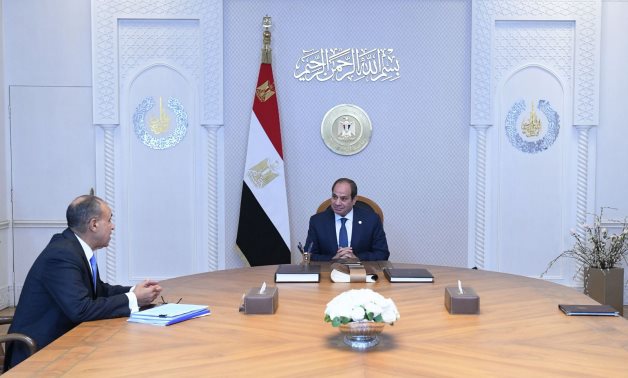

Egypt’s President Abdel Fattah El-Sisi and Foreign Minister Badr Abdelatty reaffirmed the government’s ongoing commitment to human rights, with a special emphasis on women’s empowerment and gender equality, during a high-level review of Egypt’s National Human Rights Strategy. The meeting followed Minister Abdelatty’s return from the 78th session of the United Nations General Assembly in New York.
In a detailed briefing to the president, Minister Abdelatty, who also serves as Chair of the Supreme Standing Committee for Human Rights, presented the fourth executive report of the strategy, which covers the 2021–2026 period. The report outlines progress in civil, political, economic, and cultural rights, with notable advancements in the promotion of women’s rights and protection of vulnerable groups including children, youth, persons with disabilities, and the elderly.

According to Presidential Spokesperson Ambassador Mohamed El Shennawy, President El-Sisi reiterated his directive to prioritize gender equality and women’s inclusion in all national development plans, highlighting the importance of embedding human rights into Egypt’s legislative and institutional frameworks.
“The president emphasized the need for continued efforts to ensure full and effective implementation of the strategy’s goals, particularly in areas that directly affect women and families,” El Shennawy said. “This includes addressing systemic barriers, promoting equal opportunities, and ensuring the constitutional rights of all Egyptians are protected without discrimination.”
The president also directed that preparations begin for a new long-term human rights strategy, developed in partnership with civil society and national institutions, to build upon the momentum of recent achievements. Central to this strategy, according to officials, will be a focus on women’s empowerment across sectors such as education, political participation, labor, and health.
Women’s Rights as a Pillar of Egypt’s National Agenda
Egypt’s human rights roadmap has increasingly prioritized gender-sensitive policies, including measures to combat gender-based violence, expand women’s economic participation, and boost representation in political and leadership positions.
Under President El-Sisi’s leadership, the country has passed legislation protecting women from harassment, improved maternal health services, and created national programs aimed at economic inclusion for women in rural and underserved areas.
Human rights observers note that while challenges remain, Egypt’s integrated approach signals a growing institutional commitment to advancing gender equality — not as a separate policy domain but as a cornerstone of broader development and democratization efforts.