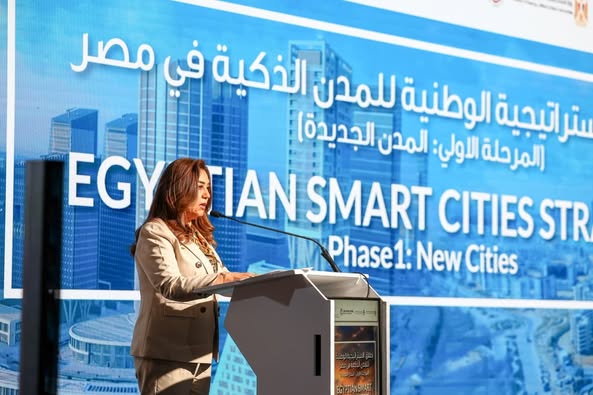

Egypt’s Ministry of Local Development has officially unveiled the National Smart Cities Strategy, a landmark initiative poised to transform urban development across the country. The strategy represents a qualitative leap toward sustainable urbanization, aligning with Egypt’s broader national vision for economic growth, social inclusion, and environmental resilience.
Dr. Manal Awad, Minister of Local Development and Acting Minister of Environment, described the strategy as a pivotal response to Egypt’s rapid urbanization challenges. “This strategy addresses urgent issues such as spatial justice and climate adaptation while unlocking broader economic opportunities and strengthening social integration. At its core, it places Egyptian citizens at the heart of sustainable development,” Dr. Awad stated during the launch event.

The National Smart Cities Strategy adopts a holistic approach that integrates both existing urban centers and emerging cities within a unified framework. This vision, Dr. Awad emphasized, draws from global best practices showing that successful smart city initiatives depend on the revitalization of established cities alongside new urban developments. “Building smart cities transcends technology alone. It requires supportive legislation, innovative financing mechanisms, and active civic participation to empower residents as co-creators of their urban futures,” she added.
The launch ceremony was attended by key government officials including Sherif Sharabiny, Minister of Housing, Utilities and Urban Communities, Amr Talaat, Minister of Communications and Information Technology, as well as governors, international partners, and private sector leaders. The event highlighted the government’s commitment to placing sustainable urban development at the forefront of its 2024–2027 agenda.
Under the strategy, the Ministry of Local Development plans to enhance existing cities through strategic plan updates, infrastructure improvements, expanded essential services, and targeted efforts to rehabilitate informal settlements and unsafe areas. Simultaneously, it supports the development of smart new cities designed to absorb population growth, foster economic opportunity, and embrace technological innovation.
Crucially, Dr. Awad emphasized the human-centered nature of the strategy. “The essence of smart cities is not just technological adoption, but redefining the relationship between city and citizen. Our approach guarantees adequate housing, high-quality services, safe mobility, inclusive economic prospects, and a healthy environment — all aligned with Egypt’s Vision 2030 and international commitments.”
The ministry also highlighted the recently completed Egyptian Cities Atlas, developed in partnership with the World Bank, as a foundational resource. The atlas provides precise data on existing cities and informs planning for new urban areas, underpinning a sustainability framework based on economic, environmental, social, and urban dimensions.
The National Smart Cities Strategy is more than an urban planning project; it embodies Egypt’s vision for a modern future with data-driven, innovative cities that balance progress with heritage. The Ministry of Local Development reaffirmed its dedication to this integrated approach, leveraging strong partnerships with the World Bank and other development partners to ensure continued success.