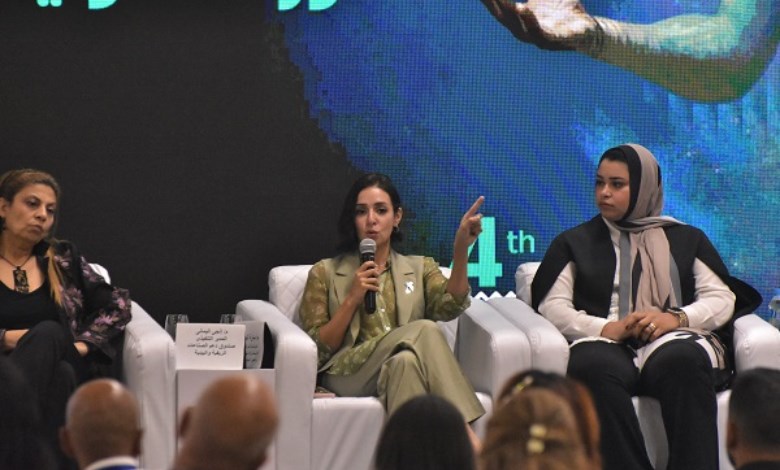

At the 4th Green Society Forum, held under the banner “Inspirational Civilization Toward a Sustainable Future,” renowned architect and environmental entrepreneur Eng. Sarah El Battouty delivered a powerful call to action for advancing women’s roles in the green economy and localizing sustainability across Egypt.
Speaking during a high-level session titled “The Role of Corporate Social Responsibility in Achieving Sustainable Development,” El Battouty emphasized that 90% of the workforce at her consultancy, ECONSULT, is composed of women—a deliberate strategy, she explained, to leverage the wealth of practical expertise women bring to the environmental and engineering sectors.

A Leader in Climate, Architecture, and Policy
A University of Cambridge alumna, Eng. El Battouty is the Founder of ECONSULT, a leading firm in green architecture and environmental consultancy, and Founder of MùBun, a social enterprise promoting sustainable interior design and traditional crafts. She currently serves as a Global Ambassador to the UNFCCC High-Level Climate Champions, Advisor to the Egyptian Presidency on sustainability, and is a Vital Voices Fellow.
With over 20 years of experience in climate policy and architecture, she is recognized as one of the foremost voices driving Egypt’s green transformation on both a national and international scale.
From Rural Villages to International Standards
In her remarks, El Battouty noted that several villages across Egypt are already achieving international and African-recognized sustainability certifications, particularly through national initiatives like “Hayah Kareema” (Decent Life). These efforts have supported communities in Aswan, Beheira, and Sharqia governorates, in collaboration with local governments, universities, and entrepreneurs.
“Sustainability isn’t about ticking boxes or merely earning certifications,” she stressed. “It requires deep technical and applied specialization to be effective and lasting.”
While certifications are an important milestone, El Battouty underscored the need to go beyond them by focusing on scientific education, engineering, and applied training—especially for young people and women in rural areas.
Women as Catalysts for Climate Solutions
El Battouty also highlighted a critical gap in Egypt’s sustainability efforts: the underutilized role of women in finding practical solutions to agricultural and climate challenges. She called for increased investment in technical training, STEM education, and hands-on sustainability programs that would empower women to lead in innovation and environmental resilience.
A National Priority: Egypt’s Green Economy Agenda
The Green Society Forum takes place as Egypt intensifies its focus on building a green economy, aligning with Egypt Vision 2030. The government is backing unprecedented levels of support for environmentally friendly investments across key sectors, particularly agriculture, renewable energy, infrastructure, and sustainable transport.
With participation from senior policymakers, private sector leaders, academics, and international organizations, the forum is expected to yield a slate of actionable recommendations to overcome national sustainability challenges and accelerate the transition toward a circular, low-carbon economy.
Toward a Sustainable Future: Key Takeaways
- Empowering Women in Sustainability: With women comprising 90% of her team, El Battouty exemplifies how gender inclusion can drive technical excellence in the green economy.
- Sustainable Villages as Models: Villages with global sustainability certifications demonstrate the success of local initiatives like Hayah Kareema when backed by multidisciplinary collaboration.
- Specialization Over Symbolism: Beyond certifications, Egypt must prioritize technical knowledge, engineering expertise, and applied research to achieve long-term environmental goals.
- Education as a Catalyst: Scaling up applied education and vocational training—particularly for women and youth—is crucial to meeting the demands of Egypt’s green transition.
- Policy Integration: Coordinated action between government, academia, the private sector, and civil society is key to ensuring inclusive, impactful progress on sustainability.
A Vision for Inclusive Sustainability
Eng. Sarah El Battouty’s message at the Green Society Forum was clear: sustainability must be inclusive, technically driven, and locally grounded. Her work bridges grassroots development with high-level policy, offering a blueprint for how nations like Egypt can harness the full potential of their people—especially women—to build a greener, more resilient future.