
As the United Nations marks its 80th anniversary, a unique celebration is taking place far from its headquarters—on the shores of Egypt’s Red Sea. The 8th edition of the Gouna Film Festival has become more than a cinematic gathering this year. It has emerged as a dynamic platform for dialogue, development, and diplomacy, showcasing how storytelling can bridge cultures and inspire collective action.
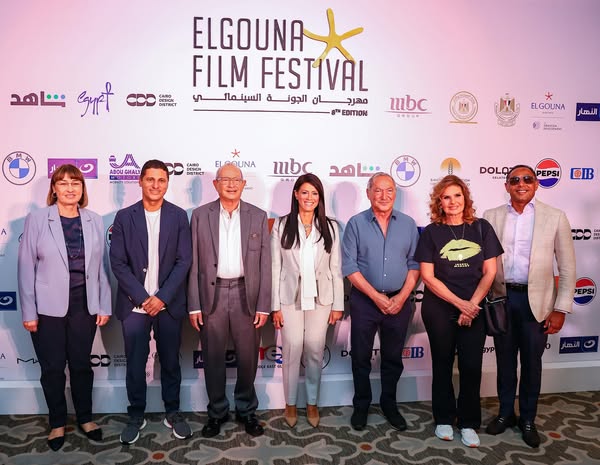
At a press conference launching the festival, Dr. Rania Al-Mashat, Egypt’s Minister of Planning, Economic Development, and International Cooperation, joined a distinguished roster of leaders and cultural icons. The event featured UN Resident Coordinator Elena Panova, Naguib and Samih Sawiris, the festival’s founders, along with industry executives and renowned artists. Together, they underscored cinema’s unique ability to unite people, spark empathy, and promote sustainable development.

Art as a Vehicle for Sustainable Development
In her address, Minister Al-Mashat praised the festival for energizing Egypt’s tourism sector, particularly in the Red Sea region, and emphasized its alignment with the country’s broader development goals. She called cinema “a universal language that connects people across borders,” and highlighted the importance of embedding current global challenges—such as climate change, food insecurity, and inequality—into the narratives shared through film.
This year, the festival’s central theme—food security—resonates deeply with national and international priorities. Al-Mashat called the issue “not just a fundamental human right, but a matter of national security,” adding that its presence in artistic storytelling underscores the urgency of global action. She reiterated that culture and creativity are essential engines for economic and social transformation, particularly as Egypt continues to implement its long-term development strategy.
Elevating Egypt’s Cultural Infrastructure
The minister also outlined a wide-ranging national effort to enhance access to cultural services across Egypt’s urban and rural areas. Under the country’s FY2025/2026 public investment plan, Egypt is undertaking the restoration and expansion of 21 cultural palaces in governorates including Cairo, Aswan, the Red Sea, North Sinai, and Luxor. The initiative also includes the renovation of 15 national theatres, such as the historic Mansoura National Theatre and Alexandria’s Mohamed Abdel Wahab Theatre, alongside three museum upgrades and six new children’s cultural centers.
In parallel, the government is investing in mobile libraries to extend cultural access to underserved areas, reflecting a commitment to bridging developmental gaps between urban centers and rural communities. These investments, according to Al-Mashat, reflect the government’s belief that “building the Egyptian citizen” through culture and education must remain a national priority.
A Cultural-Diplomatic Milestone
The United Nations’ participation in the festival marks a growing commitment to cultural diplomacy. Speaking at the press conference, Elena Panova, the UN’s Resident Coordinator in Egypt, described the festival as “a platform to amplify voices, share values, and open hearts.” She emphasized the power of cinema to spark dialogue, raise awareness, and bring global audiences closer to complex development challenges in ways traditional communication channels cannot.
“As we commemorate 80 years of peacebuilding, human rights, and sustainable development,” Panova said, “we proudly stand alongside the Gouna Film Festival and the Egyptian government in celebrating the resilience, creativity, and shared humanity that define our global mission.”
Looking ahead, Panova expressed the UN’s commitment to deepening its partnership with the festival, transforming it into a long-term cultural platform that annually highlights a key issue at the intersection of global and local development.
Tourism Meets Diplomacy in a Cinematic Celebration
Since its founding in 2017, the Gouna Film Festival has evolved into a major cultural and economic event in the region. Beyond its artistic significance, the festival has become a tool for promoting Egypt’s soft power, drawing international filmmakers, diplomats, and tourists to a destination that blends natural beauty with cultural heritage.
Minister Al-Mashat noted that the festival’s ability to merge tourism, art, and national branding makes it a powerful engine for sustainable growth. “This festival tells stories through both image and word, and it tells the world a powerful story about Egypt,” she said. “It is a model for how nations can use art to foster mutual understanding, promote development, and create global impact.”
A Shared Commitment to Human Stories
In an era defined by global crises and rapid transformation, the message emerging from Gouna is clear: the stories we tell shape the world we create. From tackling food insecurity to celebrating resilience, this year’s festival exemplifies the power of culture to illuminate paths toward a more just, inclusive, and sustainable future.