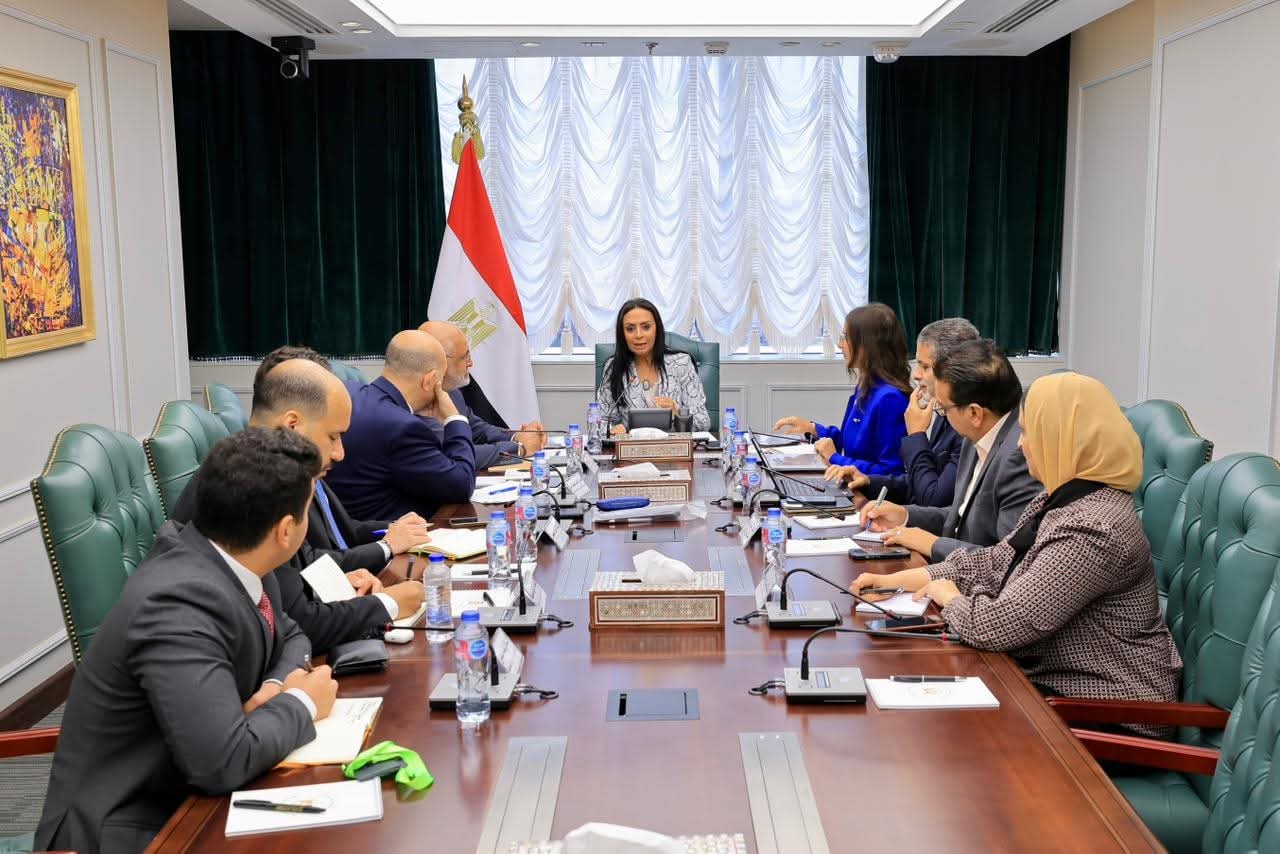

Egypt’s Minister of Social Solidarity, Dr. Maya Morsy, met with Mr. Abdulaziz El-Mulla, Executive Director for Egypt at the World Bank Group, at the ministry’s headquarters in the New Administrative Capital, to explore ways of strengthening ongoing cooperation in social protection initiatives.
The meeting brought together Dina El-Seirafy, Assistant Minister for International Cooperation and Agreements, Raafat Shafik, Assistant Minister for Social Protection and Economic Empowerment, Director of Takaful and Karama, Amb. Hisham Saif, Alternate Executive Director at the World Bank, Moataz Mansour, EBRD Cooperation Lead, and Mohamed Magid, World Bank Portfolio Manager at the Ministry of Planning.

The meeting highlighted the success of Egypt’s flagship conditional cash transfer program “Takaful and Karama”, which recently marked its 10-year anniversary and was enshrined into law under Law No. 12 of 2025—transforming it from a temporary program into a constitutional right for eligible citizens.
Dr. Morsy praised the long-standing partnership between the Ministry of Social Solidarity and the World Bank, calling the collaboration a model of success in implementing efficient, impactful, and scalable social protection programs.
Toward a Holistic and Sustainable Social Safety Net
During the meeting, the minister unveiled Egypt’s plan to launch a high-level international platform for social protection, to be hosted annually in coordination with the World Bank. This global forum will foster dialogue among policymakers, international organizations, and experts, promoting the exchange of successful practices and innovative strategies in social safety nets.
Dr. Morsy emphasized the ministry’s holistic approach to social protection, which extends beyond cash assistance to include economic empowerment through a newly launched strategic financial inclusion and empowerment ecosystem. Developed over the past six months, the system brings together various ministries, banks, private institutions, and development partners to transform Egypt’s approach from traditional welfare to inclusive, sustainable empowerment.
The initiative focuses on integrating digital savings tools, micro-insurance, and investment products for Takaful and Karama beneficiaries, especially those able to work. It draws inspiration from global social banking models, aiming to create a fully integrated development platform that links finance, production, and marketing, based on local economic potential and market needs.
Supporting Craftsmanship and Cultural Identity
In addition to social and economic support, the ministry also promotes cultural preservation through initiatives like the “Diarna” Exhibition for Handicrafts and Heritage, which empowers artisans, supports women, and generates income for low-income families. In the past year alone, the ministry organized 36 exhibitions, featuring over 1,376 artisans, with plans to launch a permanent exhibition space in the near future.
World Bank Reaffirms Support
World Bank Executive Director Abdulaziz El-Mulla congratulated Egypt on the 10th anniversary of Takaful and Karama, calling it an iconic example of successful international cooperation.
“The Takaful and Karama program is a flagship model of how national social protection systems can be effectively institutionalized,” said El-Mulla. “The World Bank is committed to deepening our support for Egypt’s social safety initiatives and contributing to further achievements that benefit vulnerable families.”
Both parties concluded the meeting by reaffirming their shared commitment to deepen cooperation, leverage Egypt’s accumulated expertise in social protection, and expand collaborative efforts to improve the lives of marginalized populations.