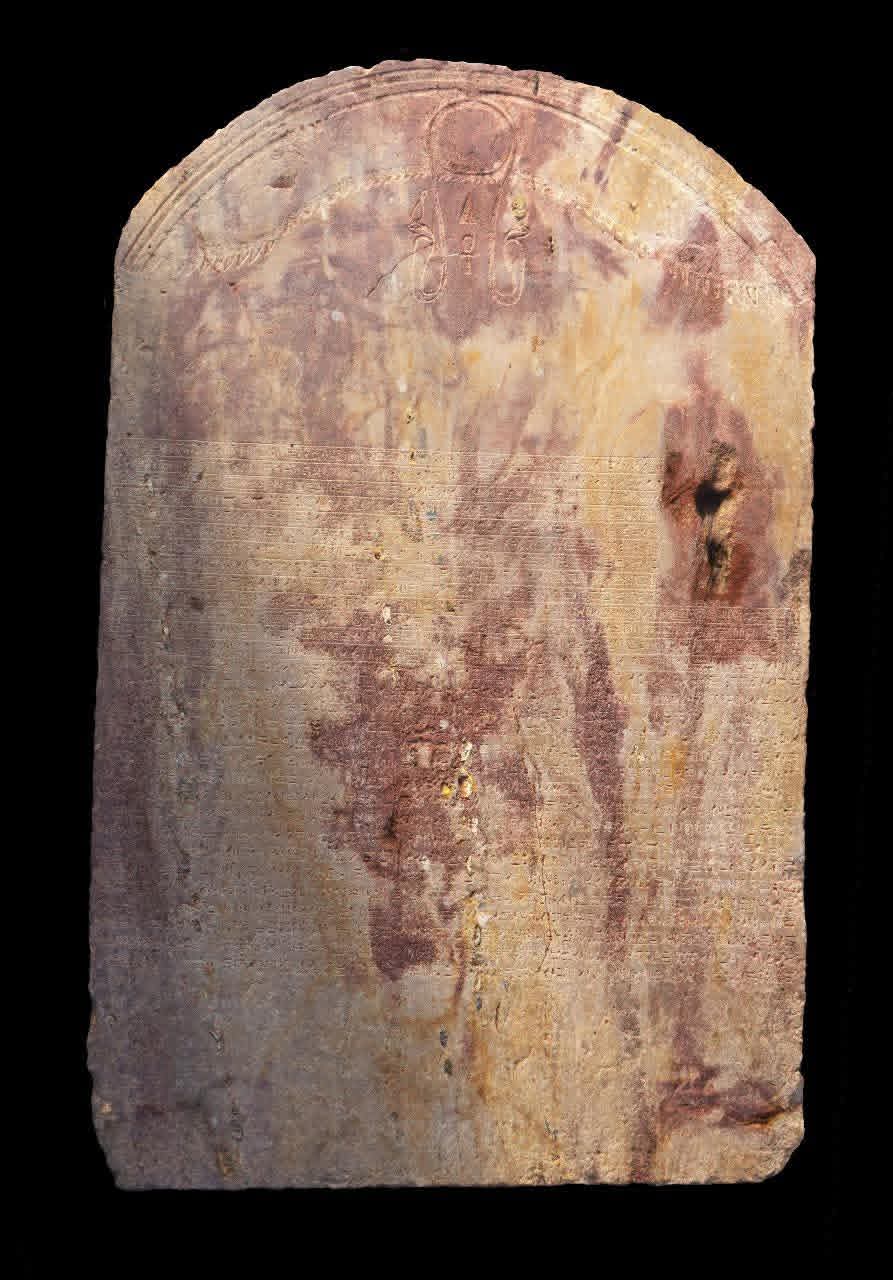

In a landmark archaeological discovery, an Egyptian mission from the Supreme Council of Antiquities has uncovered a remarkably well-preserved stone stela bearing a new and complete version of the Canopus Decree—a royal proclamation issued in 238 BCE by King Ptolemy III. The find was made at Tell el-Pharaeen in the city of Husseiniya, located in Egypt’s Sharqia Governorate.

This version of the decree, which had previously only been known through six extant copies—some fragmentary, others trilingual—marks the first complete version to be uncovered in over a century and a half. Its discovery is being hailed by scholars and officials alike as one of the most significant contributions to the study of Ptolemaic Egypt in recent memory.
A Monumental Text of Power and Piety
The original Canopus Decree was drafted during a synod of Egyptian priests held in the ancient city of Canopus (east of Alexandria). It was designed to honor and elevate Ptolemy III, his queen Berenice, and their daughter through acts of deification, state rituals, and royal benefactions. Copies of the decree were ordered to be distributed to major temples throughout Egypt, inscribed in three scripts: hieroglyphic, Demotic, and Greek, so that they could be read and understood across the culturally diverse kingdom.
However, unlike previous versions, the newly unearthed stela is written entirely in hieroglyphs, offering a unique perspective on the language, religious practices, and ceremonial life of the period. Scholars believe this monolingual inscription will provide a valuable comparative source for re-evaluating known trilingual versions of Ptolemaic decrees—including, notably, the Rosetta Stone.
Unearthing the Past at Tell el-Pharaeen
The sandstone stela, measuring 127.5 cm tall, 83 cm wide, and 48 cm thick, features a rounded top crowned by a winged sun disk flanked by two royal cobras (uraei), each bearing one of Egypt’s dual crowns. Between them is the inscription “Di-Ankh,” meaning “Given Life.” Beneath this symbolic header, 30 lines of hieroglyphic text are engraved in sunk relief—preserved with remarkable clarity.
The content of the decree includes detailed references to Ptolemy III’s religious and civic reforms, including:
- Generous donations to temples;
- Tax relief during low Nile floods;
- The elevation of new priestly ranks in honor of the royal family;
- The institution of a new religious festival aligned with the rising of Sirius, a key astronomical event;
- And notably, the earliest known reference to a leap-year system, by adding a day every four years in reverence to the deified rulers.
The decree also proclaims the deification of the royal daughter, Berenice, affirming her cultic worship within Egyptian temples—another hallmark of the fusion between Egyptian and Hellenistic traditions during the Ptolemaic era.
Scholarly and National Significance
Dr. Mohamed Ismail Khaled, Secretary General of the Supreme Council of Antiquities, emphasized the profound academic value of the discovery. “To find a new complete version of the Canopus Decree after more than 150 years is an extraordinary moment in the study of ancient Egyptian texts,” he stated. “It not only deepens our understanding of Ptolemaic religious ideology, but also enhances our ability to interpret hieroglyphic sources independently of their Greek or Demotic counterparts.”
Echoing this sentiment, Minister of Tourism and Antiquities Sherif Fathy praised the dedication of Egyptian-led missions and reiterated the Ministry’s support for continued excavation. “Each discovery like this adds a new page to the story of our civilization,” he said. “This find underscores the immense archaeological significance of Sharqia Governorate, which continues to yield treasures that captivate scholars and the global public alike.”
A Window into Ancient Imet
Tell el-Pharaeen—identified with the ancient city of Imet—has long been recognized as a key urban and religious hub, particularly during Egypt’s Middle Kingdom and the Ptolemaic period. Previous excavations at the site have uncovered a temple dedicated to the cobra goddess Wadjet, as well as grand residential structures, suggesting a high-status administrative center.
With this new discovery, the site is once again thrust into the archaeological spotlight, reinforcing Egypt’s position as a central locus for understanding the complex interplay between native traditions and Hellenistic rule during one of the most dynamic periods in its ancient history.