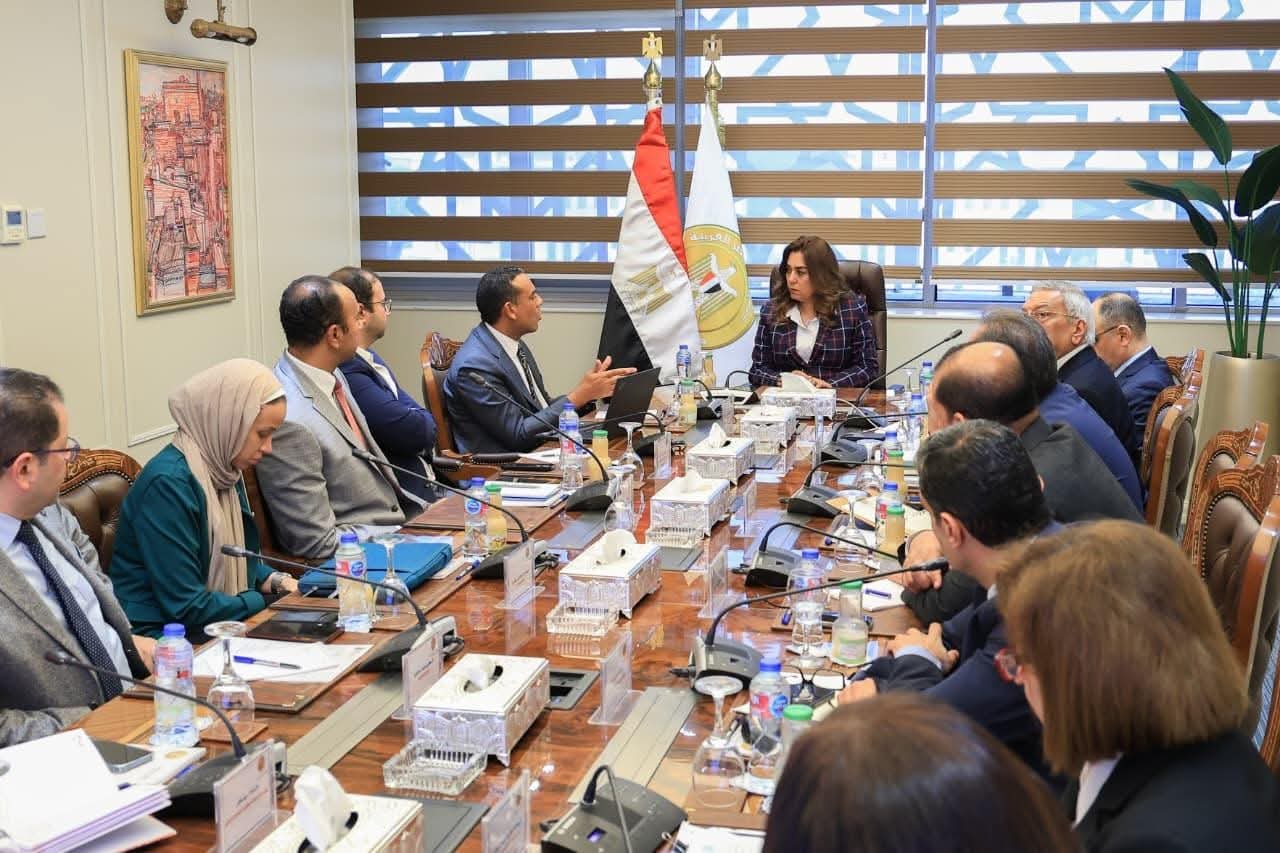

In a significant move toward advancing Egypt’s environmental sustainability and local development agenda, Dr. Manal Awad, Minister of Local Development and Acting Minister of Environment, held a high-level meeting with a delegation from the United Nations Human Settlements Programme (UN-Habitat). The delegation was led by Ahmed Rizk, Head of UN-Habitat Egypt Office, and attended by Dr. Ali Abu Sena, CEO of the Egyptian Environmental Affairs Agency, along with senior officials from both ministries and consultants from the UN program.
The meeting, held at the Ministry of Local Development headquarters, focused on strengthening the integration between environmental financing mechanisms—particularly those related to climate adaptation and biodiversity—and local development strategies. The ministers and UN-Habitat team discussed several strategic initiatives that aim to translate national and international environmental goals into practical interventions across Egyptian cities and governorates.

Among the key topics was Egypt’s readiness project for accessing the Green Climate Fund, which supports countries in building the institutional capacity needed to receive and manage climate finance. The meeting also covered the potential deployment of UN-Habitat’s Waste Investment Tool in governorates to improve solid waste management and attract private investment in recycling and waste-to-energy initiatives.
One of the most promising projects discussed was the “Sustainable Oasis” initiative in Farafra, located in the New Valley governorate. This project seeks to enhance the resilience of desert communities through biodiversity restoration and climate adaptation techniques. Dr. Awad stressed the importance of supporting the Farafra Protected Area by improving visitor services, enhancing monitoring systems, providing solar-powered lighting, and upgrading infrastructure. The vision is to turn Farafra into a model eco-reserve that can be replicated in other parts of Egypt. In addition, she proposed involving local artisans and producers in the national “Ayadi Misr” platform to market their handmade products and crafts online, thereby linking environmental preservation with community empowerment.
The meeting also addressed the vulnerability of coastal governorates such as Alexandria and Matrouh, where the impacts of climate change are already being felt. The ministers and UN officials discussed ways to enhance the infrastructure and public services in these areas so they can better absorb climate-related shocks. These efforts will reflect on the outcomes of Egypt’s “Smart Green Projects” initiative and will be supported by UN-Habitat’s participation in local dialogues around the National Climate Adaptation Plan. Such consultations are already taking place in governorates including Luxor, Qena, the Red Sea, South Sinai, and Beheira.
Dr. Awad highlighted the necessity of aligning this work with Egypt’s presidential initiative “100 Million Trees,” which seeks to green urban spaces across the country. She cited the example of Esna, a city undergoing significant development, which could become one of Egypt’s model green cities. She also emphasized the need for enhanced coordination between the ministries of environment and local development in implementing climate adaptation strategies in governorates such as Giza and Alexandria, leveraging research and studies conducted with the help of international development partners.
On the urban development front, the meeting reviewed progress on collaborative projects aimed at revitalizing commercial and public spaces. These include the redevelopment of historic shopping streets in El-Ataba, Cairo, as well as the rehabilitation of local markets, pedestrian pathways, and public squares in the cities of Rasheed (Beheira) and Port Said—specifically in the El-Arab and El-Manakh districts. These interventions are intended to stimulate local economies, preserve architectural identity, and improve overall urban quality of life.
Dr. Awad announced upcoming plans to revamp two major commercial corridors in Port Said—El-Togary and El-Mohamady Streets—through infrastructure upgrades that maintain the visual identity of the area and attract more visitors. Additionally, similar upgrades will soon begin in Rasheed, where historic streets such as Dahleez El-Malek and Sheikh Qandil will be restored to reflect the city’s cultural and architectural heritage. These projects aim to create sustainable employment opportunities while eliminating visual distortions in urban spaces.
The meeting concluded with a mutual commitment to deepening the partnership between the Egyptian government and UN-Habitat in areas of climate resilience, green finance, sustainable urban development, and community-based environmental initiatives. Both sides emphasized the importance of scaling up successful models and continuing to align local development efforts with Egypt’s national environmental vision and international climate commitments.