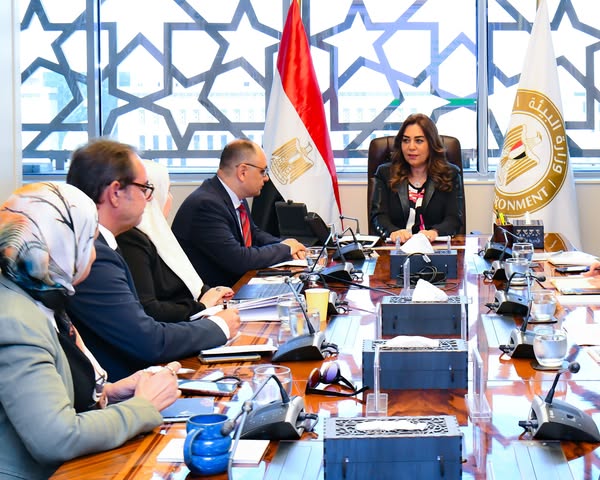

As the countdown begins for the 30th United Nations Climate Change Conference (COP30) in Belém, Brazil this November, Egypt has officially launched its inter-ministerial coordination process to prepare a unified national position that reflects its climate priorities, development goals, and regional leadership.
In a high-level meeting this week, Dr. Manal Awad, Egypt’s Minister of Local Development and Acting Minister of Environment, convened officials from across government agencies to align Egypt’s technical, political, and negotiation strategies ahead of the global summit, set to run November 10–21.

The coordination meeting included participation from:
- Dr. Ali Abou Sena, CEO of the Egyptian Environmental Affairs Agency (EEAA)
- Ambassador Raouf Saad, Senior Advisor for Multilateral Agreements
- Senior advisors and department heads specializing in climate negotiations, transparency, technology transfer, and international cooperation.
Strategic Coordination with the Foreign Ministry
At the heart of the discussions was the integration of negotiation and policy positions in collaboration with the Ministry of Foreign Affairs, particularly in shaping Egypt’s contribution to the “thematic days” at COP30, which will focus on key areas such as adaptation, finance, energy transition, and capacity building.
“Egypt’s approach is to present a coherent and proactive climate agenda that reflects our national interests and builds on our diplomatic legacy post-COP27,” said Dr. Awad. “We are building a strong position based on science, equity, and our proven leadership on the African and global stages.”
She noted that Egypt’s successful hosting of COP27 in Sharm El-Sheikh in 2022 had elevated the country’s standing as a key voice for the Global South. One of the landmark outcomes of COP27 was the establishment of the Loss and Damage Fund to support climate-vulnerable nations — a mechanism Egypt championed during its presidency of the summit on behalf of the African continent.
From COP27 Legacy to COP30 Vision
With the UNFCCC’s focus shifting toward implementation, Egypt aims to carry forward its climate diplomacy momentum into COP30 by emphasizing:
- The need for developed countries to fulfill climate finance pledges
- Support for technology transfer and capacity building in developing nations
- A call for greater ambition in Nationally Determined Contributions (NDCs)
- Transparent reporting mechanisms and equitable access to clean energy transitions
Dr. Awad reaffirmed Egypt’s commitment to the principles of the Paris Agreement, including the concept of “common but differentiated responsibilities”, underscoring the importance of historical accountability and the need for international cooperation to ensure a just transition.
Egypt’s policy priorities for COP30
The meeting reviewed Egypt’s policy priorities across the key COP30 negotiation tracks, including:
- Adaptation and Resilience: Strengthening mechanisms to address climate impacts, especially in water-scarce and vulnerable communities
- Mitigation: Supporting a diversified approach to emissions reductions in line with national development
- Transparency: Ensuring clear, credible reporting of progress toward climate commitments
- Technology Transfer and Innovation: Advocating for accessible green technologies for developing countries
- Climate Finance: Calling for predictable and adequate funding from developed nations to enable developing countries to meet their obligations and scale up climate action
Outcomes from this meeting will be presented to Egypt’s National Council for Climate Change, chaired by Prime Minister Mostafa Madbouly, which will officially endorse the national negotiation strategy ahead of COP30.