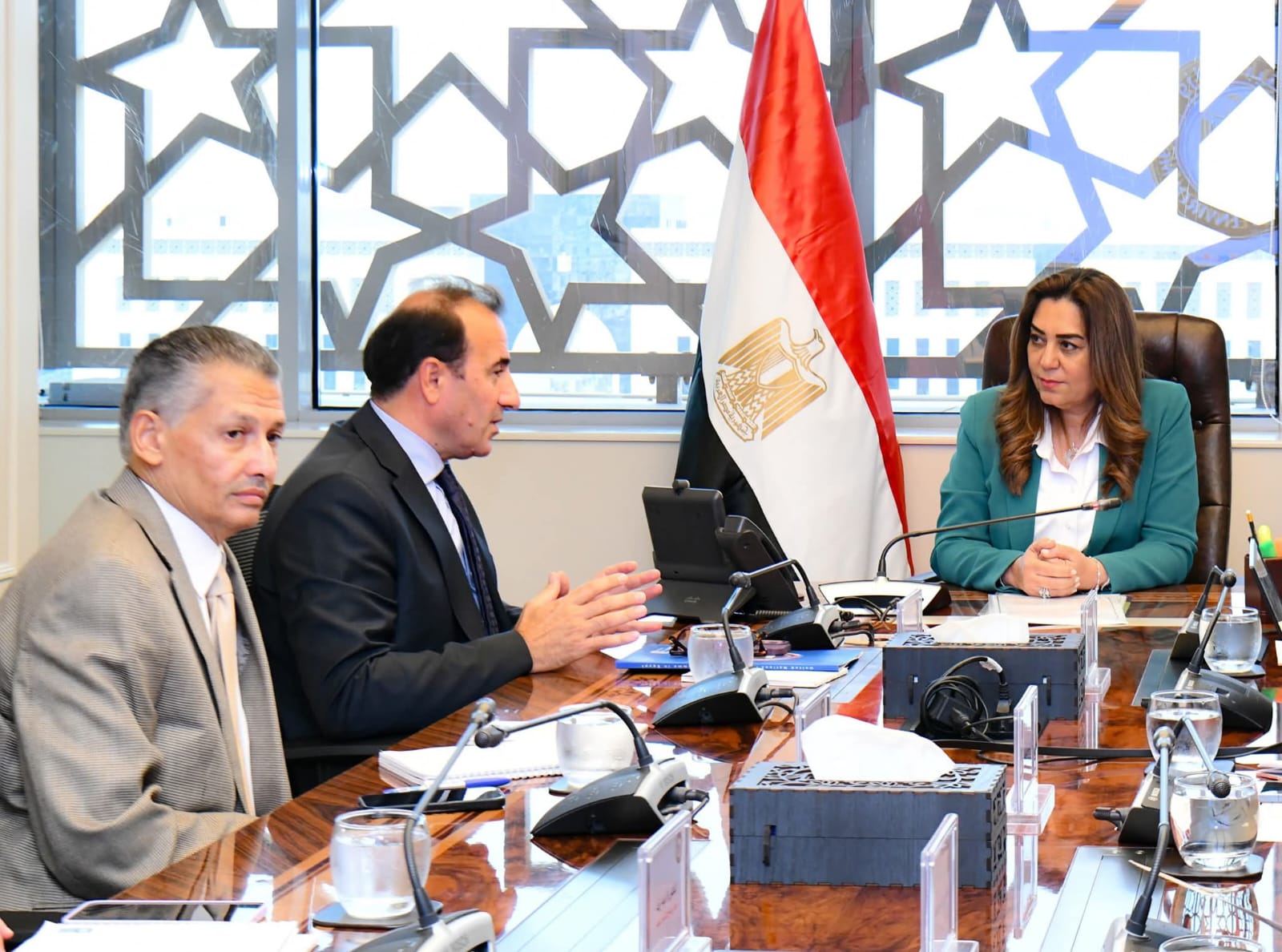

Egypt’s Acting Minister of Environment and Minister of Local Development, Dr. Manal Awad, met with senior officials from the United Nations Development Programme (UNDP) to evaluate the outcomes of ongoing environmental projects and to discuss future strategies for deepening collaboration.
The meeting, held at the ministry’s headquarters in the New Administrative Capital, brought together key stakeholders including Ghammar Deeb, UNDP’s Deputy Resident Representative in Egypt, and several high-level experts from both the Ministry and the UNDP team. The discussions focused on progress made, challenges encountered, and plans to enhance the scope and impact of Egypt’s sustainable development agenda.

Strengthening Natural Reserves and Promoting Eco-Tourism
Dr. Awad emphasized the urgent need for development measures at Wadi Degla Protected Area, calling for enhanced protection mechanisms and the promotion of eco-tourism activities that align with sustainable practices.
“Preserving our natural resources while unlocking their potential for responsible tourism is a priority,” she said, highlighting Wadi Degla as a key location for immediate intervention.
The minister also reviewed the Nabq Protected Area’s Gharqana Village Project in South Sinai, which supports local communities through income-generating activities such as the production and sale of handicrafts by women, youth, and Bedouin residents. These efforts combine environmental preservation with community empowerment.
Advancing Flagship Initiatives: Climate Reports, Biodiversity, and Renewable Energy
The session included a comprehensive overview of joint projects covering climate change, biodiversity, and environmental governance. These included support for Egypt’s transparency reports, biodiversity action plans, and the National Adaptation Plan (NAP)—critical deliverables under Egypt’s commitments to international climate agreements.
Projects showcased included:
- “Green Sharm”: A legacy of Egypt’s hosting of COP27, this initiative is transforming Sharm El-Sheikh into a sustainable tourism hub.
- Red Sea Coral Reef Protection: A long-term UNDP collaboration that safeguards one of Egypt’s most vital marine ecosystems.
- Migratory Bird and Renewable Energy Project: A successful model mitigating the risks of wind farms on bird migration routes.
- Ozone Protection Programs: Conducted in partnership with UNDP and UNIDO, focusing on phasing out ozone-depleting substances.
- National Energy-Efficient Buildings Project: Supporting low-emission building standards across Egyptian cities.
Dr. Awad also praised Egypt’s role as a national focal point for international climate finance mechanisms, such as the Green Climate Fund (GCF), the Global Environment Facility (GEF), and the Adaptation Fund. She highlighted Egypt’s landmark coastal protection project, implemented by the Ministry of Water Resources and Irrigation with GCF funding, as a regional model for climate adaptation.
Removing Barriers to Renewable Energy Projects
One of the key topics was facilitating private sector investment in solar energy, particularly in Sharm El-Sheikh, where green energy adoption remains a high priority. Dr. Awad called for accelerated solutions to regulatory and logistical hurdles, reaffirming the government’s commitment to renewable energy.
Shared Vision for Accelerated Impact
The meeting concluded with a strong reaffirmation of the strategic partnership between Egypt and the UNDP. Dr. Awad stressed the importance of fast-tracking the implementation of environmental projects and expanding their reach to reflect Egypt’s growing role as a regional leader in climate and environmental policy.