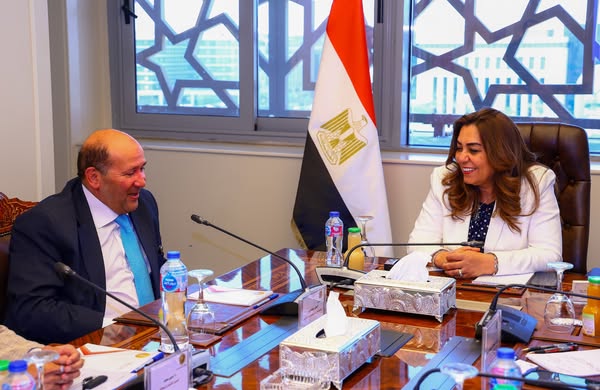

As Egypt continues its push toward institutional reform, the Ministry of Local Development convened a high-level meeting this week with representatives from the Government Excellence Award to explore ways to strengthen provincial engagement in the award’s upcoming cycle.
The session, held at the ministry’s headquarters in Cairo, brought together senior officials from both the ministry and the award’s secretariat. Among the key participants were Ambassador Hisham Badr, general supervisor of the award, and Dr. Manal Awad, Minister of Local Development, who also sat in on part of the discussions to review the meeting’s outcomes and recommendations.

Awad described the award as a “strategic national instrument” to incentivize institutional performance, advance a culture of innovation in the public sector, and improve service delivery across Egypt’s local governance landscape.
A Catalyst for Administrative Reform
Launched under the umbrella of Egypt’s Vision 2030, the award aims to promote merit-based competition across government entities while encouraging efficiency, transparency, and accountability. According to Awad, the Ministry of Local Development has actively encouraged governorates and local administrations to take part in previous award cycles and adopt its foundational principles, including digital governance, operational transparency, and data-driven planning.
The collaboration is part of a broader government effort to institutionalize performance measurement and raise the quality of services delivered to citizens — particularly at the local level, where gaps in responsiveness and resource allocation are most visible.
Ministry of Planning Reaffirms Commitment
Ambassador Hisham Badr, who oversees the award program, emphasized the initiative’s central role in enhancing the global competitiveness of Egypt’s public sector. He noted the strong support from Dr. Rania Al-Mashat, Minister of Planning, Economic Development, and International Cooperation, who has prioritized expanding the award’s reach and impact.
From Evaluation to Recognition: Inside the Award Journey
The meeting also featured a detailed presentation from Soha Said, Executive Director of the Egypt Government Excellence Award, who outlined the multi-phase process that applicants undergo. She walked attendees through the lifecycle of participation — from initial training and submission preparation, to on-site evaluations, panel assessments, and the final recognition ceremony.
Said explained that the award is structured across both institutional and individual categories, designed to spotlight innovative initiatives, managerial excellence, and superior public service.
Dr. Ahmed Seddik, Director of Evaluation and Quality at the award, offered a technical overview of the evaluation criteria and the standards used to measure public entities’ performance. These include metrics for service efficiency, user satisfaction, digital transformation, and responsiveness to citizens’ needs.
Strengthening Provincial Competitiveness
The Ministry of Local Development reaffirmed its commitment to supporting local units in competing effectively in the next round of the award. The meeting was attended by senior figures including Dr. Hesham El-Helbawy, Assistant Minister for National Projects, and Dr. Naglaa El-Adly, Head of the International Cooperation and Agreements Department.
Both officials expressed the ministry’s readiness to provide technical and operational support to governorates seeking to enhance their institutional competitiveness. Discussions also touched on ways to streamline participation procedures, improve data readiness, and leverage the award’s methodology to embed a results-driven culture in local government.
A Broader Vision of Government Innovation
The Egypt Government Excellence Award has emerged as a cornerstone of the country’s efforts to modernize its bureaucratic infrastructure, elevate citizen trust in state institutions, and foster a results-oriented public service ethos.
As the state accelerates its digital transformation agenda and expands decentralization efforts, the award is increasingly viewed not just as a recognition mechanism — but as a catalyst for national administrative renewal