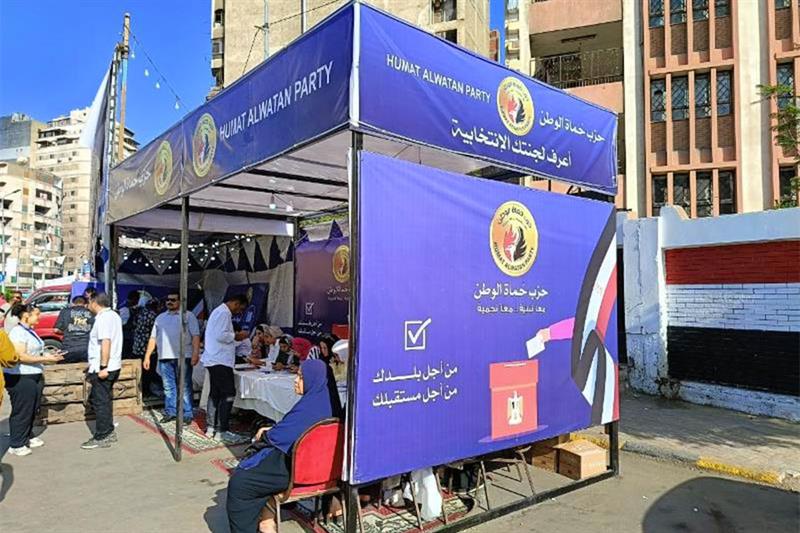

In a powerful demonstration of civic engagement, Egyptian women turned out in large numbers across polling stations on the first day of the 2025 Senate elections, setting a vibrant tone for the nationwide electoral process.
According to Hussein Dessouki, reporting from Sharqia, queues of women lined up early at 844 sub-committees across 829 polling locations, signaling not just enthusiasm but a deep awareness of constitutional duty and democratic participation. The Supreme Electoral Commission has confirmed that over 4.86 million eligible voters are registered in Sharqia alone — one of Egypt’s most populous and politically active regions.

Women at the Forefront of Political Participation
Observers and election officials noted the predominance of female voters in several districts, lauding their ongoing role as a cornerstone of Egypt’s democratic landscape.
Nationwide Turnout
Polling stations opened at 9:00 a.m. across 8,286 locations nationwide, supervised by 9,500 judges in military, administrative, and state council courts. An estimated 63 million Egyptians were registered to vote in this upper‑chamber election conducted over two days (4–5 August 2025).
National Elections Authority Director Ahmed Bendary hailed the turnout as a remarkable and unprecedented voter surge across all governorates, and declared participation in every district entirely orderly, with any emerging congestion swiftly eased through reinforcements.
Proof of Political Awareness
House Speaker Hanafi Jabali underscored that the turnout is both a constitutional duty and a powerful proof of political awareness among Egyptians, joining the chorus of high-ranking officials depicting the turnout as a national pivot.
Greater Cairo & Lower Egypt / Delta
- Cairo: At Maadi’s Al-Jumhuriya School, long, orderly queues formed even before gates opened. Nearby, Abdeen Secondary for Girls brimmed with mainly women voters and the elderly, setting a morning pilgrimage scene.
- Qalyubia: The governorate was among the first to see women and female university students fill polling stations across towns like Banha and Qalqilyah—most lines were female-dominated.
- Monufia: Nearly 3 million registered voters cast ballots calmly at 455 sub‑committees spread across 12 general committee centers, many under oak and walnut trees.
- Beheira: Officials confirmed that all polling committees were operational by 9 a.m., with mats and plastic barrier sheets set for voters under the relentless summer sun.
Upper Egypt & South
- Sharqia: Over 4.86 million registered voters contributed to one of the highest opening‑day totals. Women stood shoulder‑to‑shoulder with youth, and seven-seat competitions proceeded smoothly.
- Minya: Across Minya city and its seven counties, polls saw a mix of peasants, retirees, and daughters of migrant workers taking part in their first elections. Men and women—often dressed practically in headscarves and jeans—lined up well before the morning heat.
- Beni Suef: Voter turnout was particularly female-heavy, with scenes of elderly women carrying lawn chairs and masks for shade, determined and confident at polling centers.
- Qena & Luxor: In Upper Egypt’s cultural heartland, committees in Abo Tesht, Esna, and villages along the Nile opened on time and welcomed heavy crowds. Women, young professionals, farmers, and Nubian families all shared tables.
Suez Canal & Eastern Region
- Alexandria: The governor imported barrier-tented seating for seniors and wheelchairs; female voters—many wearing headscarves—led streams of voters into schools like Al‑Shatby.
- Port Said, Ismailia, Suez: Early mobile broadcasts confirmed that all subcommittees opened on time with consistent youth turnout and minimal technical issues. Officials noted no missing ballot boxes or procedural delays in all these coastal governorates.
- Aswan & South Sinai: Citizens in Aswan’s desert and Nile towns and North Sinai’s Arish schools gathered in respectful queues. Nurses stood ready with carts, and colleagues shared vote selfies.
Seamless Execution
Authorities nationwide coordinated through central operations rooms, working across ministries of health, electricity, interior, and youth, to manage shading systems, water tanks, and elderly seating. In some rural outposts, cribs and makeshift booths were built for voter aid.
Throughout polling hours (9 a.m. to 9 p.m.), electrical generators, shaded tents, and on-call medical teams were in place. Facilities were reported ready in nearly all governorates by 8:45 a.m., with rapid responses to minor glitches.
Towards Inclusive Parliament
With 424 candidates competing for 100 individual seats—no opposition lists emerged, and the “National List for Egypt” runs unopposed for list seats—this vote is being watched as a barometer of state-society trust.
Authorities report turnout is already in the teens to low twenties percent range in several governorates.
Women’s outsized role in the opening day—including record intakes—marks yet another milestone in Egypt’s electoral history.