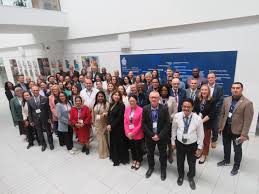

Senior higher education officials from Egypt, Tunisia, and Saudi Arabia joined policymakers and university leaders from across the globe in Cardiff last week for the fourth edition of Deep Dialogues, an international forum on the future of transnational education (TNE) and higher education.
Organized by the British Council, the three-day event, held from June 25–27, convened more than 43 participants from over 21 countries, including representatives from ministries of education, regulatory bodies, and leading universities. The forum focused on emerging models of cross-border academic collaboration and the growing imperative to design education systems that are both globally connected and locally grounded.

The event took place amid a sharp global uptick in demand for higher education. According to the World Bank, that demand is expected to rise by 70% by 2030, placing increased pressure on governments and institutions to develop scalable, inclusive, and sustainable learning pathways.
MENA Delegations Signal Deeper Global Engagement
The presence of senior delegations from Egypt, Tunisia, and Saudi Arabia underscored the Middle East and North Africa (MENA) region’s accelerating engagement with global education policy. Officials from these countries highlighted national strategies aimed at expanding access, enhancing quality, and aligning higher education systems with both domestic development priorities and international standards.
“The focus on glocalisation strategies at the Deep Dialogue in Cardiff has given our delegates from across the region an opportunity to reflect on how to use TNE to support the development of local solutions to global challenges,” said Susanna Carmody, the British Council’s Regional Education Director for the Middle East and North Africa.
She noted that delegates from the MENA region presented diverse institutional approaches to transnational education, each tailored to local needs but unified by a shared goal: improving student outcomes and increasing global competitiveness.
Equity, Innovation, and Institutional Resilience
Sessions were hosted at Cardiff Metropolitan University, University of South Wales, and other Welsh academic institutions, and featured both UK-based and international experts. Topics ranged from equitable access to TNE and the design of sustainable institutional models, to regulatory innovation and the role of student voice in cross-border education.
Workshops addressed the evolving needs of learners in a post-pandemic, digitally transforming world. Participants examined how TNE can support inclusive growth, talent mobility, and the internationalization goals of universities—especially in emerging markets and middle-income countries.
The forum also provided space for bilateral meetings and partnership-building, with delegates using the opportunity to share best practices and explore new areas of collaboration.
A Platform for Long-Term Partnerships
Deep Dialogues was organized in partnership with Universities UK International, Universities Wales, and Cardiff Metropolitan University, with additional support from Cardiff University, Swansea University, and the University of South Wales. The program reflects the British Council’s broader aim to support resilient higher education systems worldwide and deepen academic ties between the UK and its international partners.
As higher education continues to globalize, initiatives like Deep Dialogues offer policymakers and institutions an increasingly vital platform for joint learning and strategic alignment.