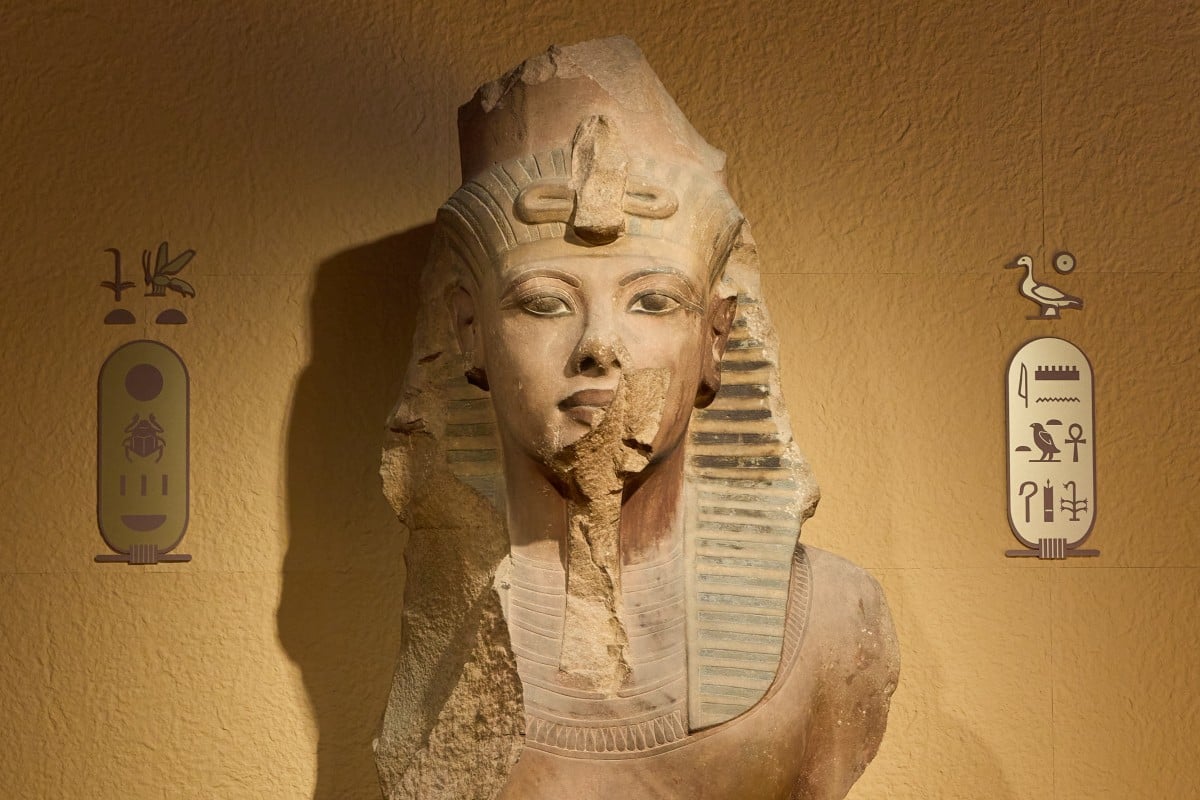

A towering statue of Pharaoh Tutankhamun, feline mummies, and sacred coffins are among 250 artefacts that will travel from Egypt to Hong Kong this November, marking the largest and longest-running exhibition of Egyptian antiquities ever staged in the city.

Titled “Ancient Egypt Unveiled: Treasures from Egyptian Museums,” the exhibition will open at the Hong Kong Palace Museum on November 20, 2025, and run through August 31, 2026. The partnership between the museum and Egypt’s Supreme Council of Antiquities marks a first-of-its-kind cultural collaboration and is being heralded as the beginning of a broader exchange between the two nations.
“This is just the beginning,” said Dr. Mohamed Ismail Khaled, Secretary-General of the Supreme Council of Antiquities. “We’re already in talks about future exhibitions—including some focusing on Islamic art and new archaeological discoveries. We are open to everything.”
Among the headline pieces are a 2.8-meter-tall statue of Tutankhamun, a statue of the feline goddess Bastet clutching a sistrum, anthropoid coffins, and a collection of mummified cats—a distinctive glimpse into the spiritual beliefs and funerary practices of ancient Egypt.
Cultural Diplomacy Through Antiquity
The exhibition not only showcases some of Egypt’s most iconic relics but also underscores the deepening diplomatic and cultural ties between China and Egypt, Dr. Khaled noted. “We saw Hong Kong Palace Museum as a rising star,” he said, praising its curatorial ambition and its potential to reach diverse Asian audiences.
Khaled hopes the exhibition will inspire more cultural tourism to Egypt from Hong Kong and mainland China. “We want people to see the tombs, the temples, and experience the richness of Egyptian heritage firsthand,” he added.
A Regional Milestone
The museum’s director, Louis Ng Chi-wa, called it “the longest and largest Egyptian exhibition ever organised in Hong Kong.” He expects the exhibition to draw between 600,000 and 700,000 visitors over its nine-month duration. Audience projections suggest around 30% will be local, over 50% from mainland China, and the rest from across Asia.
“This is more than an exhibition,” Ng said. “It’s an opportunity to strengthen the cultural bridge between our two ancient civilizations.”
Looking Ahead
Dr. Khaled hinted at what may come next: exhibitions centered on Islamic art—featuring treasures from Egypt, Iran, and Turkey—and the possibility of showcasing new archaeological finds before they debut in Cairo or Luxor.
“We are open to everything,” he reiterated. “We want people in Asia to see that Egypt is not just pyramids—it’s a living, layered civilization.”
As the ancient world travels to one of Asia’s most modern cities, both sides see this exhibition as a starting point for a broader conversation—one that spans centuries and continents.