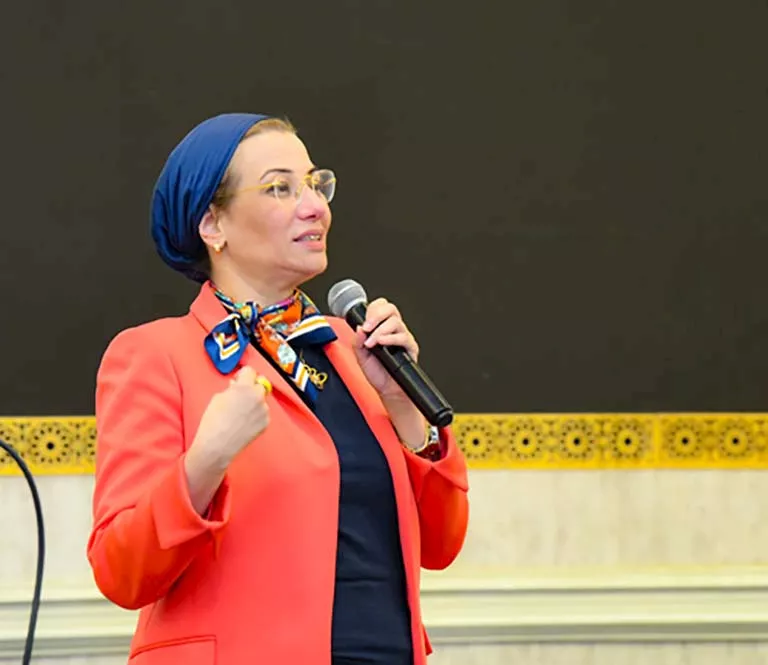

Egypt has taken a decisive step toward integrating sustainability into its economic fabric with the launch of its first Digital Green Transformation Toolkit and Environmental Self-Assessment Platform for small and medium-sized enterprises (SMEs). Spearheaded by Environment Minister Dr. Yasmine Fouad, the initiative was unveiled in celebration of World Environment Day 2025 and developed in strategic partnership with the European Bank for Reconstruction and Development (EBRD) and the United Nations Industrial Development Organization (UNIDO).
The new digital toolkit is designed to support the more than 90% of Egypt’s economy made up of SMEs, equipping them with the knowledge and tools necessary to transition to environmentally responsible operations. Hosted on the official website of the Ministry of Environment, the platform provides both an interactive guide and a self-assessment mechanism, tailored to help businesses monitor, evaluate, and enhance their environmental performance.

Unlike conventional guides, Egypt’s new platform functions as a practical decision-making system. It offers SMEs the means to assess their carbon emissions, water and energy consumption, and waste management practices. In addition, it delivers customized recommendations to help businesses improve their sustainability performance while aligning with national and global environmental standards. Minister Fouad emphasized the tool’s accessibility and utility, noting that “this is not just a guide—it is a practical roadmap for every entrepreneur in Egypt striving for real, measurable sustainability.”
The platform also helps businesses identify tangible pathways to access green financing, adopt circular economy practices, and integrate sustainable design into their operations. It serves as a centralized hub that connects businesses with regulatory guidance, sector-specific benchmarks, and step-by-step advice on acquiring environmental permits. In doing so, it reflects the Egyptian government’s commitment to building an inclusive green economy that benefits from both fiscal responsibility and climate resilience.
This initiative is a result of close technical collaboration with UNIDO and co-financing by EBRD, alongside support from the Swiss Embassy in Egypt and advisory input from Chemonics Egypt. Patrick Jean Gilabert, UNIDO’s Country Representative, underscored the partnership’s value, stating that it “merges policy, innovation, and private sector growth to shape an ecosystem for green business in Egypt.” He also highlighted the critical role played by the Ministry’s Climate and Environmental Investment Unit (CLEIU) in bridging environmental governance with private-sector incentives.
Reem El Saady, Deputy Head of Government Relations at EBRD Egypt, noted that the platform addresses one of the most critical barriers for SMEs—the lack of accessible, accurate information about environmental compliance and sustainable growth opportunities. She stressed that “with this digital guide, businesses can now assess their environmental performance independently and take actionable steps—without the added burden of hiring consultants.”
At the heart of this initiative is the Climate and Environmental Investment Unit (CLEIU), a division within the Ministry of Environment established to support Egypt’s green transition by linking environmental policy with investment planning. CLEIU focuses on accelerating both public and private green investments, easing regulatory bottlenecks, and offering a centralized database of opportunities for sustainable enterprise. It works across sectors to stimulate growth in areas like waste management, renewable energy, low-carbon transport, and circular manufacturing, helping to align environmental value with economic return.
The platform also offers real-time diagnostics, enabling companies to identify performance gaps, calculate emissions, and receive tailored guidance for operational improvements. In an era where data-driven ESG compliance is increasingly expected by investors and regulators alike, this feature provides critical value to both domestic firms and export-oriented businesses.
During the launch event, representatives from over 40 SMEs engaged in a live interactive session that reviewed the platform’s interface and provided feedback for future enhancements. Suzan Salem, of Chemonics Egypt, demonstrated the diagnostic tools and highlighted the guide’s ability to convert basic company data into actionable sustainability strategies. She emphasized that the platform not only promotes environmental compliance but also opens access to green markets, export incentives, and operational cost reductions through resource efficiency.
Minister Fouad stressed that the toolkit is part of Egypt’s broader national commitment—endorsed by President Abdel Fattah El-Sisi—to embed environmental sustainability into all aspects of policy and development planning. “This launch is a foundational milestone,” she said, “in a much larger journey toward a resilient, inclusive, and green Egyptian economy.”
As governments worldwide race to build climate-resilient economies, Egypt’s initiative sets a precedent for the region. It showcases a scalable model for embedding sustainability into SME ecosystems through digital tools, multilateral cooperation, and localized capacity building.