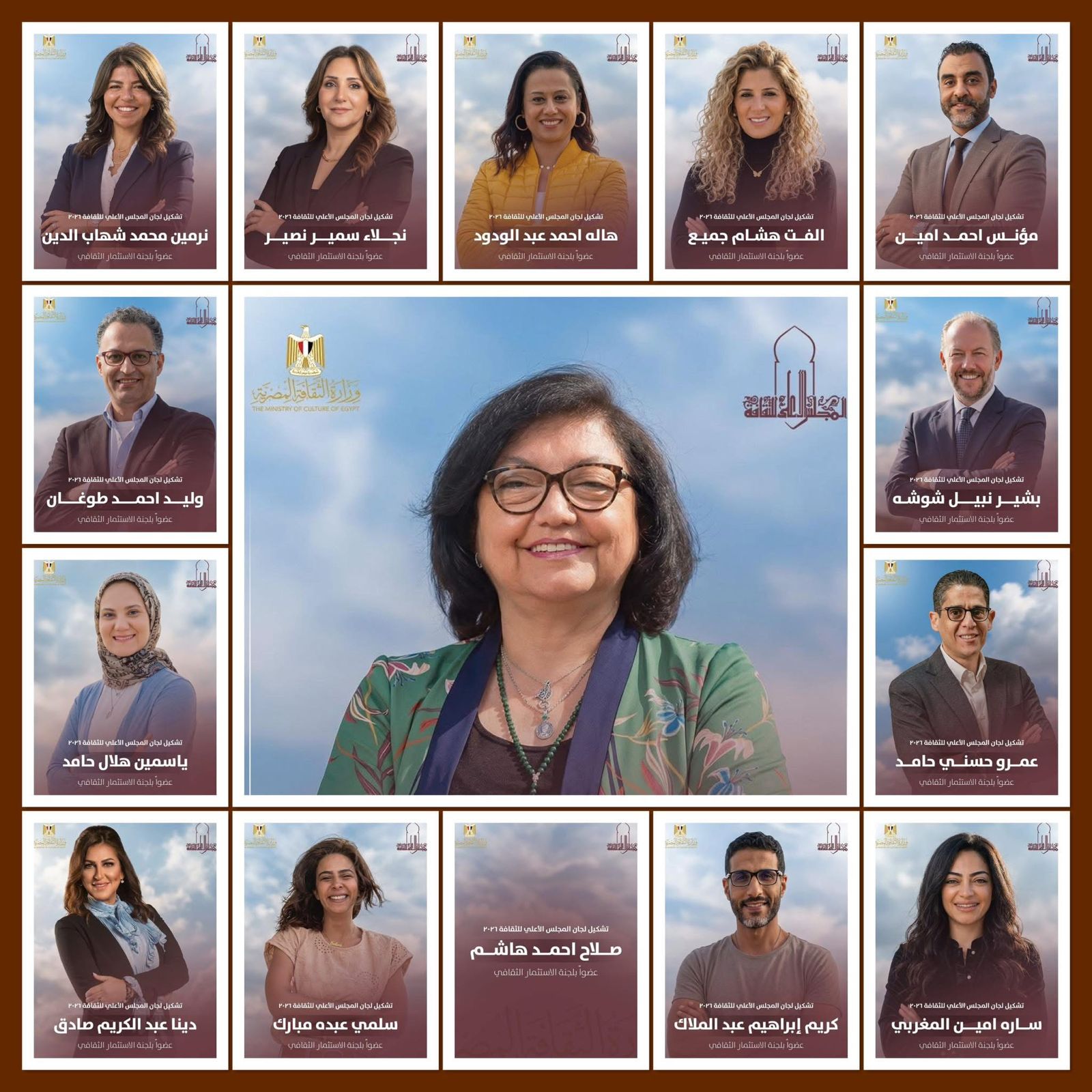

Egypt’s Supreme Council of Culture has unveiled its full slate of committee rapporteurs for 2026, appointing a wide-ranging group of academics, artists and public figures in a move that reflects both disciplinary breadth and a growing presence of women in senior cultural leadership.
The appointments span the entirety of the council’s specialized committees, covering architecture, the arts, literature, media, and emerging interdisciplinary fields. Among those named, Yasser Mohamed El-Sayed Ibrahim will lead the Architecture Committee, while Mahmoud Hamed Mohamed Saleh has been appointed rapporteur of the Fine Arts Committee. Morsi El-Sayed Morsi Ibrahim El-Sabbagh will oversee Folk Arts and Intangible Heritage.

In the performing arts, Hanan Ahmed Abu El-Magd Mohamed has been named rapporteur of the Music, Opera and Ballet Committee, while Ayman Abdel-Hamid Hafez El-Shiwi will lead Theater and Mervat Ahmed Shafik Abu Ouf will oversee Cinema.
Literary and intellectual portfolios are similarly represented. Haitham Ahmed Hassan El-Hag Ali will head Literary, Critical and Linguistic Studies, with Mohamed Nasr El-Din Mohamed El-Gebali leading Translation and Ahmed Mostafa Sabry Abdel-Gawad Megahed overseeing Poetry. Samah Abu Bakr Mohamed Ezzat has been appointed to Children’s Culture, while Mohamed Ibrahim Taha will lead Narrative Fiction.
Policy and interdisciplinary committees include Mohamed Mostafa Kamal Abdullah Shahda for Economics and Political Science and Lamise Aly Negm for Cultural Investment. In media and heritage, Amr Mamdouh Fouad El-Leithy has been appointed rapporteur of the Media Committee, while Tarek Sayed Tawfik Ahmed will oversee History and Antiquities.
Emerging and cross-disciplinary areas are also represented, with Nevine Makram Labib Eskaros leading Scientific Culture, Innovative Thinking and Artificial Intelligence, and Hisham Ibrahim Ibrahim El-Kassas heading Geography and Environment. Zein El-Din Mohamed Abdel-Hadi will oversee Books and Publishing.
Additional appointments include Samia Kadry Wanees Tadros to lead Philosophy, Sociology and Psychology, Ahmed El-Sayed Hussein Roumiya for Youth Affairs, and Essam El-Din Ahmed Taha Sheha for Legal Sciences, including human rights, intellectual property and citizenship.
Observers note that women have been appointed to several of the council’s most influential and forward-looking committees, particularly in the performing arts, children’s culture, and innovation-focused portfolios. The composition of the new leadership suggests a continued shift toward broader representation within Egypt’s cultural institutions, alongside an effort to combine academic expertise with practical experience.
The council is expected to formally ratify the appointments in an upcoming session, paving the way for a new term that emphasizes both diversity of leadership and a comprehensive approach to cultural policy.
The Supreme Council of Culture’s newly announced committee appointments for 2026 reflect a wide range of expertise across the arts, humanities and emerging fields — alongside a notable rise in women taking on leadership roles.
Several key cultural portfolios will be led by women, including Hanan Ahmed Abu El-Magd Mohamed in music, opera and ballet, and Mervat Ahmed Shafik Abu Ouf in cinema. Their appointments place women at the forefront of sectors central to Egypt’s cultural output.
In areas shaping future generations and ideas, Samah Abu Bakr Mohamed Ezzat will oversee children’s culture, while Nevine Makram Labib Eskaros will lead a committee focused on scientific culture and innovation. Samia Kadry Wanees Tadros will head philosophy, sociology and psychology.
The broader lineup includes academics, writers and media figures across disciplines, reflecting an effort to combine scholarly depth with practical experience in cultural production and policy.
The council is expected to formally approve the appointments in an upcoming session, setting the stage for a new term that emphasizes both diversity of expertise and expanded participation in shaping cultural policy.