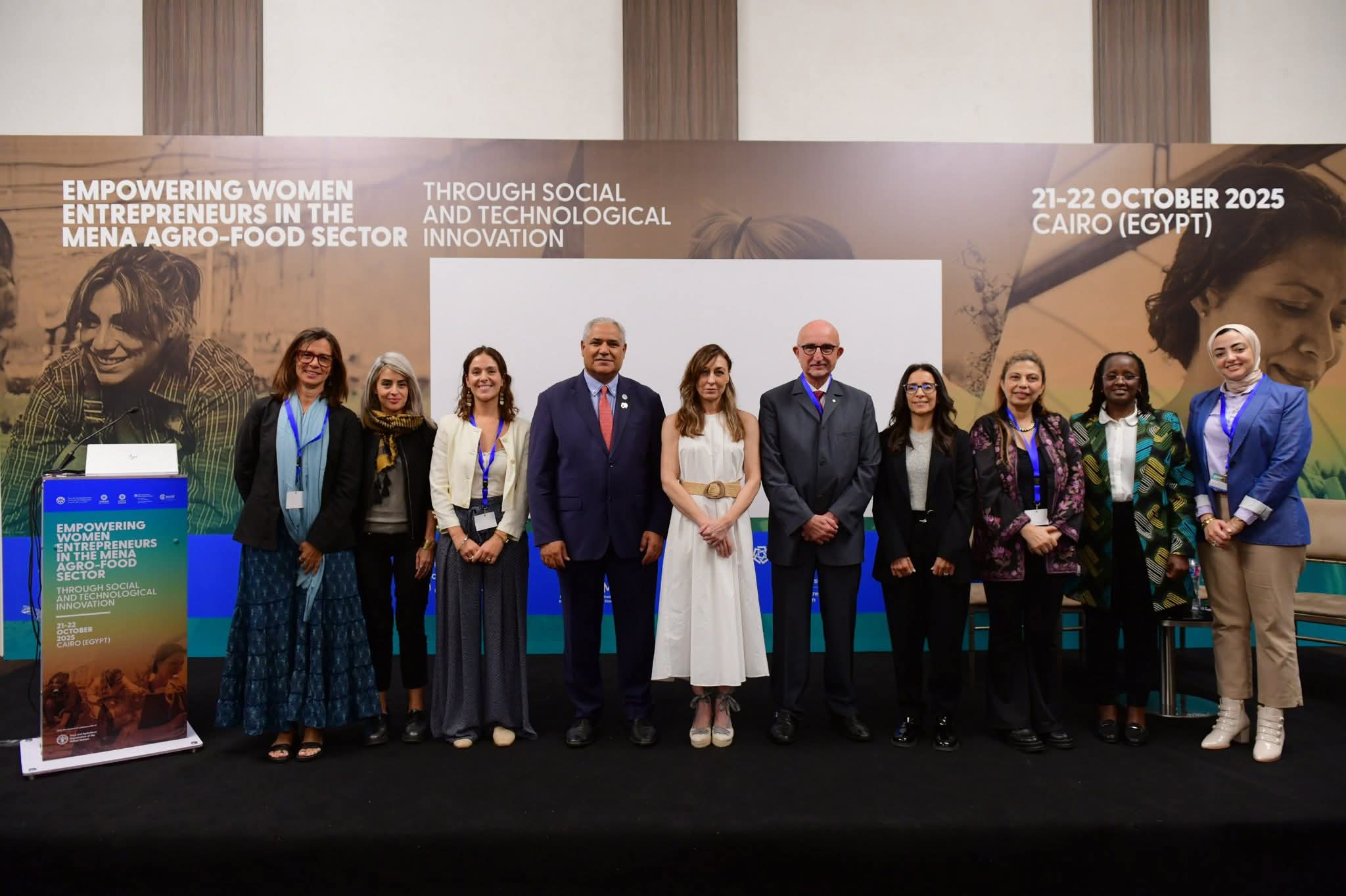

The Egyptian Rural and Environmental Industries Fund (REIF), under the Ministry of Social Solidarity, took an active role in the “Regional Stakeholder Dialogue and Training on Empowering Women Entrepreneurs in the Agri-Food Sector in the MENA Region.” The event, organized by the Union for the Mediterranean with support from the Spanish Agency for International Development Cooperation, in partnership with the International Center for Advanced Mediterranean Agronomic Studies, the FAO Regional Office for Near East and North Africa, the American University in Cairo’s Center for Entrepreneurship and Innovation, and the Sustainable Food Systems Platform, focused on advancing social and technological innovation.
Eng. Engy El-Yemany, Executive Director of REIF, expressed her honor at participating in this pivotal regional dialogue. She emphasized the forum’s role in fostering innovation among women entrepreneurs across the agricultural and food value chains, noting that the event comes at a critical time as countries pursue inclusive, green, and sustainable transformation in agri-food systems.

“Across the MENA region, women are central to the agricultural and food value chain. They plant the food, preserve traditional knowledge, and support their families and communities,” El-Yemany said. “Yet, barriers such as unequal access to land, credit, markets, and technology often limit their full potential.”
El-Yemany highlighted the mounting pressures from climate change and food security challenges, stressing that enabling women’s capacity for innovation is imperative. She underscored the need for integrated approaches that link financial inclusion, digitization, training, and innovative policies to create an enabling environment for women-led businesses in agri-food systems.
The Ministry of Social Solidarity has taken significant steps to move beyond traditional social protection toward a comprehensive economic inclusion strategy, led by REIF. The Fund implements this vision by supporting financing, production, and marketing, ensuring that every investment translates into measurable impact for rural women and small-scale producers.
Central to REIF’s work is its “Community Value Chain” approach—a localized development model that identifies a community’s comparative advantages and builds a complete value chain around them. This model considers local resources, available skills, and accessible markets to ensure women, cooperatives, and small enterprises participate at every stage of production. The approach enhances local ownership, reduces waste, and transforms community potential into economic strength.
El-Yemany explained that each value chain project integrates three essential elements: access to financing through partnerships with NGOs, microfinance institutions, and national banks; capacity building through technical, commercial, and leadership training; and market access via modern trade, exhibitions, and digital platforms, turning small workshops into competitive enterprises while promoting women’s leadership.
The Fund also implements subsidized loan policies aligned with national economic conditions, maintaining rates no higher than 6% below the central bank’s official lending rate and adjusted for inflation, balancing sustainability with inclusion to keep credit accessible to vulnerable groups.
Through the digital platform “Ayadi,” REIF connects artisanal producers—predominantly women—with consumers nationwide and internationally, enabling continuous sales, electronic payments, and customer insights to guide production decisions. Investments in digital financial systems, in partnership with Banque Misr and E-Finance, ensure transparent fund flows from the Fund to microfinance institutions and directly to beneficiaries.
El-Yemany emphasized that the Strategic Financial System for Economic Empowerment links ministries, financial institutions, and development partners under one framework, ensuring all projects, loans, and training programs are monitored and reported transparently. This system aligns national efforts with Egypt Vision 2030, the Sustainable Development Goals, and global gender equality commitments.
“No country can succeed alone. Climate change, food security, and gender inequality cross borders, and our solutions must do the same,” El-Yemany said. “This regional dialogue amplifies women entrepreneurs’ voices, ensures policy coherence, and strengthens resilience across our region.”