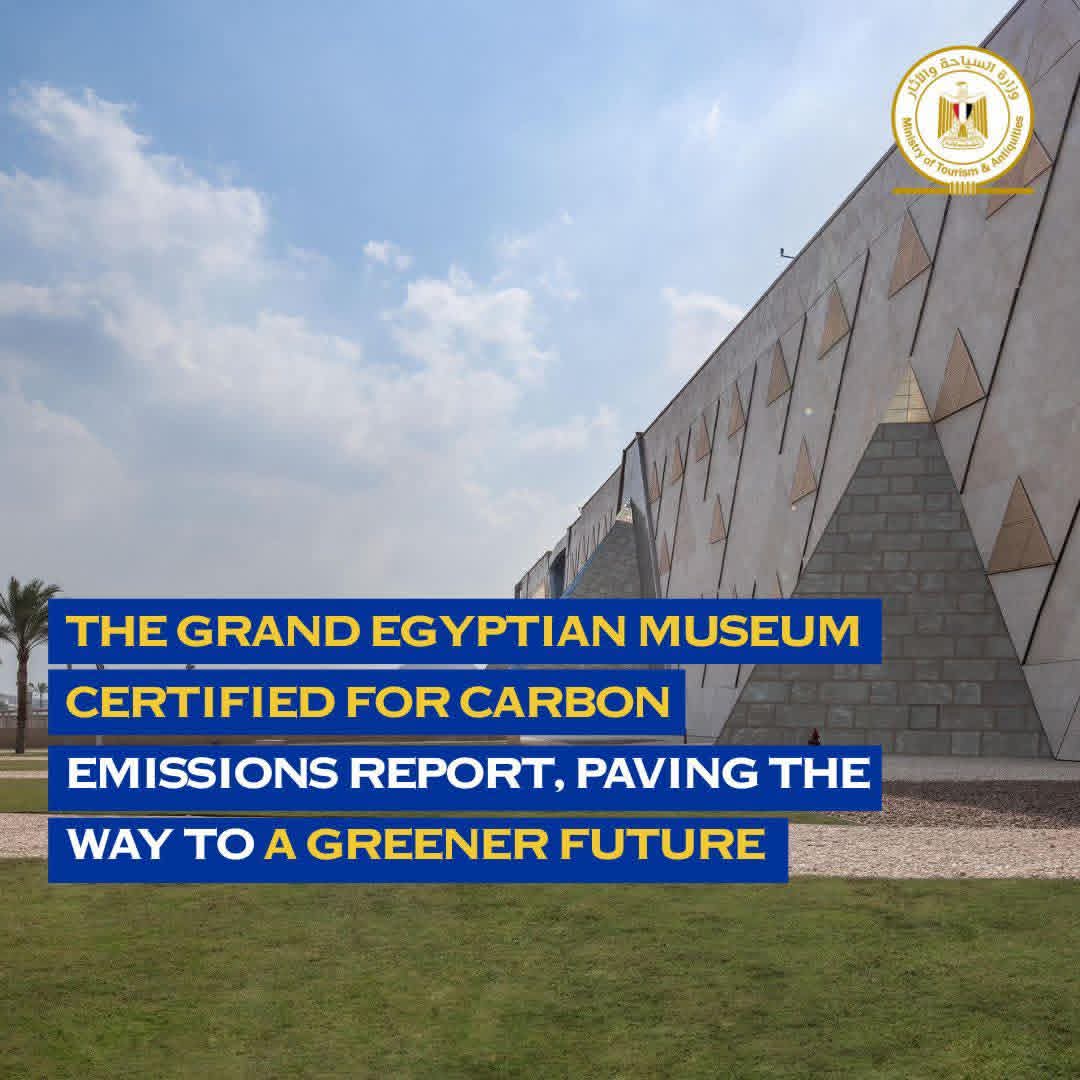

In a move towards cutting-edge sustainability, the Grand Egyptian Museum (GEM) has officially received accreditation for its carbon emissions reporting, a critical milestone ahead of its long-anticipated opening.
This certification confirms that the museum meets international environmental standards, positioning it as the first green museum in Africa and the Middle East, and one of the few cultural institutions worldwide to actively measure and mitigate its environmental impact.

Sustainability at the Heart of a Cultural Megaproject
Located near the Giza Pyramids, the Grand Egyptian Museum is poised to become the world’s largest archaeological museum, housing over 100,000 artifacts, including the complete Tutankhamun collection. But beyond its vast collections and architectural marvel, GEM is now leading a green revolution in museum practices.
The carbon emissions accreditation confirms that GEM has implemented transparent mechanisms to monitor, report, and reduce its carbon footprint—an uncommon achievement in the museum sector, especially at this scale.
Pioneering Green Cultural Heritage in the Region
By integrating environmental considerations into its construction, operations, and energy systems, the museum now serves as a blueprint for future cultural infrastructure in the region. Sustainability measures include energy-efficient lighting and climate control, advanced waste management systems, and eco-conscious landscaping across the museum’s vast complex.
Global Model for Eco-Conscious Museums
With this recognition, the Grand Egyptian Museum joins a small but growing list of major institutions worldwide committed to sustainability. Its leadership in environmental compliance is expected to influence museum design and operation standards globally, especially in countries with vulnerable cultural and ecological landscapes.