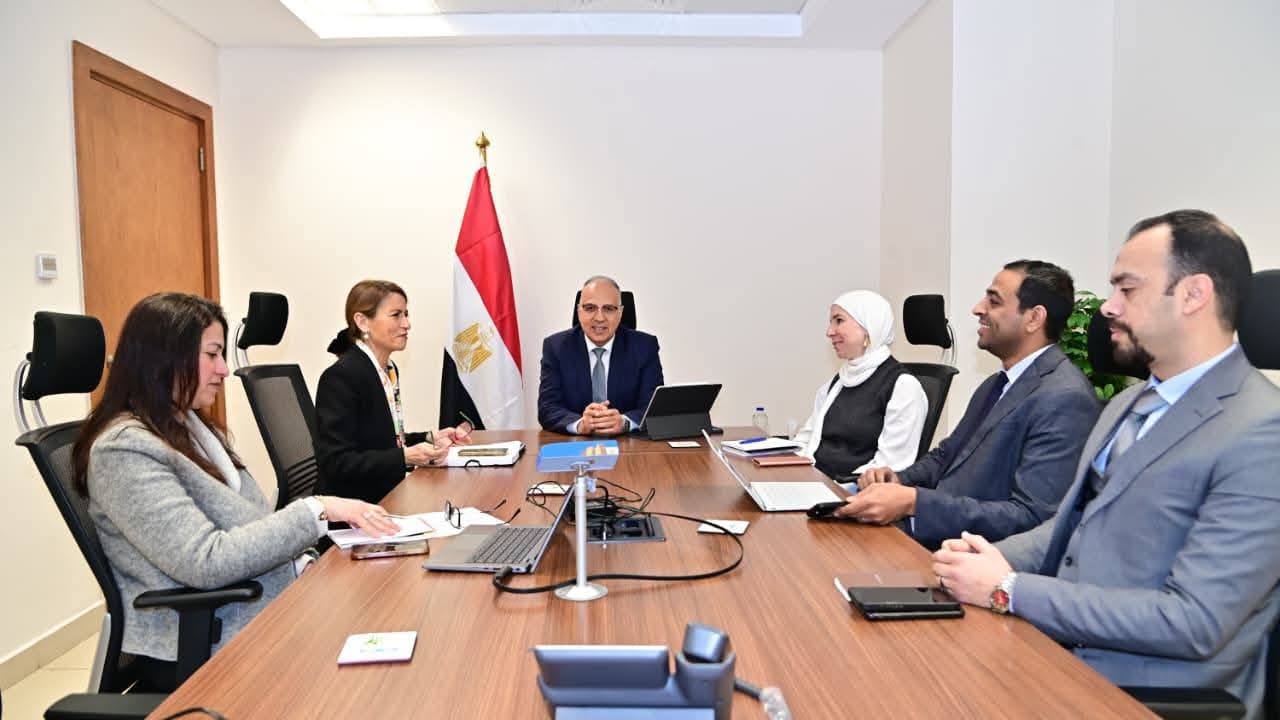

Egypt’s Minister of Water Resources and Irrigation, Hany Sewilam, met with Nuria Sanz, the regional director of UNESCO’s office in Cairo, this week to review ongoing cooperation and discuss future priorities in water management, climate adaptation, and sustainable development, as Sanz approaches the end of her mandate.
The meeting underscored the depth of collaboration between Egypt and UNESCO, particularly in areas related to water resources, climate resilience, science, and cultural development, according to a statement issued by the Ministry of Water Resources and Irrigation.

Acknowledging UNESCO’s Role in the Region
At the outset of the meeting, Sewilam expressed appreciation for Sanz’s leadership during her tenure, praising UNESCO’s “constructive and enduring role” in supporting Egypt and the wider region. He emphasized the importance of continuing cooperation, especially in water resource management and efforts to enhance resilience to climate change, which remains a growing challenge for arid and water-stressed countries.
Sewilam noted that UNESCO has been a key partner in aligning regional water policies with global sustainability frameworks.
Advancing the AWARe Initiative and Green Water Dialogue
Discussions also focused on joint work under the Action on Water Adaptation and Resilience (AWARe) initiative, particularly through the Green Water Dialogue track. Sewilam commended UNESCO’s Cairo regional office for its role in completing a regional survey of participating countries as part of the initiative over the past year.
He also praised UNESCO headquarters for building on the survey’s findings and advancing the Green Water Dialogue, including the organization of a high-level international event in November 2025, which helped elevate policy discussions on sustainable water use and climate adaptation.
Supporting Regional and African Capacity Building
Sewilam highlighted UNESCO’s sponsorship of both the Regional Training Center for Water Resources and Irrigation and the Pan-African Center for Water and Climate Adaptation (PACWA), describing them as pillars of regional capacity building.
He specifically cited the “Climate Risk-Informed Decision Analysis” training program held at PACWA in June 2025, which was jointly organized by UNESCO and the AWARe initiative. The program aimed to strengthen climate-related decision-making skills among professionals from Africa and the Middle East. Sewilam stressed the need to expand similar training programs in the coming period.
Research and Knowledge Exchange
The minister also praised the International Hydrological Programme (IHP), calling it a cornerstone of cooperation between Egypt and UNESCO in the fields of research, technical training, and knowledge exchange related to water sciences.
In addition, Sewilam reaffirmed Egypt’s appreciation for UNESCO’s role as a principal sponsor and strategic partner of Cairo Water Week since its inception, noting the organization’s contributions to enhancing the event’s international profile.
Sustained Coordination and Partnership
The meeting concluded with both sides reaffirming their commitment to sustained coordination and partnership. Officials said the cooperation reflects a shared goal of advancing sustainable water management and climate adaptation strategies across Egypt, Africa, and the Middle East, at a time when water security is increasingly central to regional stability and development.