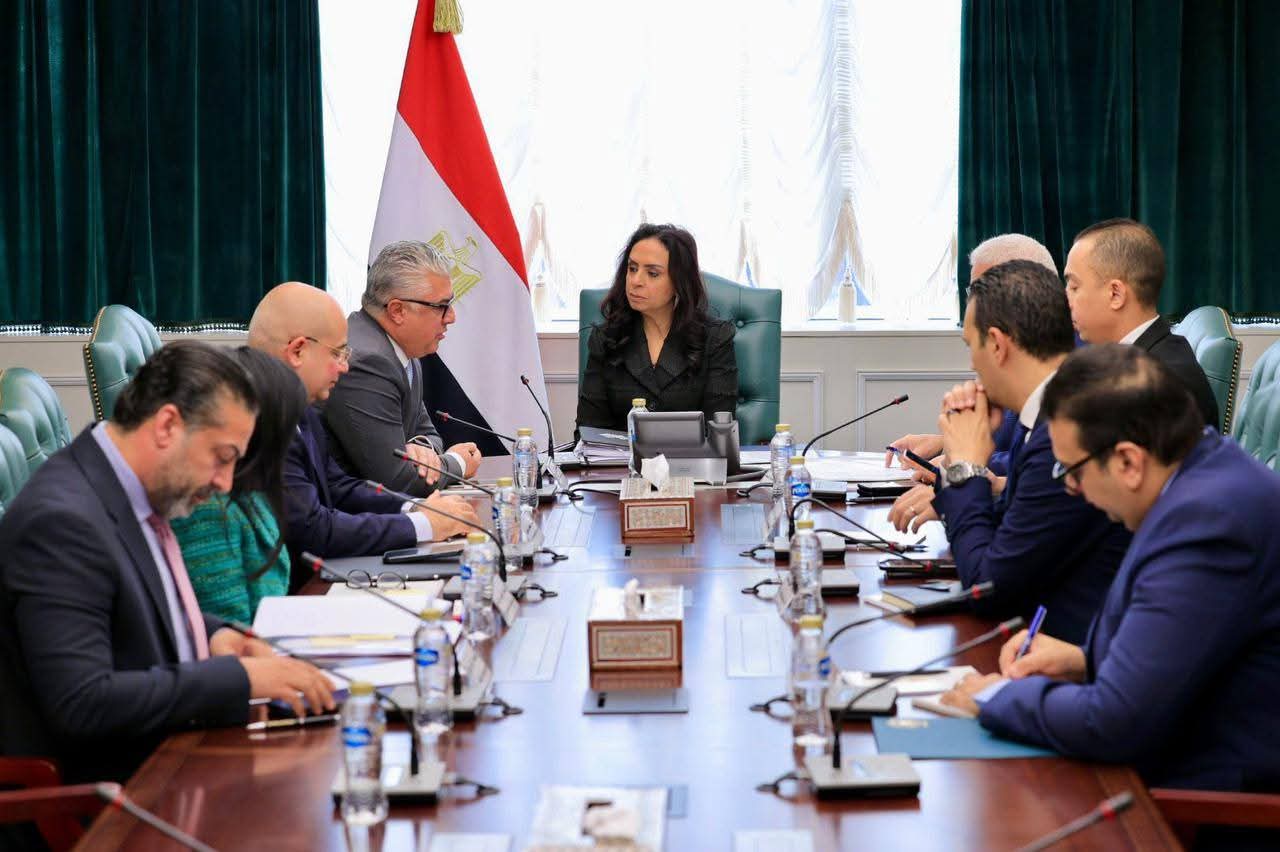

Egypt’s Minister of Social Solidarity, Dr. Maya Morsy, held talks with Waleid Gamal El-Din, Chairman of the General Authority of the Suez Canal Economic Zone (SCZone), to expand cooperation aimed at creating job opportunities and strengthening economic empowerment for families enrolled in the government’s flagship cash-transfer program, “Takaful and Karama.”
The meeting, held at the ministry’s headquarters in Egypt’s New Administrative Capital, was also attended by Major General Gamal Awad, head of the National Organization for Social Insurance, reflecting a broader, multi-institutional approach to linking social protection with sustainable employment.

Linking Social Protection to Productive Employment
According to a statement from the Ministry of Social Solidarity, discussions focused on enhancing cooperation in industrial projects within SCZone’s industrial areas, an effort expected to generate thousands of labor-intensive jobs. These opportunities would directly support women’s economic empowerment and help beneficiary families transition from reliance on cash assistance to stable, income-generating work.
Officials emphasized that the initiative aligns with the government’s broader strategy of transforming social welfare programs into platforms for productive inclusion and long-term economic resilience.
Successful Model in Fayoum
During the meeting, Dr. Morsy highlighted a successful partnership model already implemented in Fayoum Governorate, where the Ministry of Social Solidarity collaborated with the Ministry of Public Business Sector and the Egyptian Integrated Development Foundation (Nidaa) to revive a long-idled textile facility.
The project involved establishing and operating a ready-made garments industrial complex spanning 12,000 square meters inside the Fayoum Spinning Factory, which had been closed for years. The complex now provides structured employment and skills training for women from low-income households.
In its first phase, the project trained and employed 2,000 women, many of whom are beneficiaries of the Takaful and Karama program, equipping them with modern skills in sewing, industrial operations, and maintenance in line with contemporary quality standards. A second phase, scheduled to launch in the coming months, is expected to create jobs for an additional 3,000 women.
“This model reflects our commitment to moving families from dependency to productivity,” Dr. Morsy said, underscoring the ministry’s focus on sustainable economic empowerment rather than long-term reliance on subsidies.
Expanding the Model to the Suez Canal Economic Zone
The meeting also examined the possibility of replicating the Fayoum experience within the SCZone, particularly in Ain Sokhna Industrial Zone and Qantara West, both known for their concentration of labor-intensive manufacturing facilities.
By partnering with civil society organizations and the private sector, officials believe the initiative could help thousands of Takaful and Karama families exit poverty cycles and integrate into formal employment markets—especially in regions with high industrial growth potential.
Coordinated Government Effort
Senior officials from both sides attended the talks, including legal and administrative representatives from the Ministry of Social Solidarity and senior executives from the SCZone authority, highlighting the institutional coordination behind the initiative.
The discussions come as Egypt continues to recalibrate its social protection policies, aiming to align welfare programs with industrial development and job creation, particularly for women and vulnerable families. If implemented at scale, the proposed cooperation could mark a significant step in linking Egypt’s expanding industrial zones with inclusive, people-centered economic growth.