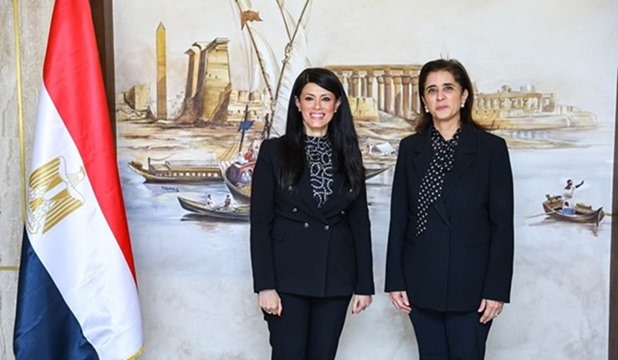

Dr. Rania A. Al-Mashat, Egypt’s Minister of Planning, Economic Development, and International Cooperation, hosted Dr. Hanan Balkhy, the World Health Organization (WHO) Regional Director for the Eastern Mediterranean, to discuss strategic cooperation aimed at strengthening Egypt’s health policies and advancing the country’s medium-term development plan.
The meeting, which also included Dr. Nima Saeed, WHO Representative to Egypt, reaffirmed the close collaboration between the Egyptian government and WHO through national plans and presidential health initiatives. Dr. Al-Mashat emphasized Egypt’s prioritization of enhancing healthcare services and the implementation of the Universal Health Insurance System as key pillars for sustainable development.

Dr. Al-Mashat provided an overview of the Ministry’s mandate, highlighting its role in preparing Egypt’s economic and social development plans and managing public investments across sectors. She underscored ongoing coordination with international development partners, noting Egypt’s active role as the national coordinator for the United Nations 2030 Agenda and the importance of multilateral and bilateral partnerships within frameworks such as the United Nations Sustainable Development Cooperation Framework (2023–2027).
Significantly, Dr. Al-Mashat discussed Egypt’s new Planning Law and its integration with the Public Finance Law. She announced plans to develop a three-year medium-term development plan starting fiscal year 2026/2027, designed to implement evidence- and data-driven policies with clear, measurable targets.
“Providing equitable, high-quality healthcare is a fundamental human right and a cornerstone of social justice and national development,” Dr. Al-Mashat stated. She emphasized that continued cooperation with WHO aligns with Egypt Vision 2030’s core objective of improving quality of life and raising living standards for all Egyptians.
The Minister also noted Egypt’s robust economic performance, citing a 4.7% GDP growth in the third quarter of the previous fiscal year—exceeding expectations despite regional challenges. She detailed that approximately 45% of government investments in the current fiscal year are directed toward human development sectors, including health.
Dr. Hanan Balkhy commended the Egyptian government’s ongoing commitment and collaboration with UN agencies. She lauded Egypt’s progress in disease control, enhancement of healthcare infrastructure, and efforts to bolster pharmaceutical security through expanded local manufacturing of medicines and vaccines.
The discussion further explored WHO’s “Health in All Policies” initiative, which advocates integrating health considerations into policymaking across all sectors. Dr. Al-Mashat expressed strong support for this approach, highlighting its alignment with Egypt’s strategy to promote evidence-based policymaking and the development of the medium-term plan.
She also referenced Egypt’s Integrated National Financing Strategy (E-INFS) for Sustainability and Development, which serves as a comprehensive roadmap for funding development across various sectors, with a focus on health and human capital.
This high-level dialogue underscores Egypt’s commitment to fostering resilient health systems and sustainable development in partnership with international organizations.