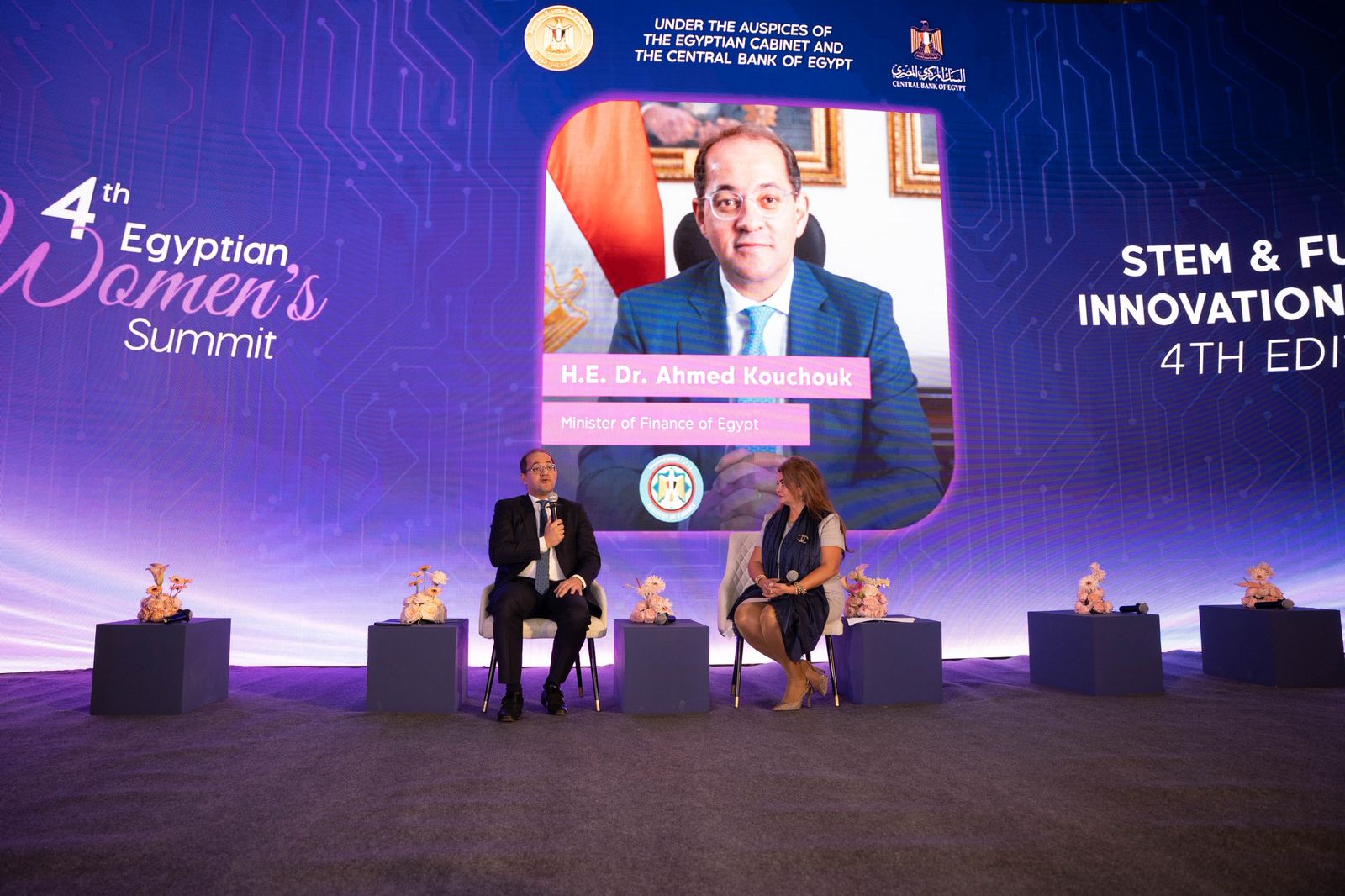

On the second day of the 4th Egyptian Women’s Summit, the ministerial session entitled “An Economy of Opportunities… Empowering Future Generations” highlighted Ministry of Finance initiatives to drive growth, support entrepreneurship, and leverage technology, engineering, and science to boost national productivity.
Moderated by media professional Dina Abdel Fattah, Chair and Founder of Top 50 Women Forum, the session attracted a wide audience of students, recent graduates, and representatives from both the public and private sectors. It aimed to familiarize youth with opportunities within the formal economy and the role of digital transformation in creating operational, motivational, and financial channels for young Egyptians.

Balanced Fiscal Policies and Private Sector Growth
Dr. Ahmed Kouchouk, Minister of Finance, emphasized that disciplined and balanced fiscal policies are essential to stimulate economic activity, ensure sustainable growth, and support other ministries in achieving tangible progress across productive sectors.
Since assuming office 18 months ago, the Ministry has focused on building a sustainable partnership with the private sector, grounded in the belief that the state and private enterprises are partners in national development, with private-sector success directly contributing to overall economic growth.
Economic indicators show clear improvement: private investment grew by 73% over the past year, with recovery in productive sectors, especially industry, alongside a thriving technology sector that the state seeks to maintain and encourage.
Tax Revenues, Fairness, and Economic Inclusion
Dr. Kouchouk highlighted that tax revenues increased by 36%, amounting to approximately EGP 600 billion, achieved by expanding the tax base and incentivizing economic activity, rather than imposing new burdens. About 650,000 new tax filings were registered for economic activities exceeding EGP 1 trillion, with voluntary payments reaching nearly EGP 80 billion.
He clarified that taxpayers with annual revenues of EGP 20 million pay only EGP 300,000 in taxes, placing Egypt among the countries with the lowest tax burdens globally, reflecting a deliberate policy to reduce pressures while encouraging growth. Additionally, around 400,000 old tax cases were closed, more than 26,000 requests were addressed, and about 20,000 transfer requests were processed since March.
Debt Reduction and Digital Transformation
Addressing public debt, Dr. Kouchouk confirmed that reducing debt is a top government priority, noting a reduction of USD 4 billion in external debt, equivalent to 10% of GDP over 24 months. These measures aim to alleviate future burdens and ensure economic sustainability.
The Ministry is also advancing the digital transformation of the tax system by establishing modern tax service centers in partnership with e-Tax, where tax officers provide technical guidance rather than direct enforcement—enhancing service quality and building trust between taxpayers and the state.
Supporting Entrepreneurship and Youth Empowerment
The Ministry continues to integrate the informal economy into the formal system through institutional reforms and direct engagement, promoting tax fairness and economic stability. Additionally, annual financing of EGP 3–5 billion is provided via the MSMEDA to support entrepreneurs and productive activities.
Dr. Kouchouk stressed the importance of youth engagement, emphasizing a comprehensive plan to enhance economic literacy and involve young people in fiscal policies, recognizing them as key partners in shaping Egypt’s economic future.
Personal Journey and Professional Philosophy
Sharing insights from his career, Dr. Kouchouk noted that he graduated from the American University in Cairo and gained extensive experience within the Egyptian government and international institutions. He was the first recipient of a Ministry of Finance scholarship to study in the United States, a program that continues today alongside new partnerships with leading international universities. These initiatives reflect long-term investment in human capital.
He underscored that studying entrepreneurship reinforced his belief in pursuing work one loves, investing early in skills and experience, learning from senior professionals, and respecting institutional hierarchies—all essential pillars for success in public service.
Strategic Partnerships and Summit Objectives
The session forms part of the 4th Egyptian Women’s Summit, which convenes government ministries, universities, international representatives, and private sector leaders. The summit fosters practical collaboration between academia, industry, and international entities, along with reaching strategic partnership with MSMEDA.
The summit also addresses major transformations in the labor market, future skills required for graduates, and the integration of STEM education and AI, featuring around 100 speakers from Egypt, the Gulf, and global corporations discussing career opportunities and bridging education with industry needs.