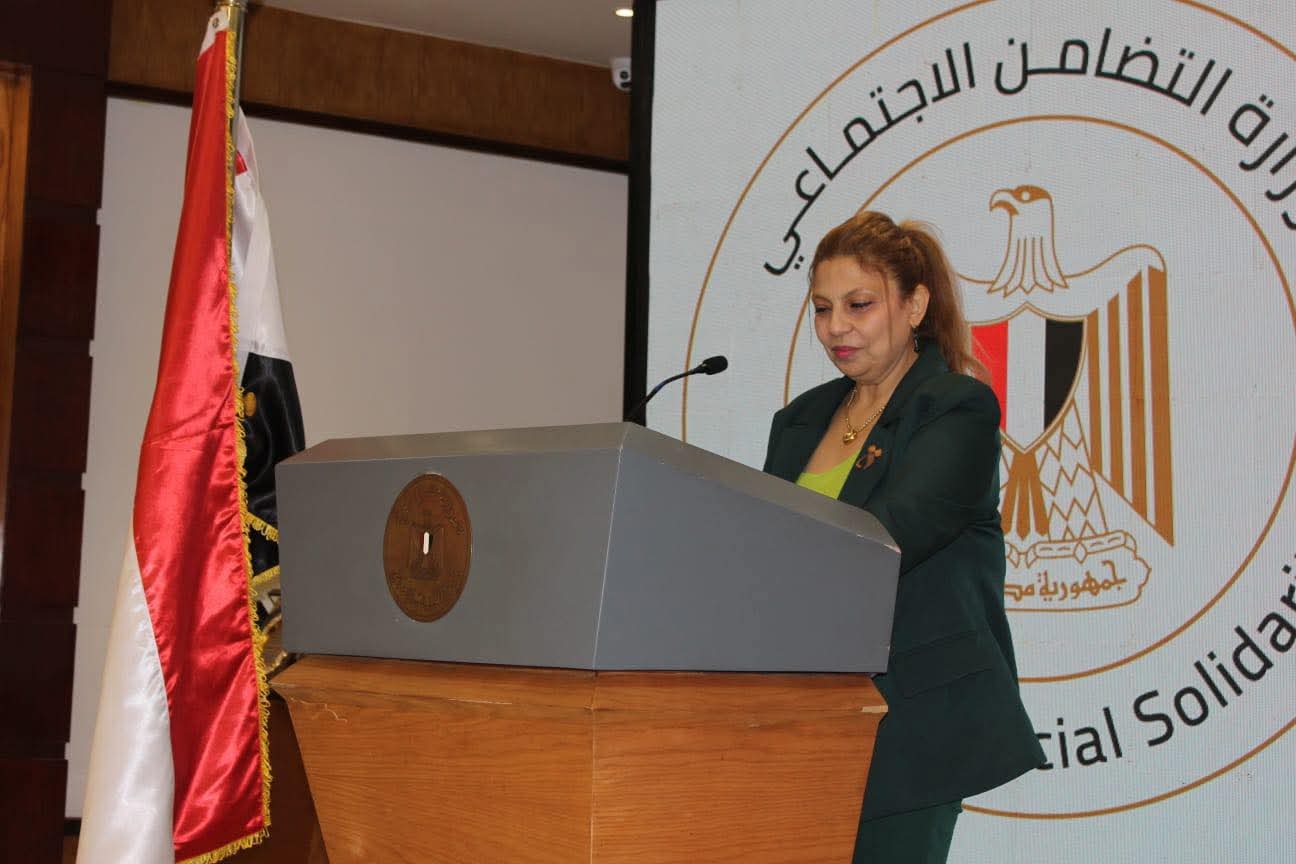

On behalf of Dr. Maya Morsy, Egypt’s Minister of Social Solidarity, Engy El-Yamani, Executive Director of the Fund for Supporting Rural and Environmental Industries and Rural Development, attended the closing conference of the project “Using Solar Energy in Industry to Combat Climate Change.” The initiative was organized by the Sawa Ala Al-Jannah Association for Development and Care of Special Needs Groups, in partnership with the Global Environment Facility – Small Grants Programme (GEF/SGP), and supported by the Ministry of Environment and the Giza Governorate.
The conference highlighted the project’s multifaceted achievements, demonstrating its social, economic, and environmental impact. Among the key accomplishments were the training of 40 young men and women in installing and maintaining solar energy systems, as well as 20 people with disabilities trained in LED maintenance and solar power bank production. Solar energy stations were installed in several workshops and factories in Giza, helping reduce operational costs and supporting local production. Additionally, solar lighting was implemented for emergency units in Giza, enhancing visibility during critical situations.

The initiative also focused on awareness campaigns, including seminars and community outreach programs, to educate the public on the benefits of clean energy and its positive impact on both climate and local economies.
During the conference, El-Yamani conveyed Minister Morsi’s appreciation for the project, emphasizing its role as a practical model showing how civil society organizations can deliver sustainable solutions aligned with Egypt’s environmental and development vision.
“Using Solar Energy in Industry to Combat Climate Change” exemplifies the vital role of civil society in promoting innovation and sustainability. The project went beyond supporting industrial facilities to include raising public awareness, equipping youth with technical skills, and integrating people with disabilities into productive economic activities.
El-Yamani noted that the project reached a wide audience, both directly through training programs and indirectly through community workshops and outreach campaigns. By combining environmental awareness, technical training, and inclusive economic empowerment, the initiative fostered a culture of sustainability in the target communities.
The project also established strong partnerships with civil society organizations, signing cooperation agreements to ensure sustainability and encourage collaborative efforts in advancing green transformation. These partnerships reinforce Egypt’s broader goals of transitioning toward a sustainable economy capable of addressing climate challenges.
“This project demonstrates that environmental initiatives are inseparable from economic development,” El-Yamani stated. “The Fund for Supporting Rural and Environmental Industries focuses on empowering rural communities and small-scale producers to adopt cleaner, more efficient production practices while integrating renewable technologies into local industries.”
The initiative further focused on youth training in advanced solar energy technologies, creating pathways to emerging green jobs. By including people with disabilities in technical training and economic participation, the project reflects a genuine commitment to inclusive development.
El-Yamani concluded by thanking all partners, including the Sawa Ala Al-Jannah Association, GEF/SGP, UNDP, the Ministry of Environment, Giza Governorate, volunteers, and technical teams. She expressed hope that this project would serve as the first step in a series of initiatives supporting sustainable economic growth, social inclusion, and climate resilience in Egypt.