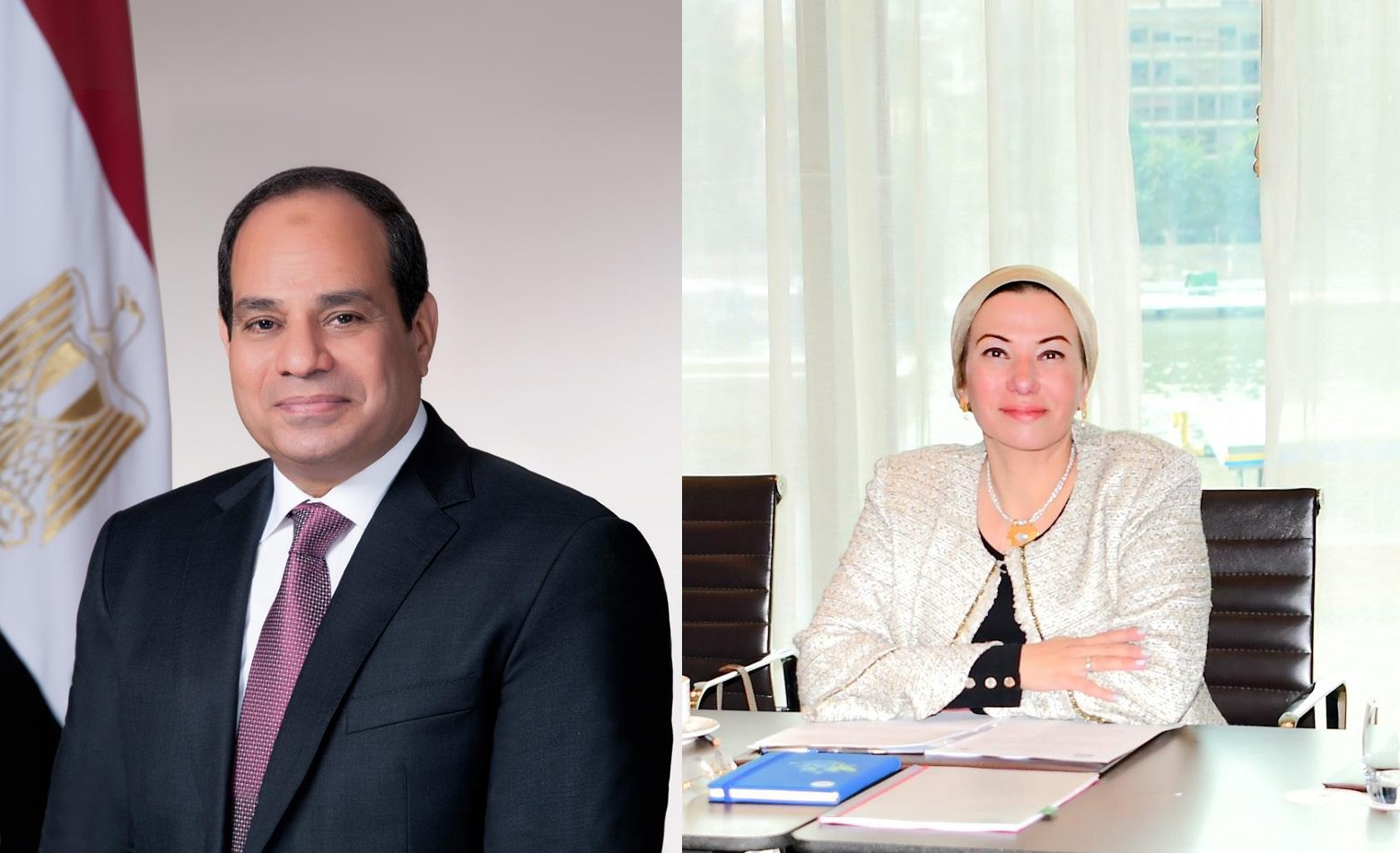

Egypt’s President Abdel Fattah El-Sisi on Tuesday met with Dr. Yasmine Fouad, United Nations Under-Secretary-General and Executive Secretary of the UN Convention to Combat Desertification (UNCCD), underscoring Egypt’s commitment to global efforts to address desertification, drought, and escalating environmental challenges.
The meeting was attended by Minister of Foreign Affairs, Emigration and Egyptian Expatriates Badr Abdel Aaty. According to Presidential Spokesperson Ambassador Mohamed El-Shennawy, President Sisi welcomed Fouad and expressed the Egyptian state’s strong confidence in her competence and extensive experience in tackling global environmental issues and advancing international cooperation to achieve the Sustainable Development Goals (SDGs).

Sisi emphasized that Egypt will provide full support to ensure Fouad’s success in her role at the UNCCD, describing the convention as a legally binding international framework for addressing desertification and drought impacts through multilateral cooperation and shared responsibility. He highlighted the urgency of coordinated global action amid intensifying environmental crises worldwide.
Egypt’s Role in Combating Desertification
For her part, Fouad expressed deep appreciation for the President’s support, praising Egypt’s pivotal role and tangible efforts in combating desertification. She pointed to the country’s large-scale agricultural land reclamation projects, noting that these initiatives are particularly significant given Egypt’s water scarcity challenges.
Fouad also commended Egypt’s full commitment to implementing the UN Convention to Combat Desertification, including the timely submission of national reports and the adoption of voluntary targets for land restoration and rehabilitation.
Expanding Cooperation with the UNCCD
The meeting also explored opportunities to deepen cooperation between Egypt and the UNCCD Secretariat, including opening broader avenues for joint action and strengthening mechanisms to support member states—particularly in Africa and the Arab region.
Officials said enhanced collaboration would help improve the effectiveness of the convention and support countries’ efforts to achieve sustainable development goals, especially as environmental pressures such as land degradation, climate change, and drought continue to intensify.
The discussion reflects Egypt’s growing engagement in international environmental governance and its broader diplomatic push to position itself as a regional leader in sustainable development and climate action.