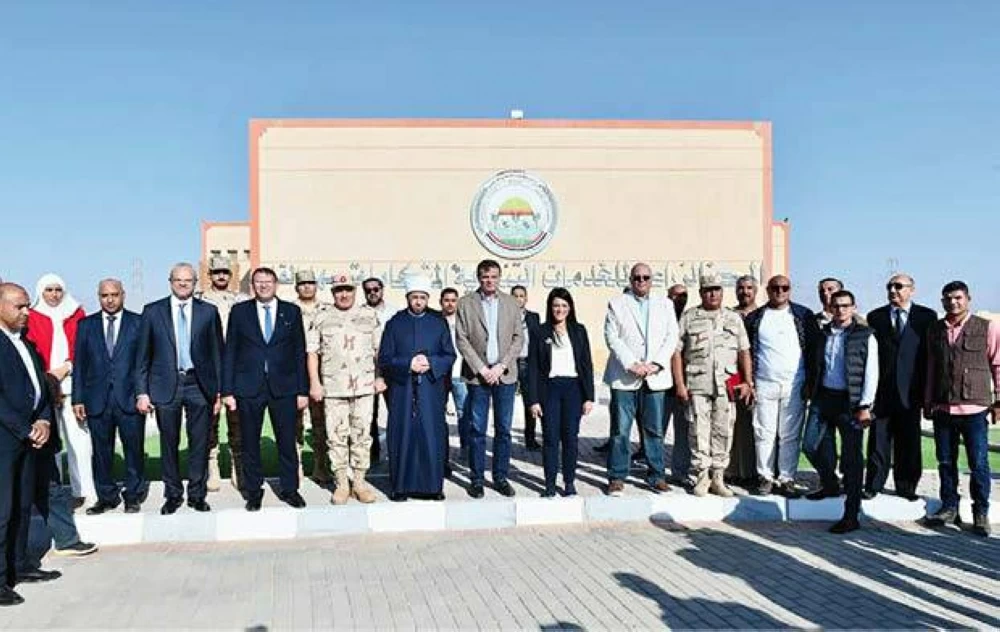

In a strategic move that transcends traditional corporate social responsibility, QNB Egypt has launched an ambitious development initiative in South Sinai’s El-Qa’a Plain, placing rural women at the center of an integrated model that merges financial inclusion with agricultural empowerment. The initiative—implemented in partnership with the Desert Research Center—marks a significant transformation in how financial institutions contribute to national development, shifting from philanthropy to long-term, community-driven impact.
The program was announced in the presence of senior government officials, including the Ministers of Planning, Agriculture, and Endowments, underscoring a powerful synergy between governmental planning, technical expertise, and private-sector financing.

A Women-Led Vision for Sustainable Growth
QNB Egypt emphasized that supporting rural women is not an auxiliary element of the initiative—it is one of its core pillars. The bank’s strategy prioritizes empowering women in the El-Qa’a development community by providing access to small and micro agricultural projects, training, and financing tools that enable them to transition from subsistence roles to active participation in sustainable production.
By equipping women with skills, resources, and direct engagement in economic activity, the initiative reinforces their position as agents of stability within the household and as contributors to broader food-security objectives.
Bridging the Gender Gap in Financial Inclusion
For many rural women in Sinai, access to formal banking services has long been limited. QNB Egypt’s model intentionally addresses this gap by integrating women into the formal financial system, expanding their access to credit, savings tools, and project-based financing. This shift not only strengthens local economies but also aligns with Egypt’s financial inclusion strategy, which seeks to empower marginalized groups—especially women—to participate more actively in the national economy.
By enabling women to manage their own agricultural projects, the initiative helps create stable income streams, enhances household resilience, and cultivates long-term economic independence.
Science Meets Finance: Ensuring Sustainability and Success
The collaboration with the Desert Research Center brings scientific rigor to every project offered to women and farmers. The Center ensures that each initiative is technically suited to the environmental conditions of the region, providing beneficiaries with agricultural training, guidance on crop selection, and the technical foundations needed to ensure project success.
This evidence-based approach significantly reduces risk and increases sustainability—allowing rural women to build livelihood projects grounded in scientific expertise rather than trial and error.
Geographic Equity With a Gender Focus
The decision to launch the initiative in the El-Qa’a Plain reflects a commitment to “geographic equity,” ensuring that remote communities—especially women—receive targeted development opportunities. By turning isolated regions like South Sinai into hubs of sustainable agricultural activity, QNB Egypt supports the government’s broader vision of integrating Sinai into the national economic fabric.
The participation of rural women is central to this mission. Their involvement strengthens community cohesion, boosts agricultural productivity, and ensures that development is inclusive rather than limited to male-headed households.
A Practical Approach to Sustainable Empowerment
In remarks during the launch, QNB Egypt CEO, Mohamed Bedeir, underscored the bank’s sustainability strategy and measurable impact. “Our vision is to move sustainability from slogans to real fields, from centralization to the peripheries,” he said. “Women in rural communities are key partners in building Egypt’s future, and supporting them is not an option—it is a necessity.”
Through this initiative, QNB Egypt positions itself as a catalyst for women-centered development, presenting a replicable model for how financial institutions can drive sustainable, gender-focused transformation in regions of strategic national importance.