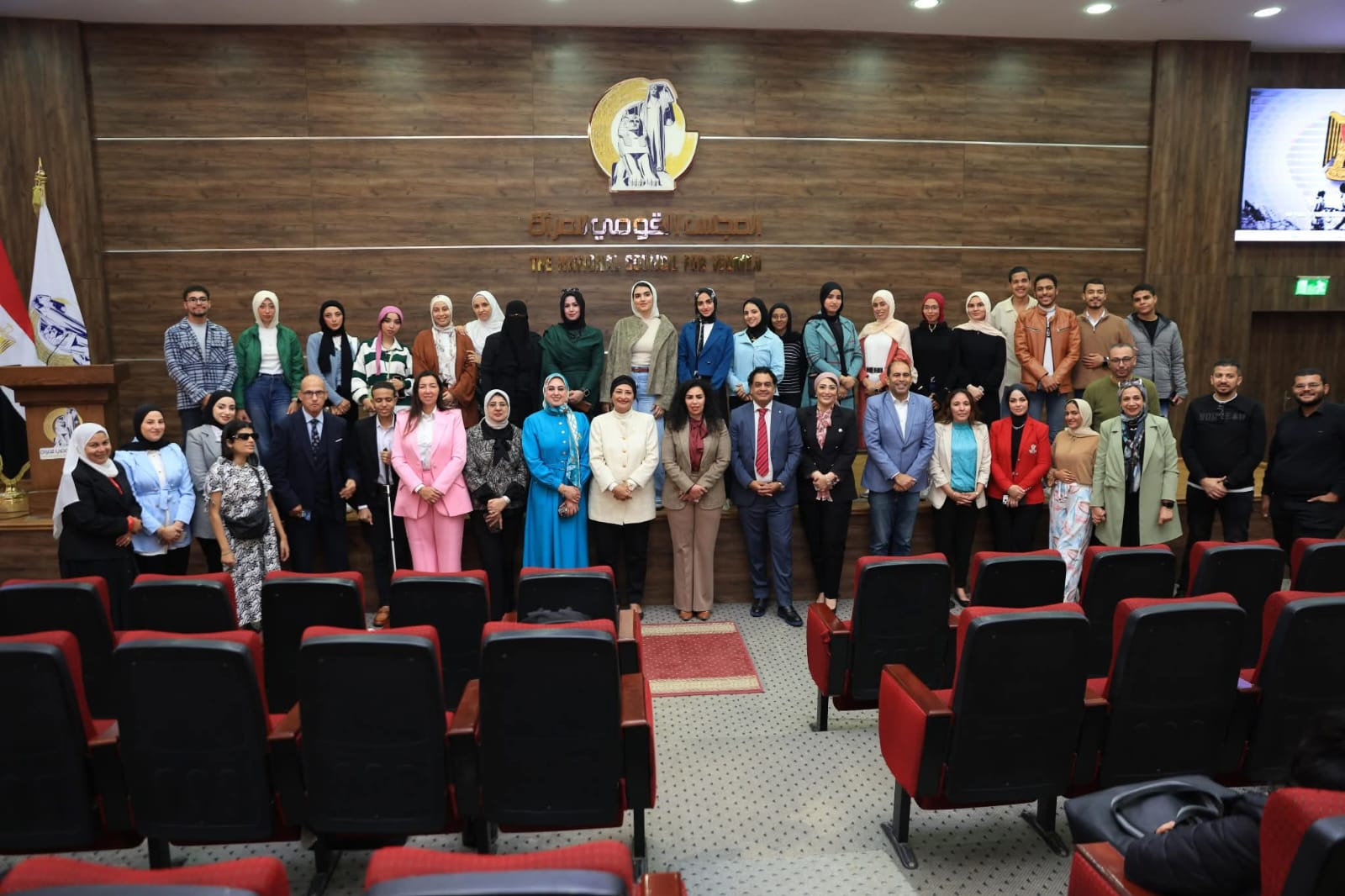

As part of Egypt’s participation in the international 16 Days of Activism Against Gender-Based Violence, the National Council for Women (NCW) organized an extensive awareness seminar titled “Together Against Cyber Violence”, led by the NCW’s Political Participation Committee.
The seminar was inaugurated by Counselor Amal Ammar, President of the NCW, in the presence of Dr. Nesreen El-Baghdadi, Vice President of the Council; Dr. Rasha Mahdy, NCW Member and Rapporteur of the Political Participation Committee; Counselor Dina El-Gendy, Deputy Rapporteur; Mona Salem, National Coordinator of the Anti-Violence Unit; Dr. Iman Ali, cybersecurity trainer and founder of She Shield Initiative; and Dr. Iman Momtaz, mental health consultant and head of the Mental Health Committee at the Egypt Women Research & Innovation Forum in the maritime sector.

Cyber Violence: Growing Threat
In her opening remarks, Counselor Amal Ammar underscored the severity of cyber violence, describing digital spaces as “new arenas for abuse, harassment, and intimidation—particularly against women and girls.”
Ammar warned that online violence—ranging from identity distortion and character defamation to privacy breaches and digital stalking—creates deep psychological scars, often leading to persistent anxiety, fear of society, declining self-confidence, and withdrawal from public life.
She emphasized that “electronic violence isolates victims, limits their participation in public and private spheres, and may even force them out of education, employment, or digital engagement.”
On the economic level, Ammar highlighted that cyber extortion and digital harassment can cost women job opportunities and impose legal or psychological expenses, placing additional burdens on victims and families.
Expanding Cyber Protection
Ammar praised Egypt’s “clear political will” under its current leadership to safeguard women from all forms of violence—including online abuse. She noted the country’s strengthened legislative framework, which now criminalizes various forms of cyber harassment, extortion, and privacy violations, alongside easier reporting mechanisms and enhanced victim protection.
She affirmed that combating cyber violence “is not the responsibility of one institution but a collective mission requiring cooperation between families, schools, universities, media, lawmakers, and digital platforms.”
Mental Health, AI Transformation, and Expanding Digital Risks
Dr. Nesreen El-Baghdadi highlighted the importance of the newly released book “The Digital Doppelgänger” by Ashraf Mofeed, praising its relevance to AI and digital identity. She stressed the need for adaptable legislation that keeps pace with technological change, cautioning that women remain disproportionately vulnerable to online risks.
Dr. Rasha Mahdy underscored the severity of cyber extortion, noting that what begins as a simple message or photo can escalate into life-altering harm. She called for stronger psychological, legal, and digital education for families.
NCW’s Expanding Network of Support Units Across Egypt
During the seminar, Mona Salem reviewed the achievements of NCW’s anti-violence units, including:
- 49 university-based anti-violence units across 23 governorates
- Women Safe Spaces launched with UNFPA for medical and psychological support
- Economic empowerment programs for survivors, active in 8 governorates
- Ongoing campaigns against female genital mutilation in partnership with the National Council for Childhood and Motherhood
Digital Safety: Tools, Behaviors, and Psychological Protection
Cybersecurity expert Dr. Iman Ali presented key digital safety techniques for women, urging widespread use of secure passwords, facial-recognition login tools, and proactive protection against extortion risks.
Mental health consultant Dr. Iman Momtaz warned that unsafe digital behavior can lead to severe psychological trauma, including suicidal ideation. She urged families to monitor behavioral changes in children and teens who may be silently enduring online abuse.
On the other hand, Counselor Dina El-Gendy reviewed regional legal frameworks, noting Egypt’s strengthened penalties for digital harassment and cyber extortion.
The event aimed to spotlight the growing risks of cyber violence and its profound impact on women and girls, while promoting safer, more responsible digital engagement.