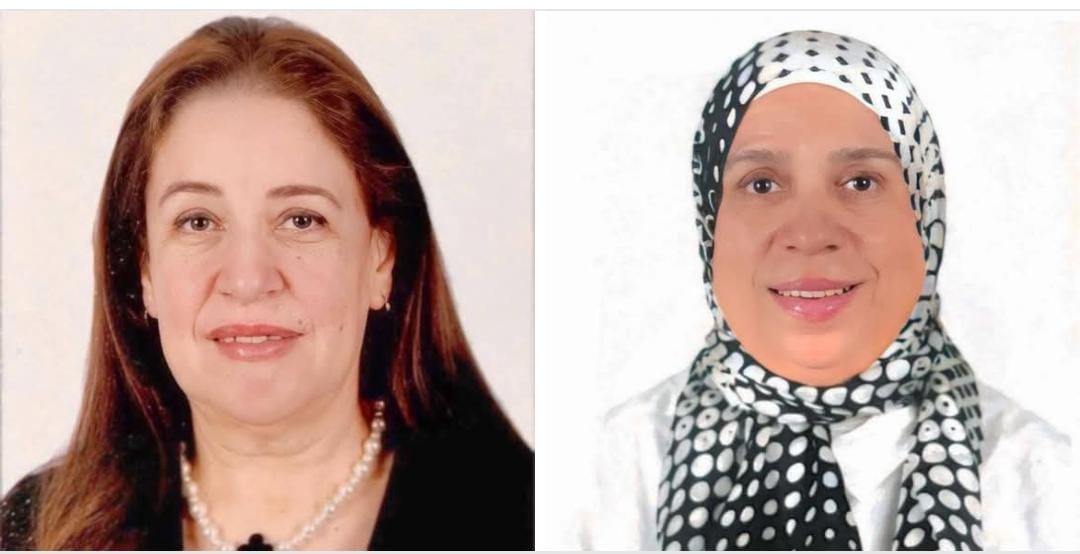

For the first time in Egypt’s judiciary, two senior female judges have been appointed to prominent leadership roles within the Public Prosecution Office — marking a first in the nation’s legal history.
Judge Dalia El-Namaki assumes the position of Chief of Appeals and Acting First Attorney General for the Supreme Family Prosecution Office, while Judge Asmaa Abdel Dayem now serves as Chief of Appeals and Director of International Cooperation at the Public Prosecutor’s Office. These high-ranking appointments reflect a growing national commitment to empowering women within Egypt’s legal and judicial frameworks.

The milestone represents tangible outcome of Egypt’s National Strategy for the Empowerment of Egyptian Women 2030, a comprehensive initiative launched in 2017 under the leadership of President Abdel Fattah El-Sisi. The strategy aims to elevate women’s participation across public life, particularly in sectors historically dominated by men.
A New Era of Inclusion in the Judiciary
Counselor Amal Ammar, National Council For Women Chairperson, praised the appointments, as a catalyst for institutional reform and gender equity in Egypt’s justice system.
She also expressed gratitude to Judge Assem Gayesh, President of the Supreme Judicial Council, for his consistent support for women’s advancement in the judiciary. Additionally, she acknowledged Prosecutor General Mohamed Shawky for his ongoing confidence in female judicial talent and commitment to promoting merit-based appointments.
Trailblazers in a Male-Dominated Field
These appointments are not only symbolic but operationally significant, as both judges will now oversee critical departments that influence both domestic legal affairs and Egypt’s judicial coordination on an international scale.
The roles held by El-Namaki and Abdel Dayem are among the highest prosecutorial ranks within the Public Prosecutor’s Office, placing them at the helm of key legal, administrative, and international decision-making processes.
Their rise also aligns with Egypt’s broader vision of increasing female representation in leadership positions across sectors, from politics and public administration to security and justice.
Accordingly, their appointments has been an encouraging sign that the barriers limiting women’s access to leadership roles in the judiciary are gradually being dismantled.