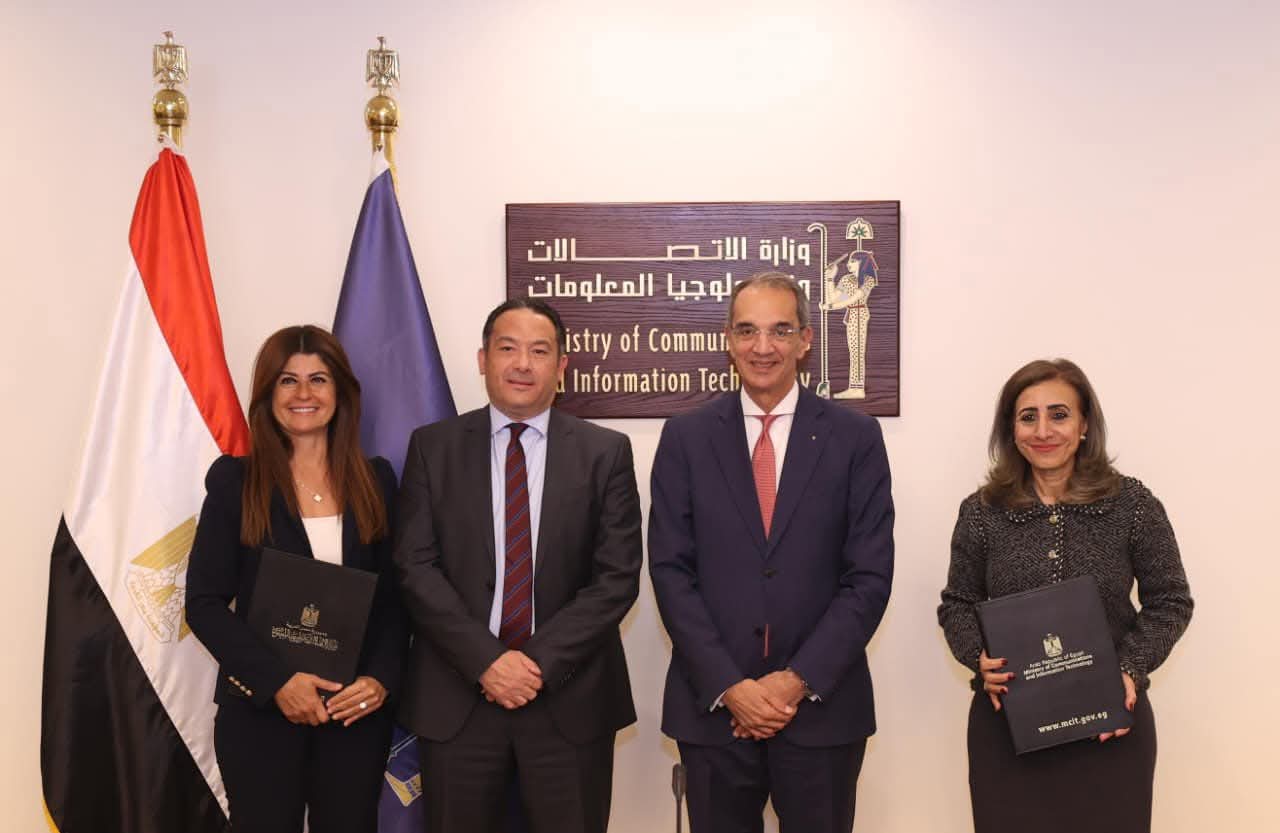

Egypt’s Minister of Communications and Information Technology, Amr Talaat, on Tuesday witnessed the signing of a Memorandum of Understanding (MoU) between the Ministry of Communications and Information Technology (MCIT) and Orange Egypt for expanding telemedicine services and delivering high-quality digital healthcare to rural, remote, and underserved communities. The agreement aims to scale up the use of telemedicine across villages and deprived areas through partnerships with civil society organizations and specialized medical convoys operating in multiple governorates.
The MoU was signed by Hoda Dahroug, Advisor to the ICT Minister for Digital Community Development and Director of the Digital Transformation for Sustainable Development in Egypt (DT4SDE) project, and Maha Nagy, Chief Marketing Communications Officer at Orange Egypt. The ceremony was attended by Mohamed Shamroukh, Executive President of the National Telecom Regulatory Authority (NTRA); Hesham Mahran, CEO of Orange Egypt; and Samer Saeed, Head of the Central Administration for Financial and Administrative Affairs at MCIT.

Advancing Digital Healthcare Access
The agreement falls under the DT4SDE project, implemented by MCIT in cooperation with the United Nations Development Programme (UNDP). It focuses on promoting equitable and sustainable access to advanced digital healthcare services in remote and underserved regions by expanding scalable, digitally automated telemedicine solutions.
In his remarks, Minister Talaat said the MoU reinforces MCIT’s ongoing efforts to leverage information technology to strengthen Egypt’s healthcare system and improve citizens’ access to quality medical services, particularly in areas with limited healthcare infrastructure.
He noted that approximately 317 telemedicine units have already been deployed nationwide, connecting central and university hospitals with healthcare units in remote locations. These units currently support medical consultations across more than 100 medical specialties, helping to improve diagnostic accuracy while reducing travel time and costs for patients.
“Telemedicine technologies are a key enabler for improving the quality and efficiency of healthcare services,” Talaat said, adding that the partnership with Orange Egypt reflects a collaborative model involving government, the private sector, and civil society in line with the Digital Egypt strategy.
Public-Private Partnership Model
Orange Egypt CEO Hesham Mahran said the agreement supports the state’s efforts to advance digital transformation and enhance healthcare services, particularly in villages and remote areas. The project, he explained, seeks to establish an integrated digital health system linking healthcare units with university and central hospitals, while also equipping medical staff with training and smart digital solutions.
“This cooperation represents a successful public-private partnership model,” Mahran said, reaffirming Orange Egypt’s commitment to using technology to improve quality of life and build a more efficient healthcare system.
Mobile Telemedicine Units and Community Outreach
Under the implementation framework, mobile telemedicine units will be deployed within medical convoys operated by civil society organizations. These units will provide medical examinations, initial screenings, treatment services, and health awareness campaigns, particularly targeting priority and vulnerable groups.
The mechanism will also enhance medical consultations, facilitate the exchange of expertise, and strengthen connectivity between specialized healthcare facilities using telemedicine technologies. This approach is expected to enable faster referrals of critical cases, improve diagnostic accuracy, and reduce pressure on hospitals.
Funding, Duration, and Sustainability
The MoU spans two years, during which MCIT will oversee the preparation of digital medical units, technical and operational monitoring, awareness activities, and capacity-building programs in cooperation with civil society partners. Orange Egypt, through its corporate social responsibility (CSR) programs, will provide full funding for the project, including equipment, training, and awareness initiatives, in line with transparency and governance standards.
The project builds on the achievements of Egypt’s presidential telemedicine initiative, implemented in partnership with MCIT and the Ministries of Health and Population and Higher Education and Scientific Research. Since its launch, the initiative has benefited around 300,000 citizens over three years.
Supporting Sustainable Development Goals
The partnership underscores Orange Egypt’s role in supporting sustainable development initiatives and reflects a broader model of integration between government, the private sector, and civil society. It contributes to Egypt’s national digital transformation agenda and advances UN’s SDG 3: Good Health and Well-Being.
By reducing travel burdens, healthcare costs, and waiting times, the initiative aims to establish a comprehensive, inclusive, and sustainable digital health system that ensures equitable access to quality healthcare for all Egyptians.