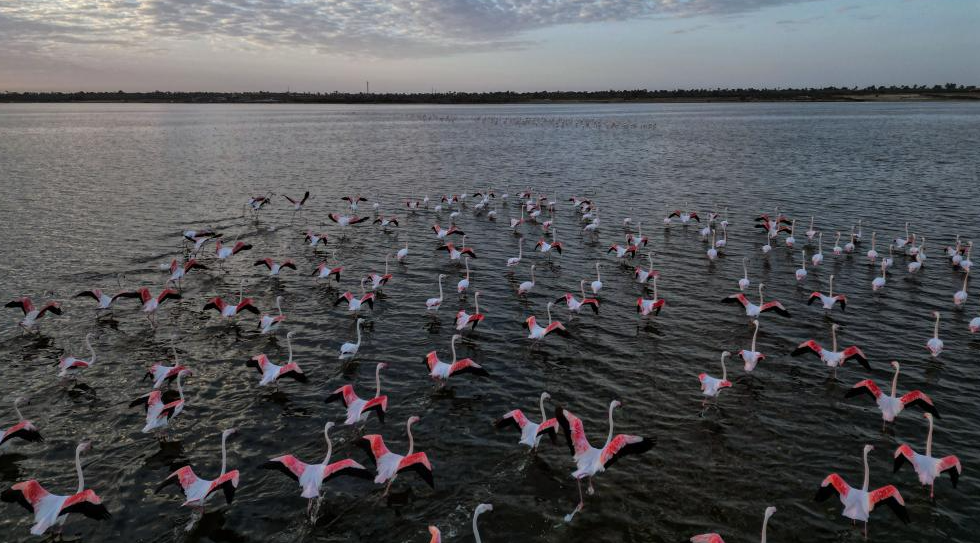

The return of flamingos to Lake Qarun marks a significant milestone in Egypt’s environmental recovery efforts, reflecting the success of a comprehensive state-led strategy to restore threatened ecosystems.
Officials say the development is the result of a coordinated package of engineering and environmental interventions that have helped improve water quality, upgrade wastewater treatment systems, and reduce the impact of untreated agricultural and industrial discharge into the lake. These measures have played a central role in rebuilding the lake’s food chain and restoring its ecological balance after years of environmental degradation.

Lake Qarun, one of Egypt’s oldest natural lakes, had long suffered from rising pollution levels and declining biodiversity, leading to the disappearance of several bird and fish species. The reappearance of flamingos — a key indicator species — is widely viewed by environmental experts as evidence of tangible improvement in the lake’s biological health.
The lake’s renewed ability to attract flamingos also reinforces its status as one of the world’s important stopover sites for migratory birds, positioning it once again on the global ecological map. Migratory birds are highly sensitive to environmental change, and their presence signals the availability of suitable habitats and food sources.
Government officials have described the progress at Lake Qarun as an example of how integrated environmental planning can deliver measurable results, combining infrastructure development with ecological restoration. They say ongoing monitoring and continued investment will be essential to ensure the sustainability of the recovery and to protect the lake from future environmental threats.
The return of flamingos, officials added, is not only an environmental success but also a reminder of the economic and social value of preserving natural resources, particularly in regions that rely on eco-tourism and biodiversity for long-term development.