
Egypt is doubling down on efforts to reform its tax and customs systems, strengthen public-private partnerships, and enhance the competitiveness of its exports across African and global markets, officials said Monday.
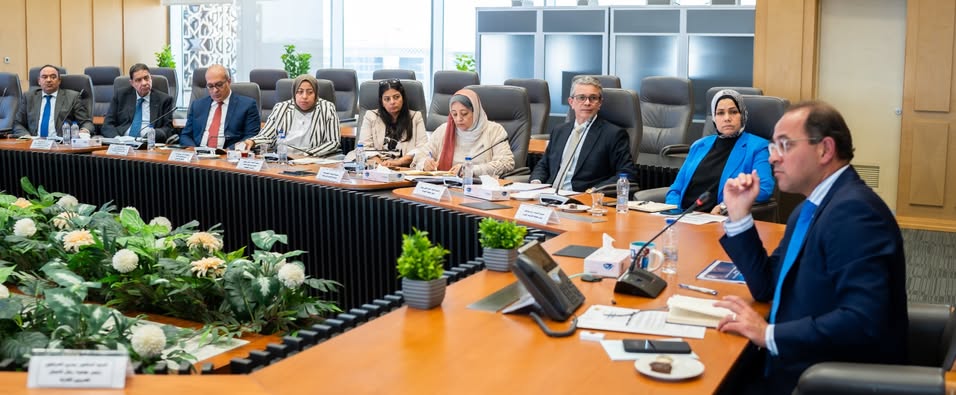
Finance Minister Ahmed Kouchouk affirmed the government’s unwavering commitment to empowering the private sector and expanding its footprint across African markets. Speaking during a high-level meeting with Yousrey El Sharkawy, Chairman of the Egyptian African Businessmen Association (EABA), Kouchouk emphasized the need for robust cooperation between government institutions and business leaders to unlock regional trade potential.

Speaking during a high-level meeting Abdel Aal underscored ETA’s central role in fostering economic stability and private sector confidence through comprehensive reforms.
Rasha Abdel Aal, Head of the Egyptian Tax Authority (ETA), reaffirmed the government’s determination to reduce tax disputes and create a business-friendly environment rooted in transparency, flexibility, and partnership.
“We are fully committed to modernizing tax services with a foundation of trust and cooperation,” Abdel Aal said. “Minimizing disputes and ensuring clear, fair practices are not just administrative goals—they are economic imperatives that directly impact business growth and national development.”
With Egypt pursuing an ambitious economic transformation under Vision 2030, Abdel Aal’s leadership marks a clear shift toward responsive tax governance. She emphasized that ETA is working in close collaboration with the business community to identify real-world challenges and develop practical, implementable solutions that streamline compliance and encourage voluntary participation.
This approach reflects broader policy alignment with the Ministry of Finance, as Minister Kouchouk reaffirmed during the meeting. He praised Abdel Aal’s reform agenda and reiterated the government’s intent to empower the private sector, strengthen exports, and deepen trade ties with African markets.
Kouchouk also highlighted ETA’s upcoming reform initiatives designed to simplify processes and reduce compliance burdens, echoing Abdel Aal’s goals of consistency, accessibility, and accountability.
The meeting also addressed complementary reforms underway at the Customs Authority, where Ahmed Amawi, its head, outlined plans to further automate procedures, lower clearance times, and cut costs for exporters and manufacturers. These include:
-
A risk-based clearance system for low-risk shipments
-
Digital classification and valuation tools for faster processing
-
Simplified documentation to improve transparency and investor confidence
Besides, Kouchouk underscored Egypt’s readiness to share its successful reform experiences with African partners and highlighted the critical role of public-private collaboration in driving sustainable development across the continent. He pointed to a series of upcoming reforms within the Egyptian Tax Authority (ETA) and Customs Authority, aimed at streamlining operations and improving compliance.
He also added that key infrastructure upgrades are underway at customs posts, designed to reduce clearance times, cut costs, and simplify trade flows. These efforts are being carried out in coordination with the Ministry of Investment, with the goal of strengthening Egypt’s role as a strategic export hub.
Meanwhile, Rasha Abdel Aal reiterated the agency’s mission to deliver more reliable and transparent tax services built on trust, collaboration, and responsiveness. She stressed that reducing tax disputes is not only a technical goal, but a central pillar in promoting business growth and investment.
She added that ETA is continuously reviewing its internal mechanisms to improve the taxpayer experience, reduce administrative burdens, and ensure a more predictable investment climate.
Supporting these efforts, Ahmed Amawi, Head of the Egyptian Customs Authority, detailed several measures currently being deployed to modernize and accelerate customs procedures. These include:
- A risk management system to expedite the clearance of low-risk shipments
- Automated classification and valuation tools to ensure accurate and swift processing
- Simplified procedures and digital platforms to cut red tape and enhance transparency
The meeting convened several high-profile members of the Egyptian-African Businessmen Association, each representing a strategic sector vital to Egypt’s regional economic engagement, including international trade, industry, construction, logistics, energy, IT, and green hydrogen.
This high-level dialogue forms part of Egypt’s broader economic modernization drive to create a more dynamic, transparent, and investment-friendly business climate. The combined reform efforts in taxation, customs, and trade facilitation underscore the country’s strategic shift toward an export-led growth model rooted in innovation, regional cooperation, and private sector engagement.