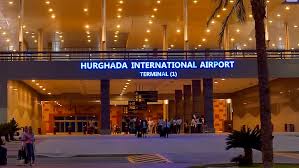

Egypt’s President, Abdel Fattah El-Sisi, has ordered an intensified push to upgrade Egypt’s civil aviation infrastructure, directing key ministries to accelerate airport development projects and move forward with a public-private partnership (PPP) framework for Hurghada International Airport by the end of 2025.
The directive comes as part of Egypt’s broader strategy to position itself as a competitive regional aviation hub, attract foreign investment, and support national tourism goals—chiefly, boosting annual tourist arrivals to 30 million.

At a high-level meeting with Minister of Civil Aviation Sameh El-Hefny and EgyptAir In-Flight Services Chairperson Soheir Abdullah, President El-Sisi reviewed detailed plans to modernize Egypt’s aviation landscape, aligning it with Vision 2030—a national roadmap for sustainable economic development and global integration.
PPPs at the Center of Aviation Reform
A central element of the president’s directive is the move to offer Hurghada International Airport, one of Egypt’s busiest tourist gateways, to private operators through a PPP model. The proposed partnership will be structured in coordination with the International Finance Corporation (IFC), following an agreement signed in March 2025. The effort reflects a growing reliance on private-sector expertise and capital to improve service quality, operational efficiency, and infrastructure capacity while maintaining public ownership of strategic assets.
“This strategy is a leap forward for Egypt’s civil aviation sector,” said El-Hefny. “Our partnership with the IFC will help ensure transparency, global standards, and investor confidence as we transform Egypt’s airports into regional benchmarks.”
The Hurghada PPP will serve as a blueprint for the broader initiative to integrate private-sector operators into the management and development of 11 key airports across the country.
“New Republic Air Gateway” Project
The meeting also highlighted progress on Egypt’s ambitious “New Republic Air Gateway” project—a state-of-the-art terminal designed to handle over 30 million passengers annually. Built to comply with the latest international standards in safety, security, and sustainability, the project is set to more than double the airport’s capacity to over 60 million passengers, establishing it as one of Africa’s largest aviation hubs.
The air gateway project is intended to future-proof the nation’s aviation sector, with emphasis on smart systems, green technologies, and passenger-centered design.
Navigating a New Geopolitical Airspace
Egypt’s strategic airspace has become increasingly vital amid geopolitical turbulence in the region. With neighboring countries facing temporary airspace closures, Egypt has experienced a sharp rise in overflight traffic—surpassing 1,600 daily flights. The surge has placed increased demands on Egypt’s air traffic control systems, which have drawn international praise for their resilience and efficiency under pressure.
Officials emphasized the need to further modernize Egypt’s air navigation infrastructure, ensuring it remains capable of handling regional disruptions while offering airlines safe, dependable routing.
EgyptAir Modernization and Tourism Goals
The meeting also addressed EgyptAir’s ongoing fleet renewal, targeting a total of 97 aircraft by fiscal year 2028/29. The initiative is designed to strengthen EgyptAir’s competitiveness, reduce emissions, and enhance passenger experience as global tourism rebounds.
These civil aviation initiatives are vital to Egypt’s broader development agenda, particularly in tourism, where aviation serves as a primary enabler. With infrastructure upgrades, fleet expansion, and PPPs paving the way, Cairo is aiming to transform its airports into globally recognized hubs of connectivity and commercial opportunity.
Investment Climate and Vision 2030
Egypt’s aviation reform program also signals a broader shift toward creating an investment-friendly environment—with PPPs as a key vehicle for sustainable growth. By inviting private-sector participation under clearly defined frameworks, Egypt seeks to attract both regional and international investors while safeguarding public control over core assets.
The push to modernize airports, enhance capacity, and embed international standards reflects Cairo’s commitment to transforming the aviation sector into a pillar of long-term economic development and global integration.
As the countdown to Hurghada’s PPP offering begins, Egypt is positioning itself not only as a crossroads between continents but as a leader in aviation reform across the Global South