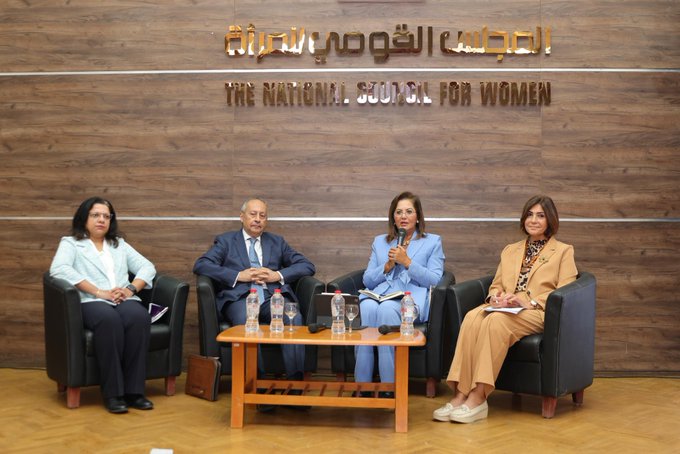

Egypt’s commitment to advancing gender equality and women’s empowerment has reached a critical milestone with the formal launch of the Egyptian Women’s Observatory, a pioneering data-driven platform launched under the leadership of Dr. Hala Elsaid, Economic Advisor to the President of the Republic .
The Observatory was introduced during a high-level conference chaired by Dr. Elsaid and organized by the Baseera Center, in collaboration with the National Council for Women (NCW) and the World Bank. The initiative marks a significant leap in Egypt’s decade-long journey to integrate gender equity into its national development agenda.

“Over the past decade, Egypt has fundamentally transformed its approach to women’s empowerment,” said Dr. Elsaid. “Political will translated into constitutional rights, progressive legislation, and comprehensive strategies across both public and private sectors.”
A Cornerstone of Egypt Vision 2030
The launch aligns with Egypt Vision 2030, the country’s sustainable development framework, which recognizes women’s economic participation as a core driver of national growth and resilience.
According to Dr. Elsaid, the platform systematically monitors a wide range of gender-related indicators — including education, employment, entrepreneurship, health, and political representation — across all 27 Egyptian governorates. The localized, real-time data allows policymakers to identify structural gaps and target interventions more effectively.
Evidence-Based Policymaking in Action
Unlike traditional gender equity initiatives that often rely on anecdotal evidence or outdated data, the Egyptian Women’s Observatory offers a centralized, independent infrastructure for continuous monitoring and analysis. This empowers institutions to develop responsive, measurable solutions grounded in the lived realities of women throughout Egypt.
“The economic case is clear: gender equality drives growth, strengthens institutions, and enhances social cohesion,” Dr. Elsaid emphasized. “When our institutions reflect society’s full diversity, policies better address the distinct realities of all its people.”
Collaboration with Global and Local Partners
The initiative reflects a multi-stakeholder approach, involving not only national entities but also global development partners such as the World Bank. Within Egypt, key contributors to the Observatory’s development include NCW President Dr. Maya Morsy, alongside leadership figures Amal Ammar and Nesreen Al-Baghdadi, who have been instrumental in integrating gender metrics into national policy frameworks.
The data generated by the Observatory is expected to influence legislation, funding decisions, and programmatic focus areas across sectors — from education and healthcare to business and governance.
Next Steps: Sustaining Momentum
While celebrating this strategic advancement, Dr. Elsaid also acknowledged the road ahead. Achieving true gender equity requires continuous adaptation, cross-sector collaboration, and sustained political commitment.
“Gender inequalities require structural responses across multiple policy domains,” she said. “The Observatory equips decision-makers with the comprehensive data necessary to design and implement these cross-cutting solutions.”