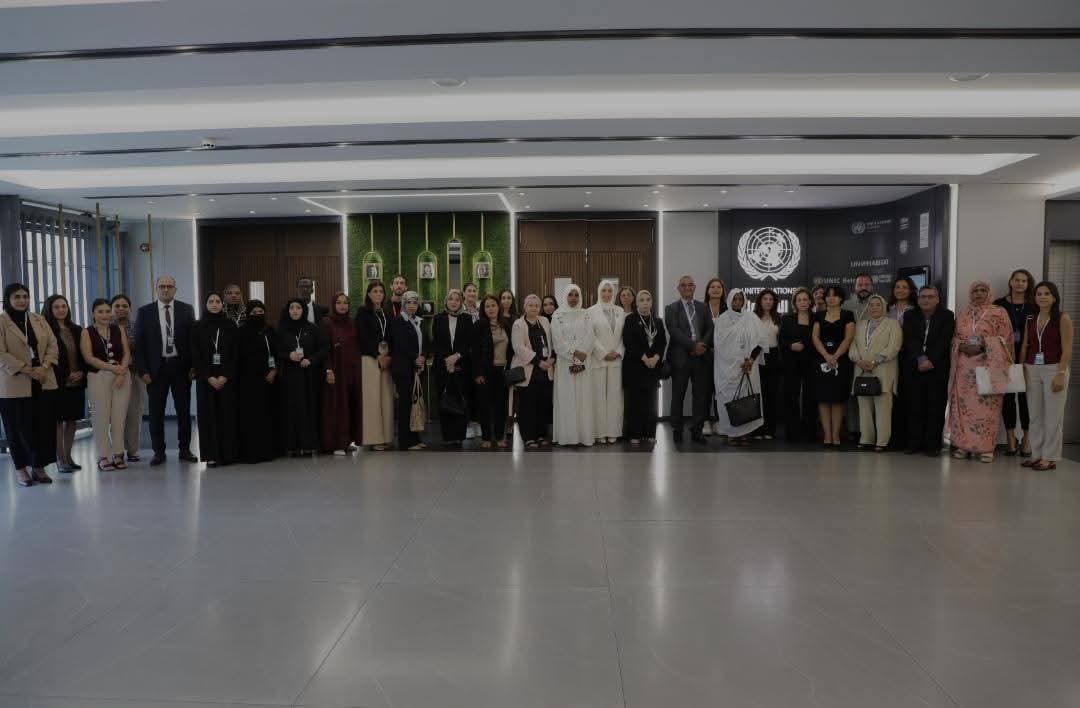

The National Council for Women (NCW) of Egypt took center stage at the regional meeting on women’s economic empowerment, hosted by the United Nations Economic and Social Commission for Western Asia (ESCWA) in Beirut, in partnership with the League of Arab States and UN Women.
The high-level event convened policymakers, gender experts, and development partners to explore challenges and opportunities surrounding women’s access to economic resources in the Arab region. Key topics included financial inclusion, recognition of unpaid care work, and the use of gender-responsive tools to measure progress.

Egypt’s “Tahweesha” : Step Towards Inclusive Innovation
During the sessions, Egypt was praised for its innovative and scalable approach to advancing women’s financial inclusion. Ms. Nashwa Mostafa, Acting National Director of the Financial Inclusion Program at the NCW, presented Egypt’s flagship initiative: “Tahweesha Masr”, a digital savings and lending group project targeting underserved women.
The program, which builds on the principles of group-based microfinance, enables women to pool savings and access small loans via secure digital platforms. In doing so, it empowers them to respond to emergencies, launch income-generating projects, and reduce their dependence on informal financial systems.
Tangible Results Fostering Collaboration Culture
Ms. Mostafa’s presentation highlighted measurable outcomes of the project, citing data that reflects improved financial stability, increased savings rates, and successful entrepreneurship stories among participating women. In addition to economic gains, the program fosters a culture of collaboration, social solidarity, and peer support — particularly crucial during times of crisis.
Key achievements shared included:
- Widespread integration into Egypt’s formal banking system
- Increased digital and financial literacy among women in rural and urban communities
- Support for women-owned micro-enterprises
- Transformation of unpaid care responsibilities into economic opportunities
The project’s impact was particularly evident during periods of social and economic instability, where flexible lending mechanisms helped participating women overcome urgent needs while maintaining long-term financial goals.
A Model for the Arab Region
The Egyptian model resonated strongly with participants from across the Arab world. Many commended the “Tahweesha Masr” initiative as a leading example of how grassroots financial inclusion strategies can be scaled nationally and regionally.
The event concluded with a shared commitment among Arab states to adopt and localize best practices such as Egypt’s model, as part of broader efforts to enhance women’s participation in the formal economy and accelerate gender equality across the region.