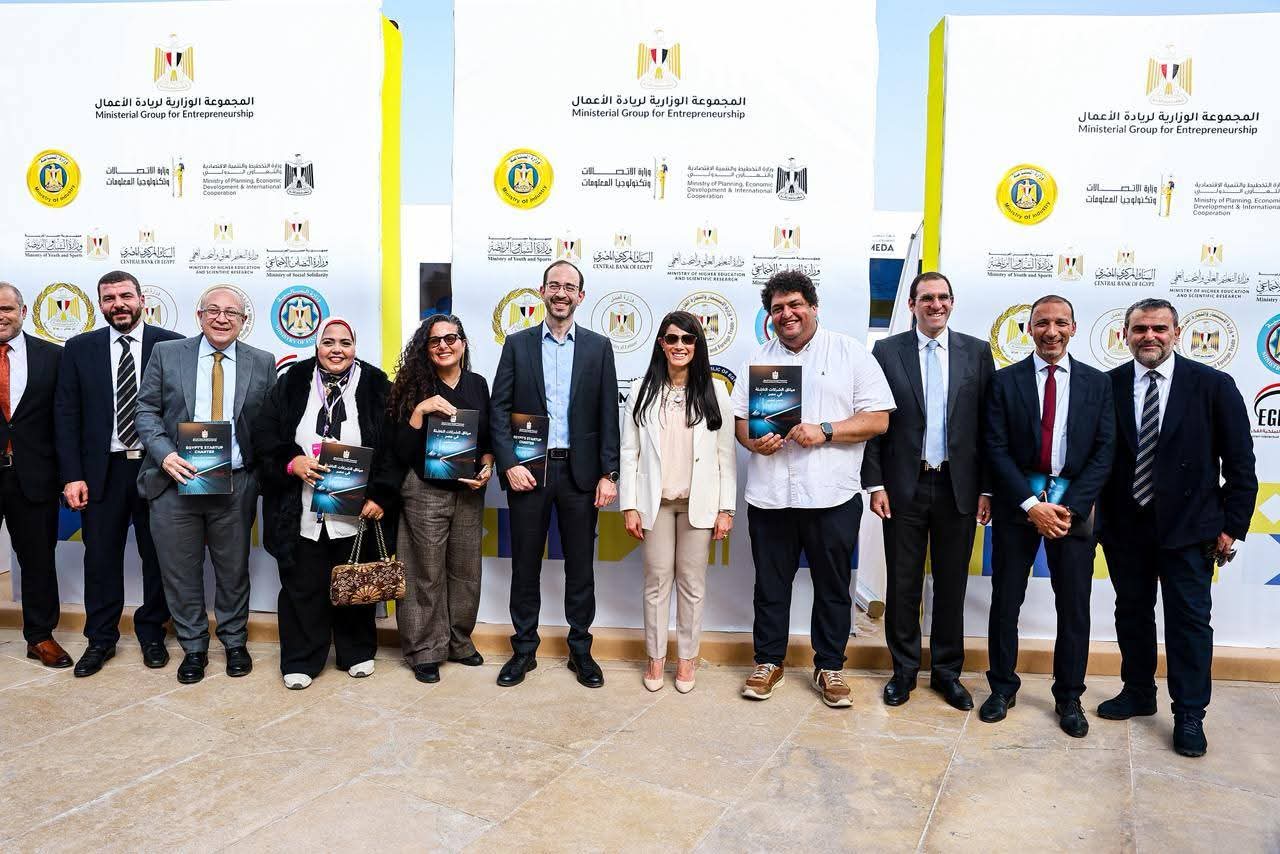

Egypt is moving forward with an ambitious reform agenda to strengthen its startup ecosystem through the Startup Charter, a wide-ranging framework that introduces continuous policies and procedures aimed at improving the business environment for startups across the country.
In an official statement, Dr. Rania Al-Mashat, Minister of Planning, Economic Development and International Cooperation, said the Startup Charter includes more than 80 policies and executive measures designed to close procedural gaps, enable startups to benefit from government incentives, and create sustainable financing and growth opportunities.

Unified Definitions and Targeted Incentives
A key pillar of the charter is the adoption of a unified definition for startups with environmental or social impact, enabling them to access tailored incentives and support mechanisms. This move is expected to provide clarity for impact-driven businesses and investors, while aligning Egypt’s policies with global sustainability and ESG standards.
The charter also introduces sector-specific reforms, including simplified import procedures for electronic components and advanced technological equipment used by startups operating in electronics, deep tech, and advanced manufacturing. A proposed “white list” system aims to significantly reduce time and administrative burden.
Industry Support and Regional Innovation Alliances
To support industrial startups, the government plans to provide financial incentives and technical assistance packages, allowing startups to scale more efficiently. These packages include access to shared equipment, operational support, and faster industrial services at lower cost.
The charter also emphasizes the creation of regional alliances that bring together universities, research centers, startups, investors, support organizations, and government entities. These alliances are intended to accelerate innovation transfer, commercialization of research, and ecosystem collaboration.
At the national level, Egypt is prioritizing innovation alliances in key technology sectors, including artificial intelligence and deep technologies, to strengthen competitiveness and local value creation.
Access to European Innovation Funding
As part of its international integration strategy, the Startup Charter enables Egyptian startups to access European innovation financing through the Horizon Europe program, opening new pathways for research collaboration, funding, and market expansion.
Government as an Enabler, Not a Competitor
The charter reinforces the role of the government as a supportive partner for startups. Public entities are encouraged to collaborate with Egyptian startups to deliver innovative digital solutions under the Egypt Digital Strategy. Measures are also being introduced to facilitate startups’ access to government tenders and integrate fintech startups into the development of public digital services.
Tax Reform and Fully Digital Government Interaction
Dr. Al-Mashat noted that the government is implementing a startup-friendly tax system that recognizes the unique nature of startup business models. This includes the creation of specialized tax units trained to deal with startups, reducing uncertainty and administrative complexity.
For startups with annual revenues below EGP 20 million, the charter proposes:
- Reduced income tax rates
- Exemptions from capital gains tax, stamp duty, and registration fees
- A five-year deferral of the first tax audit to ease early-stage pressure
In parallel, the government aims to introduce fully digital interactions between classified startups and government entities, covering taxes, labor offices, and social insurance through trained points of contact. A unified digital platform will allow entrepreneurs to complete company registration and regulatory procedures through a single electronic window.
Skills Development and Talent Retention
The Startup Charter places strong emphasis on human capital development and talent retention. Measures include financial support for technical training of startup employees, simplified visa procedures for foreign talent from more than 180 countries, and streamlined approvals for foreign workforce quotas.
Additional initiatives include:
- An executive education program for startup leadership teams
- A Soft Landing program to support regional and international expansion into and out of Egypt
- Incentives for large corporations to integrate startups into their supply chains
- Expanded participation of Egyptian startups in international exhibitions
Infrastructure and Startup Financing
To further support growth, the charter introduces financial and procedural incentives for incubators and accelerators, alongside plans to establish specialized service free zones for sectors such as technology, media, and financial services.
The framework also builds on the recent approval of crowdfunding mechanisms, and includes a dedicated allocation within the national investment plan to support entrepreneurs and improve the efficiency of public investment directed toward startups.
Together, these measures position the Startup Charter as one of Egypt’s most comprehensive efforts to date to foster innovation, attract investment, and enable startups to scale locally and globally within a transparent, supportive, and competitive business environment.