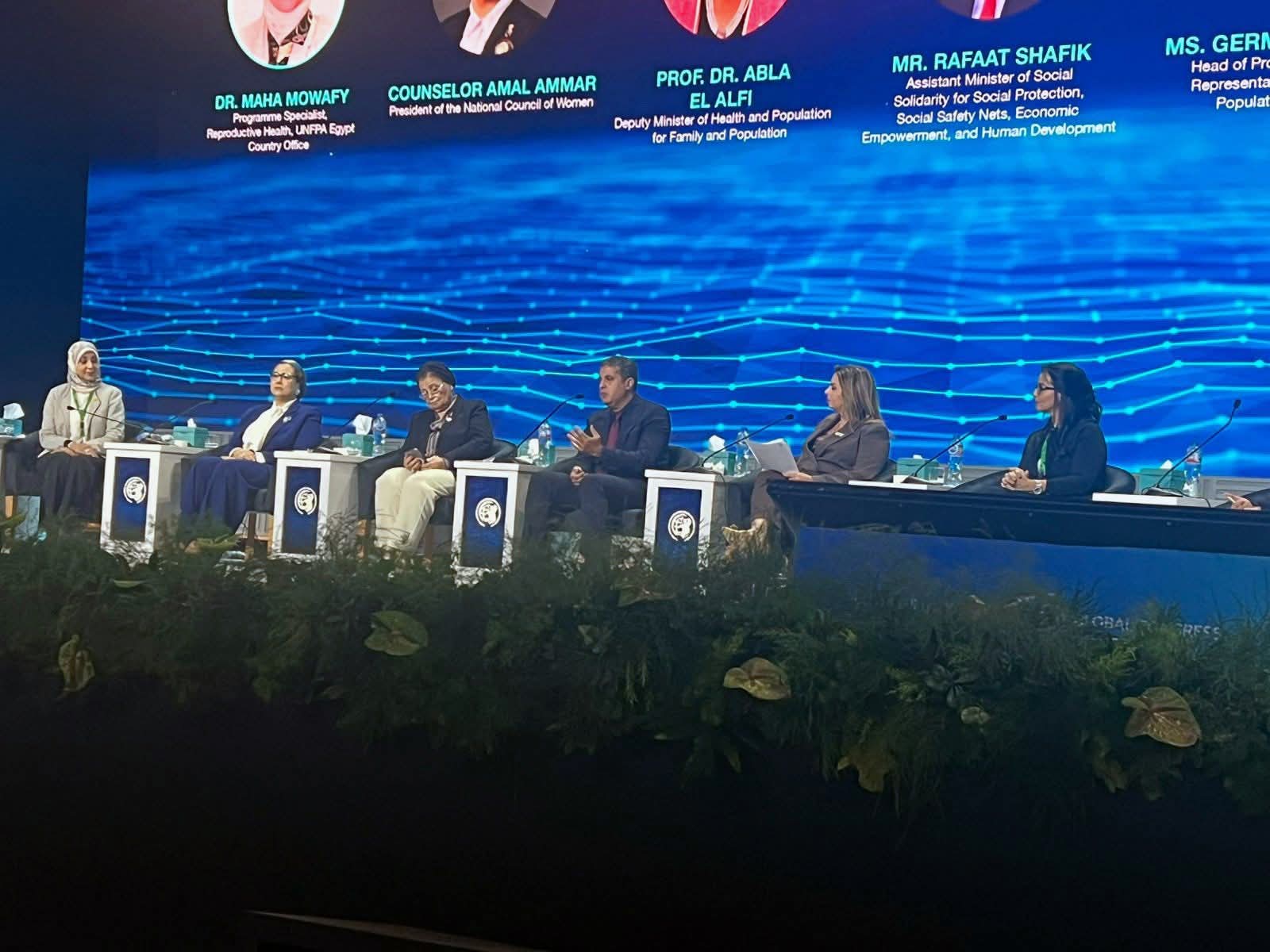

As part of the third edition of the Global Population, Health, and Human Development Conference (PHDC 2025), Egypt’s Ministry of Social Solidarity participated in a high-level session titled “Comprehensive Life-Cycle Approach to Empowering Egyptian Women in Social Protection, Health, and Employment.” The conference, held under the auspices of President Abdel Fattah El-Sisi in the New Administrative Capital, is themed “Empowering Individuals, Enhancing Progress, Enabling Opportunities.”
The session focused on strategies to strengthen women’s empowerment across all stages of life by integrating policies in health, education, employment, and social protection. Participants discussed approaches that enable women to make informed health, economic, and political decisions, while highlighting best practices at both national and international levels in reproductive health, maternal support, workforce participation, and leadership roles.

The discussion emphasized the importance of coordination between government bodies, private sector partners, and international organizations to develop inclusive social protection systems, expand economic participation opportunities, and create supportive environments for women and girls throughout their lives.
Representing the Ministry, Mr. Raafat Shafik, Assistant Minister of Social Solidarity for Social Protection, Safety Net Programs, Economic Empowerment, and Human Development, and Director of the “Takaful and Karama” Cash Transfer Program, highlighted the program’s success as a national model in Egypt and the region. He noted that linking cash transfers to health and education requirements has significantly improved school enrollment rates and healthcare follow-ups for vulnerable families.
Shafik emphasized the central role of women in the program, not only as primary beneficiaries but also as drivers of change within their families and communities. Through cash assistance and complementary initiatives—such as awareness campaigns, home visits, and positive parenting support—women have gained greater decision-making power, improved child welfare, and enhanced social participation. This integrated approach has created environments that empower women to enhance their quality of life while supporting long-term family development.
He further highlighted the Ministry’s ongoing efforts to build a comprehensive economic empowerment ecosystem for women, particularly the most vulnerable. Initiatives include financial inclusion, entrepreneurship development, access to productive assets, microfinance expansion, home-based and craft enterprises, and linkage to value chains and markets, complemented by training and capacity-building services to ensure project sustainability.
The Ministry also continues to develop partnerships with the private sector, banks, and international organizations to create equitable economic opportunities, advance digital financial services, and enable women to manage resources and make independent economic decisions. These efforts aim to boost women’s economic participation, financial independence, and meaningful contribution to sustainable development.