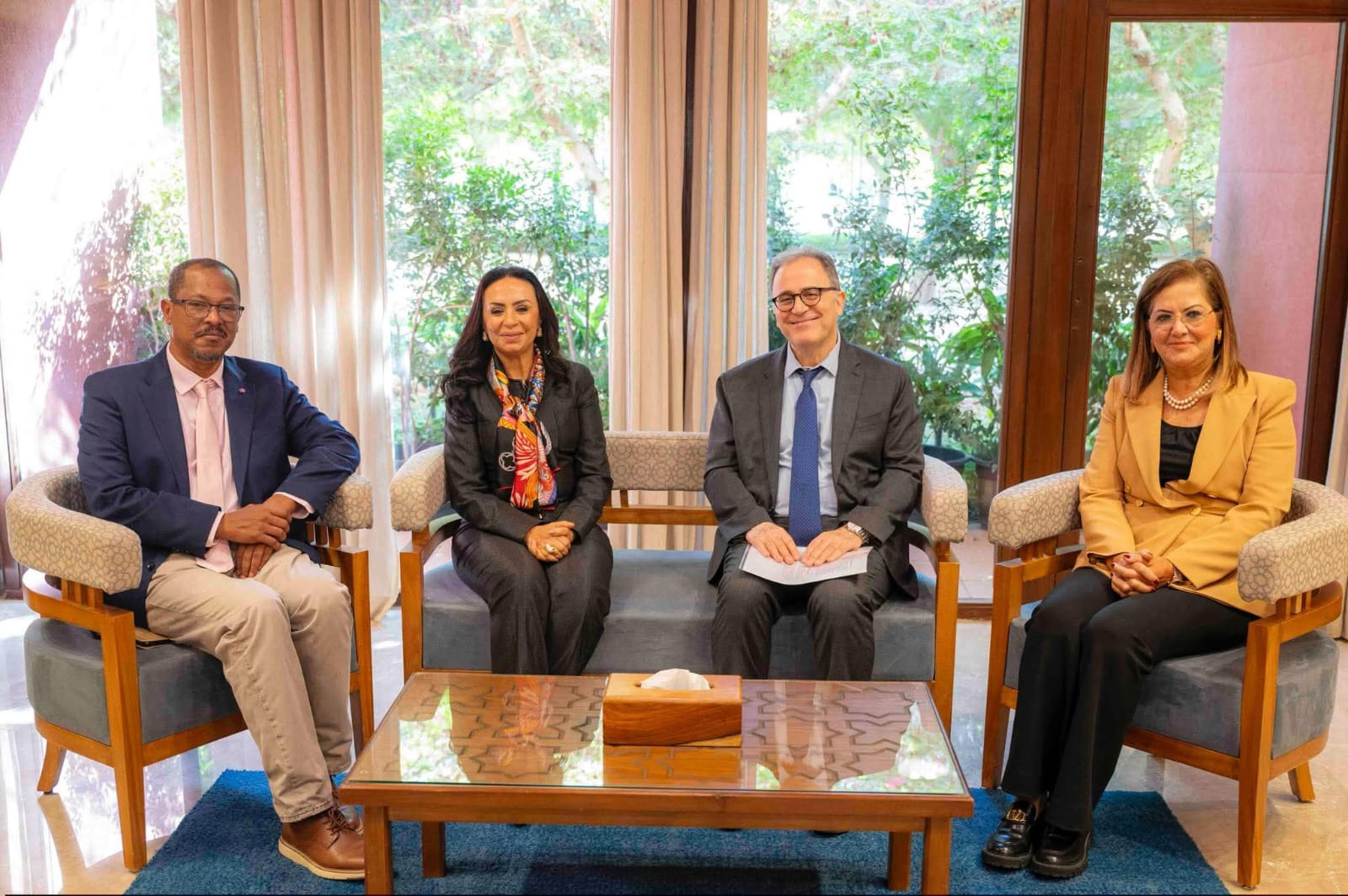

As a catalyst for for inclusive development and community-based action, Dr. Maya Morsy, Egypt’s Minister of Social Solidarity, led a thought-provoking workshop at the American University in Cairo (AUC) titled “Engaging University Students in Community Service Activities.” The workshop focused on expanding social care through youth engagement and was attended by prominent academic and governmental figures, including AUC President Dr. Ahmed Dallal and Presidential Economic Advisor Dr. Hala El-Said.
The event brought together students, faculty, administrative staff, and young leaders in a dynamic exchange of ideas around civic responsibility, social justice, and the future of Egypt’s welfare programs.

“Social Protection is a Bridge to Economic Independence”
Opening the discussion, Dr. Morsy underscored the evolving definition of social care in Egypt: “It’s no longer just about assistance—it’s about dignity, opportunity, and empowerment,” she stated. She highlighted the ministry’s decade-long transformation in building a comprehensive social protection system that supports citizens from early childhood through adulthood.
Through programs like Takaful and Karama, more than 7.8 million families have benefited from sustained cash transfers over the last ten years. Today, 4.7 million families still receive support, with over EGP 54 billion allocated annually, while over 3 million families have transitioned off the program—marking tangible progress toward economic self-sufficiency.
Spotlight on “Hayah Karima”: A National Model for Rural Development
Dr. Morsy celebrated Egypt’s flagship development initiative “Hayah Karima” (Decent Life), which she described as a “comprehensive rural transformation program.” The initiative targets the country’s most impoverished villages by upgrading infrastructure—such as water, sanitation, electricity, and roads—alongside education, healthcare, and job creation services.
She emphasized that the Ministry is committed to empowering citizens economically, especially women, through programs like the “Care Economy Model” and “Diarna Exhibitions”, which promote artisanal craftsmanship and social entrepreneurship.
Youth: The Engine of Sustainable Social Change
Drawing on her own AUC student experience, Dr. Morsy called on university students to become change agents: “Empowering youth must go hand-in-hand with protecting them. I once led an anti-drug awareness club here at AUC. That experience shaped my lifelong belief in youth-led social action.”
She praised national efforts like the Fund for Drug Control and Addiction Treatment, which collaborates with public figures like Mohamed Salah and focuses on prevention, recovery, and reintegration.
Dr. Morsy also highlighted the Ministry’s commitment to inclusive education, noting that the government pays tuition fees for vulnerable students, particularly those from Takaful and Karama families.
Advancing Inclusion: Disabilities, Child Welfare, and Beyond
The Minister spoke about integrating social services for people with disabilities, with over 1.3 million citizens currently benefiting from specialized ID cards that grant access to transportation, education, and healthcare.
In terms of child welfare, she reaffirmed the Ministry’s commitment to de-institutionalization, emphasizing that “nothing is better for a child than growing up in a loving family environment.” She highlighted national efforts to support foster care, early childhood development, and collaborative programs with the Ministries of Education and Youth.
A Call for Student-Government Collaboration
Throughout her address, Dr. Morsy encouraged students to connect their grassroots initiatives to national programs to ensure sustainability and broader impact.
“Meaningful service starts with understanding—not just action,” she told students. “You are Egypt’s next generation of social innovators. Your creativity, compassion, and commitment are what will strengthen our nation’s social fabric.”
Dr. Morsy also proposed organizing a student visit to the Egyptian Red Crescent headquarters in Nasr City to witness firsthand the country’s humanitarian response systems. The Red Crescent, she said, has delivered over 500,000 tons of aid to Gaza and mobilized 35,000 volunteers in national and international relief efforts.
Open Dialogue with Students
The session concluded with an interactive Q&A, where Dr. Morsy fielded questions on child homelessness, foster care systems, and the evolving vision of Egypt’s social solidarity strategy.
The workshop, rich in dialogue and insight, served as a reminder of the critical role students can play in driving sustainable, people-centered development.