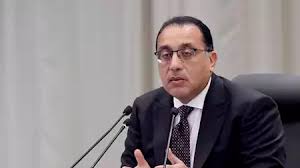

Egypt’s Prime Minister Mostafa Madbouly delivered a speech on behalf of President Abdel Fattah El-Sisi during the opening of the Second World Summit for Social Development, held in Doha, Qatar, with the participation of heads of state, government leaders, and senior international officials.
In his address, Prime Minister Madbouly expressed appreciation to the State of Qatar for its warm hospitality and excellent organization of the summit, as well as to the United Nations for its efforts in convening such an important global forum.

Dr. Madbouly underscored that the summit comes at a time of unprecedented global and regional challenges, which have hindered countries’ efforts to achieve inclusive social and economic development.
He recalled that the Copenhagen Declaration and Programme of Action of 1995 laid the foundations for addressing social development issues through its three pillars — poverty eradication, full employment and decent work for all, and social integration. These principles, he said, continue to guide the international community in confronting development challenges, particularly in developing countries.
Egypt’s Human-Centered Development Vision
Madbouly affirmed that Egypt’s development path is built on a clear, human-centered philosophy, framed by the 2014 Constitution and embodied in Egypt’s Vision 2030, under the leadership of President El-Sisi.
Despite severe economic and geopolitical challenges, Egypt has achieved remarkable progress by investing heavily in social infrastructure and strengthening social protection systems. A key milestone, he noted, was transforming the Takaful and Karama cash transfer program into a legislatively guaranteed right under the 2025 Social Security Law — now supporting more than seven million families monthly.
He also highlighted Haya Karima, one of Egypt’s largest national initiatives aimed at upgrading infrastructure and services in rural communities. The initiative was recognized in 2020 on the UN Sustainable Development Goals Acceleration Platform and in 2021 among the UN’s best international practices. Egypt has also launched a strategic financial inclusion framework to transition from welfare to economic empowerment, expanding opportunities for income generation, vocational training, and SME financing.
Inclusive Growth and Social Protection
Madbouly stressed that Egypt’s inclusive approach to development places families at the heart of policy, ensuring support for persons with disabilities and the elderly through new legislation and first-of-its-kind services. In public health, the 100 Million Healthy Lives initiative has successfully eliminated Hepatitis C and expanded universal health coverage.
He also noted ongoing programs in early childhood development, women’s financial inclusion, entrepreneurship training, and microfinance, especially for female-headed households.
To further institutionalize Egypt’s social model, a National Framework for Social Protection is being developed, serving as a modern enabler of sustainable and inclusive growth. This framework focuses on human capital investment, adaptive digital systems, and resilience to emerging shocks, particularly those stemming from climate change. It links protection with empowerment and promotes a care-based economy and decent work opportunities for women.
Shared Responsibility for Development
Reaffirming Egypt’s principles, Prime Minister Madbouly stressed that the right to development is a fundamental human right, and that shared but differentiated responsibility remains essential to achieving global development goals.
Concluding his remarks, Madbouly said, “We look forward to the success of this summit in meeting the aspirations of member states regarding social development, as a genuine reflection of our shared international vision.”