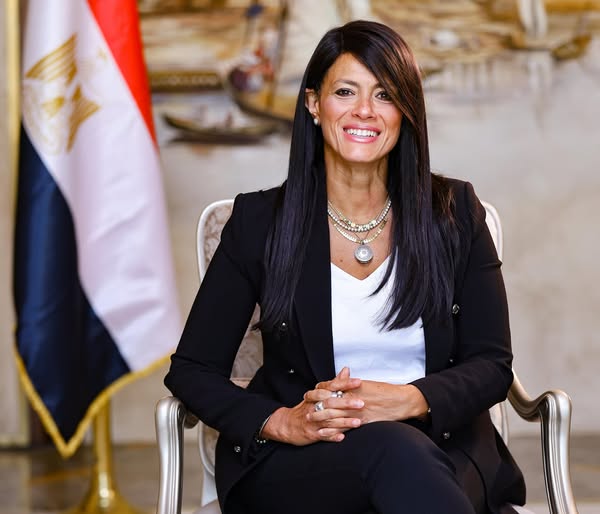

Egypt’s Minister of Planning, Dr. Rania Al-Mashat, reaffirmed her country’s deep commitment to youth empowerment and multilateral cooperation during her participation in the high-level board meeting of the United Nations’ Generation Unlimited initiative. The meeting took place on the sidelines of the 80th session of the United Nations General Assembly.
Dr. Al-Mashat underscored that Egypt places young people at the heart of its national development agenda, recognizing that human capital investment is fundamental to achieving economic resilience and sustainable growth.

“As we mark 80 years of Egypt’s partnership with the United Nations in 2025, we reflect on a development model anchored in investing in people,” she stated, highlighting decades of collaborative projects supported by bilateral and multilateral partners that have significantly advanced Egypt’s development goals.
A focal point of her address was Egypt’s national iteration of Generation Unlimited, known locally as “Shabab Balad” (translated: Youth of the Nation). Launched in 2022, the initiative has since become a cornerstone of Egypt’s youth development strategy.
“‘Shabab Balad’ is now a national model for multistakeholder partnerships involving government, the private sector, and the United Nations,” Al-Mashat explained. “It reflects our collective commitment to providing youth with real pathways to education, employment, and entrepreneurship.”
She revealed that Egypt is currently inaugurating the Shabab Balad Academy headquarters, a hub for youth training and development. The project has garnered notable private sector investment, emphasizing the strength of multilateral collaboration in shaping future-ready youth.
Al-Mashat described Shabab Balad as a “laboratory for multilateral cooperation”, bringing together civil society, the private sector, and young people themselves—not just as beneficiaries but as decision-makers. This participatory model, she said, strengthens inclusivity and sustainability.
Addressing global development financing challenges, she noted that the global SDG financing gap now exceeds $4 trillion annually, calling for innovative mechanisms that move beyond traditional aid models. She referenced Egypt’s Integrated National Financing Framework and adoption of innovative instruments such as blended finance and debt swaps as scalable solutions for closing development funding gaps.
Al-Mashat also emphasized the importance of investing in digital skills, AI, and green job creation, particularly for young women, to ensure inclusive and forward-looking development.
She concluded by reaffirming Egypt’s “unwavering commitment to multilateralism” and its continued partnership with the UN and Generation Unlimited to bridge the gap from education to employment—paving the way for a more sustainable and equitable future for youth.
About Generation Unlimited
Launched by the UN Secretary-General during the General Assembly in 2018, Generation Unlimited (GenU) is a global multi-sector partnership aimed at empowering 1.8 billion young people worldwide by connecting them to quality education, entrepreneurship opportunities, meaningful employment, and civic engagement.
Egypt’s “Shabab Balad” is among the standout national models under the GenU umbrella, representing a best practice in localized implementation and government-private sector synergy.