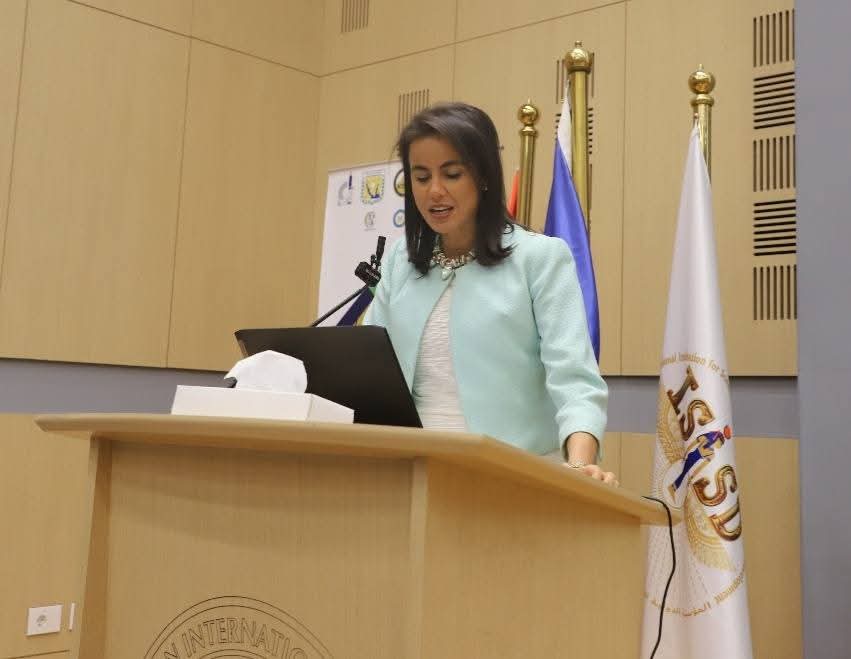

The National Council for Women (NCW) participated in the closing sessions of the International Conference on Nature and Genetic Resource Conservation, titled “Achievements of the 2030 Strategy and Future Visions”, organized by the International Institution for Science, Innovation, and Sustainable Community Development (ISISD) and hosted by King Salman International University in collaboration with the National Research Center.
Representing the Council, Dr. Marian Azar, member of NCW and Chair of the Committee on Scientific Research, Technology, and Cybersecurity, conveyed greetings from NCW Chairwoman Amal Ammar and expressed appreciation for the event, which addressed one of the most critical global topics: sustainable management of natural and genetic resources.

Dr. Azar emphasized that the Council’s participation reflects its national mandate to empower women and enhance their engagement in all areas of development, including environmental stewardship—a priority increasingly embedded in Egypt’s national policy. She highlighted the vital role of women, particularly in rural communities, as custodians of natural resources, preserving biodiversity, and passing traditional ecological knowledge to future generations.
Over the past years, the Council has actively supported rural women in sustainable agriculture, local crop preservation, and heritage-based economic initiatives, including medicinal and aromatic plants. Its work extends to international arenas, most notably COP27, where the NCW showcased Egypt’s advanced model of women’s empowerment in environmental and green-economy initiatives.
Dr. Azar noted that the conference’s objectives align closely with the Council’s priorities, as Egyptian women have historically been central to safeguarding traditional agricultural knowledge, conserving plant genetic resources, and leading small-scale, resource-based sustainable projects. She underscored that women are not merely beneficiaries of development but active partners in its design and execution.
During the conference, Dr. Azar also highlighted the pivotal role of advanced technology in supporting international agreements for genetic resource conservation through 2030. She stressed that digital transformation has become essential for tracking genetic resources and ensuring compliance with key treaties, including the Convention on Biological Diversity and the Nagoya Protocol.
Technologies such as artificial intelligence, blockchain, Internet of Things, big data analytics, geographic information systems, and genomic tools were cited as central to enabling accurate, transparent, and efficient management of genetic resources. Dr. Azar further addressed ethical and governance challenges, including data ownership, privacy, and the digital divide, emphasizing the need for frameworks that ensure responsible use of technology.
Looking ahead, she called for a global, integrated digital system by 2030 to protect genetic diversity, strengthen digital infrastructure, foster international cooperation, and guarantee the safe and equitable use of genetic data.