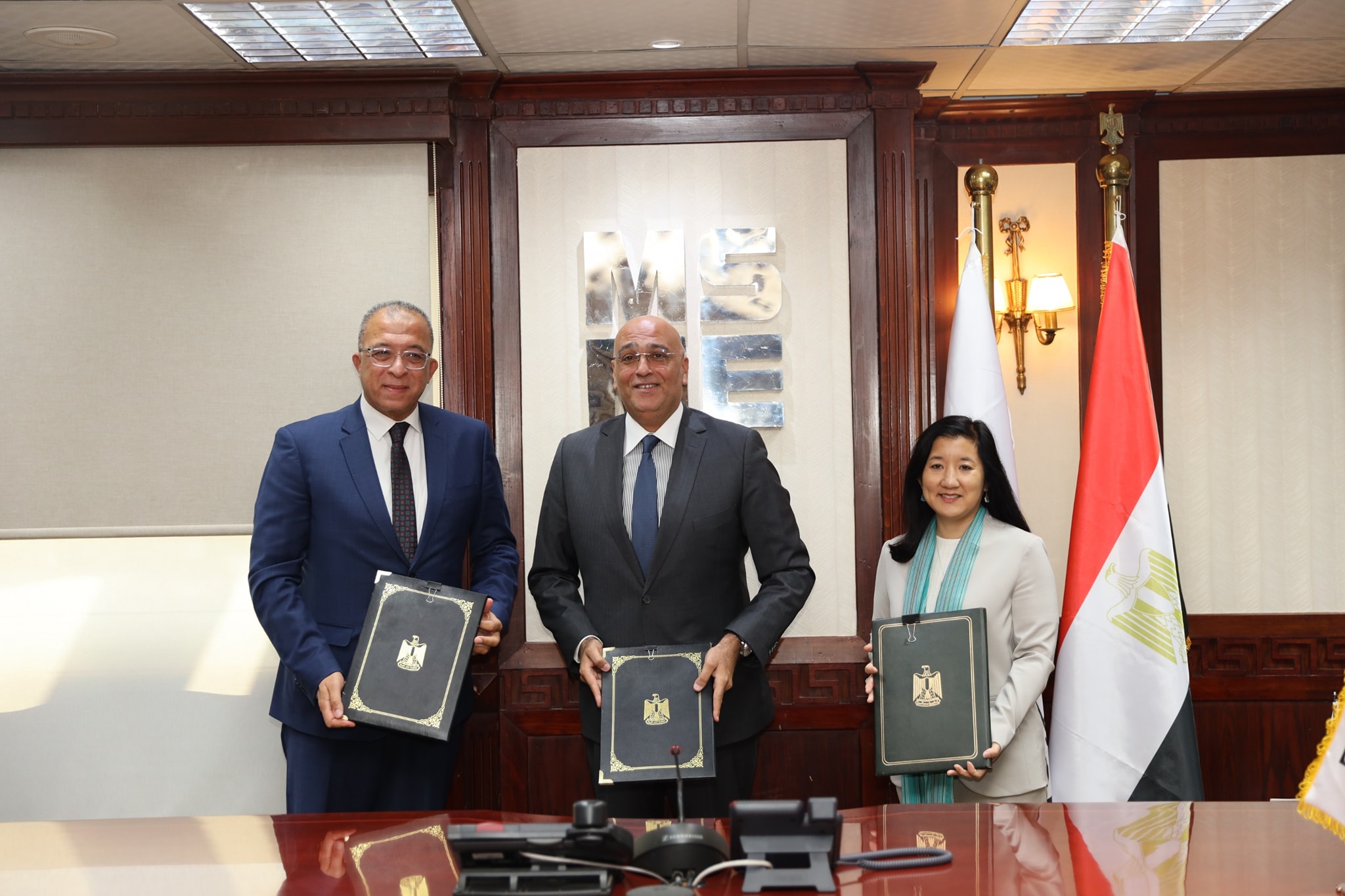

In a significant step toward advancing Egypt’s sustainable development agenda, the Micro, Small and Medium Enterprise Development Agency (MSMEDA) has signed a tripartite cooperation agreement with the National Institute for Planning (NIP) and the United Nations Development Programme (UNDP) in Egypt. The agreement aims to strengthen MSMEDA’s institutional strategy and enhance its developmental programs in alignment with Egypt’s Vision 2030.
The agreement was formally signed by Basil Rahmy, CEO of MSMEDA; Dr. Ashraf El-Araby, President of the National Institute for Planning and former Minister of Planning; and Chitose Noguchi, the newly appointed UNDP Resident Representative in Egypt. The signing ceremony was attended by senior officials, including Dr. Raafat Abbas, Head of Development Sectors at MSMEDA, and Dr. Abeer Shoukry, Assistant Resident Representative of UNDP, along with a host of institutional stakeholders.

A National Commitment to Inclusive, Sustainable Growth
The new partnership comes as part of MSMEDA’s ongoing mission to empower small businesses, integrate them more deeply into the national economy, and ensure their resilience amidst global and local economic shifts.
Rahmy underscored that the cooperation agreement is guided by the directives of Prime Minister Mostafa Madbouly, who also chairs the agency’s board. The partnership will enable MSMEDA to revise and upgrade its strategic framework, utilizing the academic and technical expertise of the National Institute for Planning, a premier Egyptian institution in development and policy research.
According to Rahmy, the strategic review will produce a comprehensive, actionable roadmap that includes key performance indicators (KPIs), regular monitoring and evaluation mechanisms, and a strong alignment with Egypt’s national development priorities. He also commended the UNDP’s long-standing partnership with MSMEDA, describing it as a “cornerstone in transferring international best practices and standards into Egypt’s micro and small enterprise ecosystem.”
A Research-Driven Roadmap for Economic Empowerment
Dr. Ashraf El-Araby emphasized that the agreement reinforces the government’s drive to empower young Egyptian manufacturers and entrepreneurs, particularly in the industrial and productive sectors.
El-Araby noted that the Institute would develop a new strategic framework for MSMEDA through a comprehensive review process, including the agency’s vision, mission, stakeholders, tools, and service beneficiaries. This approach, he added, ensures that the agency’s future direction is firmly rooted in best practices while staying adaptable to evolving local and global economic realities.
UNDP: Supporting Green Transition and Digital Transformation
UNDP Resident Representative Chitose Noguchi praised the new partnership as a timely step toward advancing Egypt’s shift toward digitalization and a green economy, especially in the small business sector.
“Through this agreement, UNDP is committed to providing technical support that improves the working environment for SMEs, especially in green and digital economy sectors,” said Noguchi. “This includes facilitating access to finance and knowledge, supporting institutional dialogue, and integrating digital solutions.”
Noguchi highlighted the broader developmental role of micro and small enterprises, describing them as “the backbone of the economy,” and reiterated UNDP’s commitment to helping them become investment-ready, digitally capable, and globally competitive.
Dr. Abeer Shoukry echoed this sentiment, stating that the agreement will help build an ecosystem where small and medium enterprises can thrive, grow sustainably, and contribute to tangible economic and social impact.
“We are working to integrate green practices, digital tools, and inclusive finance mechanisms into Egypt’s SME environment,” she said. “This partnership will help us unlock the full potential of small businesses as drivers of inclusive and sustainable development.”
A Step Forward in Egypt’s Development Path
The agreement is a milestone for Egypt’s economic development strategy, especially in a global context where resilience, digital transformation, and green transition are becoming core pillars of inclusive growth.
By aligning national planning expertise with international development support, MSMEDA aims to not only empower local entrepreneurs but also position Egypt’s MSME sector as a competitive and sustainable force in regional and global markets.
As the country continues its journey toward Vision 2030, this agreement underscores the government’s intention to build institutions that are agile, inclusive, and future-ready—where small businesses are not only supported, but also central to Egypt’s economic renaissance.