
In a recent cabinet transition, Dr. Manal Awad, currently Minister of Local Development, officially assumed responsibilities as Acting Minister of Environment, following a directive issued by the Prime Minister. The handover, conducted in coordination with outgoing Minister Dr. Yasmine Fouad—now Executive Secretary of the United Nations Convention to Combat Desertification—marks a pivotal moment in the ministry’s trajectory as it embraces a results-driven mandate focused on sustainability, pollution reduction, and climate resilience.
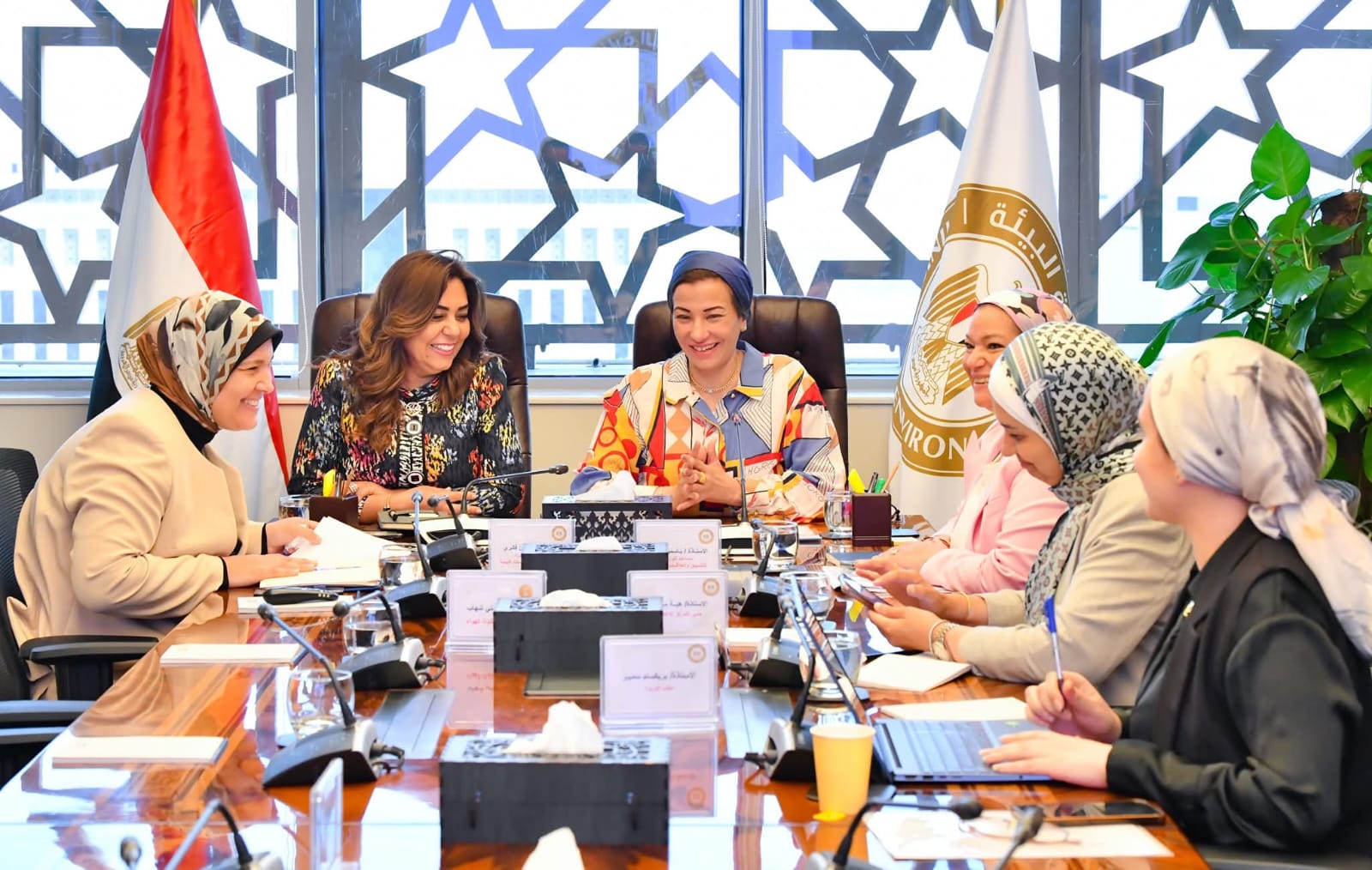
The transition commenced with an in-depth joint meeting between Dr. Awad and Dr. Fouad, who guided her successor through the Ministry’s organizational structure, operational protocols, and current project pipelines. Held in the presence of senior advisors and ministry officials, the session addressed key priorities including the management of Egypt’s protected areas, efforts to enhance air and water quality, the integration of environmental considerations into industrial development, and the expansion of green financing mechanisms.

Dr. Awad affirmed that her initial focus would be on strengthening coordination across internal departments and affiliated agencies, namely the Egyptian Environmental Affairs Agency and the Waste Management Regulatory Authority. She emphasized the importance of understanding each department’s mandates, workflow systems, and regulatory responsibilities to ensure policy continuity and performance optimization.
Environmental quality stood out as a core priority. During the transition meeting, Dr. Awad reviewed Egypt’s recent advances in combating air pollution. Ministry data revealed that sustained efforts to monitor industrial emissions, expand green spaces, and combat seasonal smog episodes led to notable improvements: from September to November 2024, Cairo experienced “good” air quality on nearly 93% of days, up from 89% the previous year. The Nile Delta saw even greater gains, with 96% of days rated as having good air quality, compared to 83% in the same period in 2023. These improvements translated to an estimated reduction of over 334,000 tons of harmful emissions.
Water quality and pollution abatement were also front and center. Dr. Awad received a brief on the Ministry’s deployment of 25 real-time monitoring stations across Egypt’s waterways to track industrial discharges and water composition. Notably, the Ministry had successfully completed environmental remediation plans for several sugar manufacturing facilities along the Nile, and pollution levels in the Gulf of Suez have been reduced by approximately 84%. Additional initiatives included ecological restoration of key lakes and comprehensive environmental correction for industries bordering aquatic ecosystems.
Dr. Awad also explored the Ministry’s achievements in biodiversity and nature conservation. Under Dr. Fouad’s leadership, Egypt updated its National Biodiversity Strategy and Action Plan, designated the Red Sea coral reef system as a protected area, and enhanced eco-tourism infrastructure in reserves such as Ras Mohamed and Nabq. Projects like the eco-lodge in Wadi El-Rayan and visitor centers in Dahab and South Sinai also contributed to balancing conservation with local development.
Green industrial policy is another cornerstone of the Environment Ministry’s current agenda. Building on the legacy of the Industrial Pollution Control Program, the Ministry is preparing to launch a new initiative focused on sustainable industrialization. This includes increasing financial allocations for environmental compliance projects, which have now reached EGP 150 million to encourage industries to align with environmental regulations while fostering competitiveness and innovation.
Dr. Awad was also briefed on efforts to streamline regulatory procedures, particularly for investors. The Ministry recently introduced a set of environmental compliance guides for key sectors eligible for Egypt’s “Golden License,” a fast-track investment mechanism. Moreover, electronic integration with the Industrial Development Authority now allows environmental approvals to be issued within seven working days—reducing bureaucratic friction and enhancing investor confidence.
Throughout the transition process, Dr. Awad repeatedly praised Dr. Fouad’s dedication and legacy. She expressed gratitude for the professionalism and vision that have characterized the Ministry’s environmental agenda, pledging to build upon those foundations. In turn, Dr. Fouad congratulated Dr. Awad and reaffirmed her confidence in the Ministry’s cadre of skilled technical professionals, whose expertise will ensure operational continuity and progress.
The meeting culminated in a comprehensive presentation by senior ministry officials, highlighting the full spectrum of the Environment Ministry’s responsibilities—from waste management to legal compliance and international coordination. Dr. Awad expressed particular interest in reinforcing interdepartmental collaboration, noting the complexity of environmental governance and the need for agile, integrated action to meet Egypt’s ambitious Vision 2030 and climate goals.
As Egypt continues to position itself as a regional leader in sustainable development, Dr. Awad’s dual portfolio presents a unique opportunity to integrate environmental priorities into urban planning, infrastructure, and public service delivery at the governorate level.