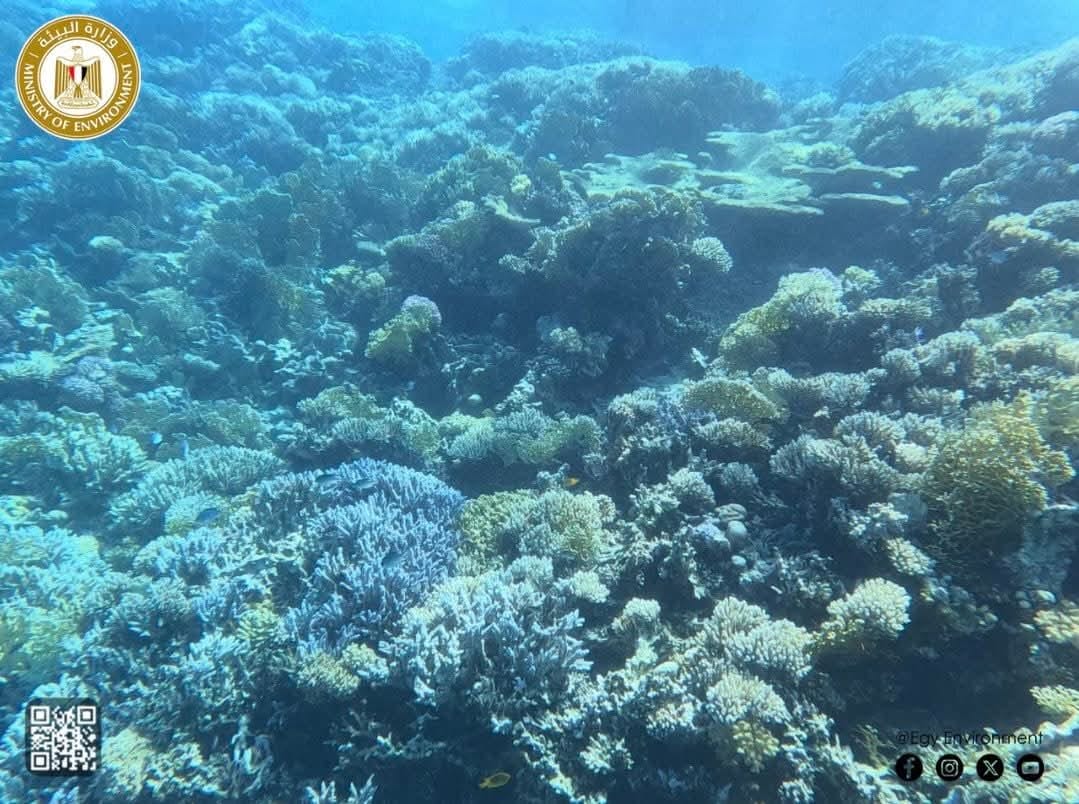

In a critical step toward protecting Egypt’s marine biodiversity, Dr. Manal Awad, Minister of Local Development and Acting Minister of Environment, announced the commencement of the annual coral reef monitoring program across the Red Sea’s Northern Islands Protected Area.
The program, led by Egypt’s environmental ministry and implemented by a team of scientific experts from the Red Sea and South Sinai nature reserves, comes amid ongoing global concerns over coral bleaching caused by rising sea surface temperatures. Encouragingly, early findings from the 2025 assessments show a notable recovery in most coral colonies previously affected by bleaching.

“The latest surveys indicate that the coral reefs across the northern Red Sea islands have largely recovered from the bleaching events observed in previous years, particularly 2023 and 2024,” said Minister Awad. “This resilience is a powerful testament to the region’s unique ecological characteristics and the effectiveness of our long-term conservation strategy.”
Lower Sea Temperatures Lead to Higher Coral Resilience
The scientific survey, which spanned multiple reef sites within the Northern Islands Reserve, utilized internationally recognized methodologies to assess coral cover and external stressors. One of the key factors in this year’s coral resurgence has been the shorter duration of high sea surface temperatures, which have previously pushed coral ecosystems past critical thermal thresholds.
“Unlike the extended heatwaves of the past two years, the 2025 season saw a quicker decline in temperature spikes,” stated one of the marine biologists leading the field assessments. “This has allowed coral communities not just to survive, but to begin regenerating.”
Data-Driven Conservation Backed by Academia
The monitoring program is conducted in close collaboration with Egyptian university professors and coral reef specialists. Together with the Ministry of Environment, these experts use standardized scientific protocols to measure coral health, biodiversity, and climate-induced stress.
The findings will contribute to Egypt’s broader environmental data framework and will inform future climate resilience strategies, not just in the Red Sea but across national protected areas.
Global Implications for Coral Ecosystems
The Red Sea’s northern reefs have long been recognized as some of the most climate-resilient coral systems in the world, making Egypt’s monitoring efforts a model for other coastal nations facing the escalating impacts of climate change.
This initiative aligns with Egypt’s commitments under the Convention on Biological Diversity (CBD) and the UN Sustainable Development Goals (SDGs), particularly Goal 14: Life Below Water.