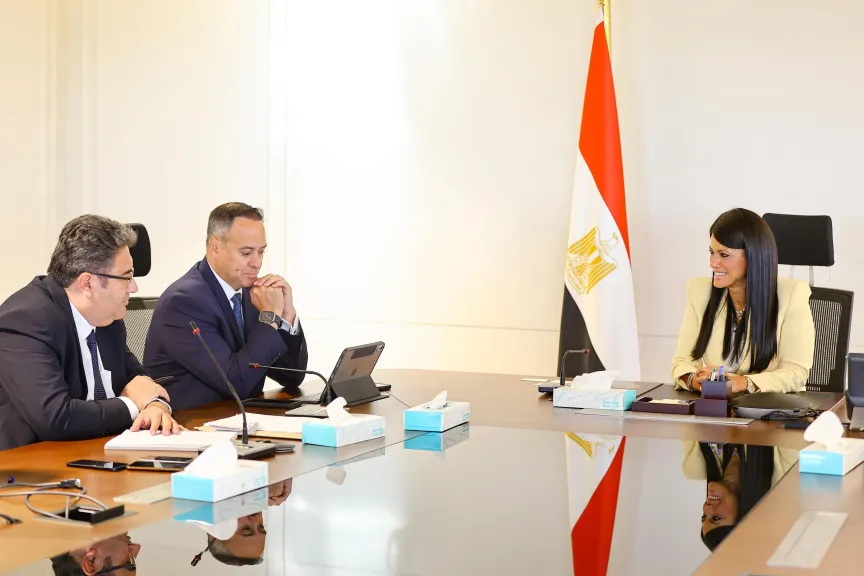

In a high-level meeting with a delegation from S&P Global Ratings, Egypt’s Minister of Planning, Dr. Rania Al-Mashat, presented a data-driven update on Egypt’s macroeconomic performance, underlining the country’s continued recovery and reform momentum following a major restructuring program initiated in March 2024.
The Cairo meeting was attended by senior S&P Global executives, including:

- Roberto Sifon-Arevalo, Global Head of Sovereign and International Public Finance Ratings (Acting)
- Benjamin Young, Executive Director, Head of Sovereign Ratings for EMEA
- Ravi Bhatia, Director, Sovereign and International Public Finance Ratings
The discussion reinforced Egypt’s ongoing dialogue with global credit agencies, vital for maintaining and improving the country’s sovereign credit rating amid volatile global economic conditions.
GDP Growth Hits 4.2%
According to figures shared during the meeting, Egypt’s real GDP growth reached 4.2% in the first nine months of FY2024/25, significantly up from 2.4% during the same period the previous fiscal year. The improvement is attributed to the continued impact of structural reforms and a strategic push to unlock private sector potential.
Key contributors to this growth included:
- Non-oil manufacturing
- Exports
- Information and communications technology (ICT)
- Tourism
These sectors benefited from Egypt’s reform program launched in March 2024, aimed at macroeconomic stabilization and structural transformation.
Private Investment Surpasses Public Investment for Third Consecutive Quarter
In a notable shift, private investment at constant prices surged by 24.2% year-over-year in Q3 FY2024/25, reaching EGP 142.8 billion, accounting for 62.8% of total implemented investments (excluding inventory). This marks the third consecutive quarter in which private investment has outpaced public spending — a clear sign of improving investor confidence and private sector engagement.
Strengthened Debt Sustainability and Governance Framework
Dr. Al-Mashat emphasized Egypt’s commitment to reducing external debt levels through enhanced fiscal discipline and a refined debt governance strategy. She noted that Egypt has become a key development finance hub for both local and foreign private sectors, with strong collaboration from international financial institutions and strategic partners.
During the session, the minister reiterated that Egypt is steadfast in pursuing inclusive, sustainable economic development, aligned with the goals of the National Structural Reform Program and Vision 2030.
Egypt’s “National Economic Development Narrative”
The meeting also saw the unveiling of Egypt’s “National Economic Development Narrative”, a comprehensive framework that aligns government action plans for 2024–2027 with Egypt’s long-term vision. The narrative prioritizes:
- Macroeconomic stability
- High-productivity sectors with strong export potential (tradables)
- Infrastructure optimization
- Redefining the role of the state in the economy
- Green economic transition
“The narrative is more than just a strategy—it’s a promotional tool for Egypt’s real economy,” said Al-Mashat. “It showcases structural reform, highlights sectoral investment opportunities, and positions Egypt as a competitive emerging market economy.”
Multi-Year Development Plans
For the first time, Egypt will adopt a medium-term budgeting approach, starting with the 2026/27 fiscal year, under the executive regulation of the new Public Planning Law. The shift will see the introduction of a three-year economic and social development plan, aimed at improving fiscal predictability and planning efficiency.
As Egypt seeks to solidify its position as a resilient and investment-friendly economy, the government’s continued focus on reform, transparency, and sectoral development appears central to its strategy for long-term stability and inclusive growth.