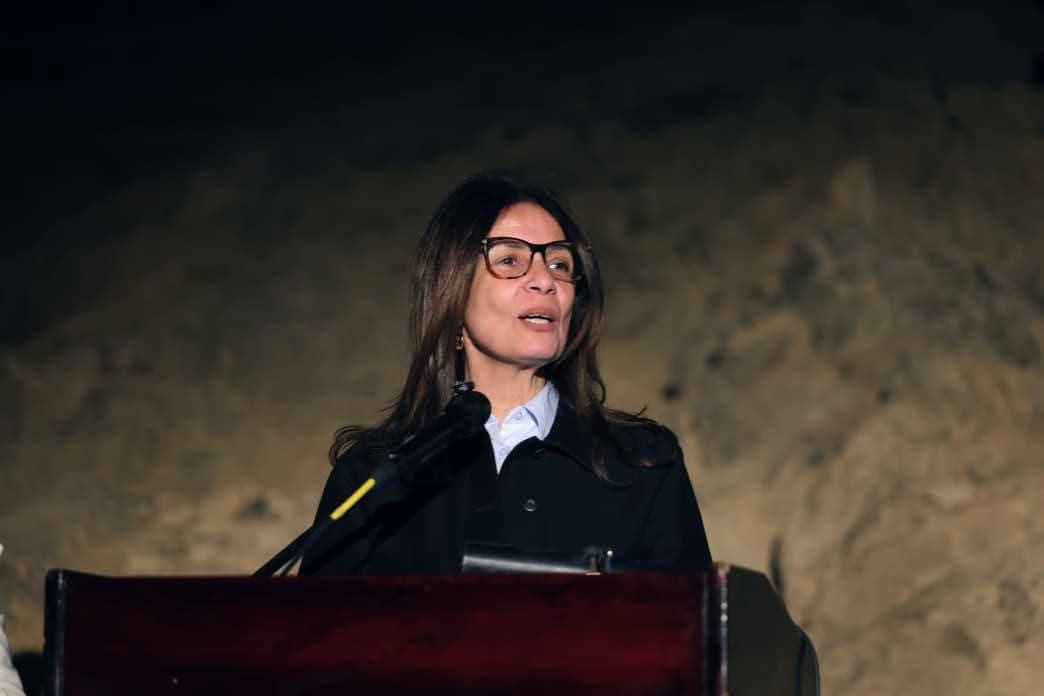

Beneath the granite hills that once supplied stone for ancient temples, Egypt’s contemporary sculptors gathered this week to close the 30th edition of the Aswan International Sculpture Symposium — a milestone event that Culture Minister , Gihane Zaki, described as central to the country’s artistic revival and cultural identity.
Held at Aswan’s sprawling Open-Air Museum, home to more than 800 sculptures created over three decades, the ceremony marked both an anniversary and a signal of continuity: that Egypt sees monumental sculpture not only as heritage, but as a living contemporary practice.

“This symposium is one of the most important cultural events supporting creativity and consolidating Egypt’s civilizational identity,” Zaki said during the closing ceremony.
A Living Archive of Stone
Founded in 1996 by the late sculptor Adam Henein, and launched under the patronage of then–Culture Minister Farouk Hosny, the symposium was conceived as a revival of Egypt’s ancient sculptural tradition. Artists work primarily in Aswan granite — the same material used in pharaonic monuments — transforming the southern city into a contemporary workshop rooted in millennia-old craftsmanship.
Over 30 editions, the initiative has grown into one of the region’s most prominent sculpture forums, attracting international participants while maintaining a strong Egyptian core.
Zaki emphasized that the Ministry of Culture plans to continue expanding the event’s scope, particularly in discovering and supporting emerging Egyptian artists and strengthening dialogue between local and international artistic schools.
Tribute to Founders and Cultural Memory
This year’s edition was dedicated to Henein, widely regarded as the spiritual father of the symposium. Officials described the tribute as recognition of his role in institutionalizing the event and elevating the status of contemporary Egyptian sculpture internationally.
The ceremony also honored the late cinematographer Salah Marei, known for his iconic visual work in the landmark Egyptian film The Mummy. Marei collaborated closely with Henein and played a key role in documenting the symposium’s evolution, helping shape its visual archive and contributing to the idea of establishing the Open-Air Museum as a permanent cultural space.
Family members accepted commemorative honors on behalf of both artists.
International Participation, Local Impact
The 30th edition featured artists from Egypt as well as Kosovo, Italy, Turkey, Belarus, Germany and Bulgaria, reinforcing the symposium’s identity as a platform for cultural exchange.
Local authorities have increasingly integrated the symposium’s sculptures into broader urban development and beautification efforts. The Aswan Governorate was recognized during the ceremony for its continued partnership in hosting the event and incorporating its works into the city’s public spaces.
Organizers also acknowledged the role of the Cultural Development Fund in overseeing logistical and institutional support.
Art as Soft Power
The evening concluded with a performance by Egyptian soprano Amira Selim, marking the milestone edition with a celebratory tone.
Beyond the ceremony, officials framed the symposium as part of Egypt’s broader cultural diplomacy strategy — positioning contemporary art as an extension of the country’s historical legacy and a vehicle for international engagement.
Three decades after its founding, the Aswan International Sculpture Symposium stands as both workshop and museum — a space where artists continue carving modern forms from ancient stone, reinforcing Egypt’s enduring artistic identity on the global stage.