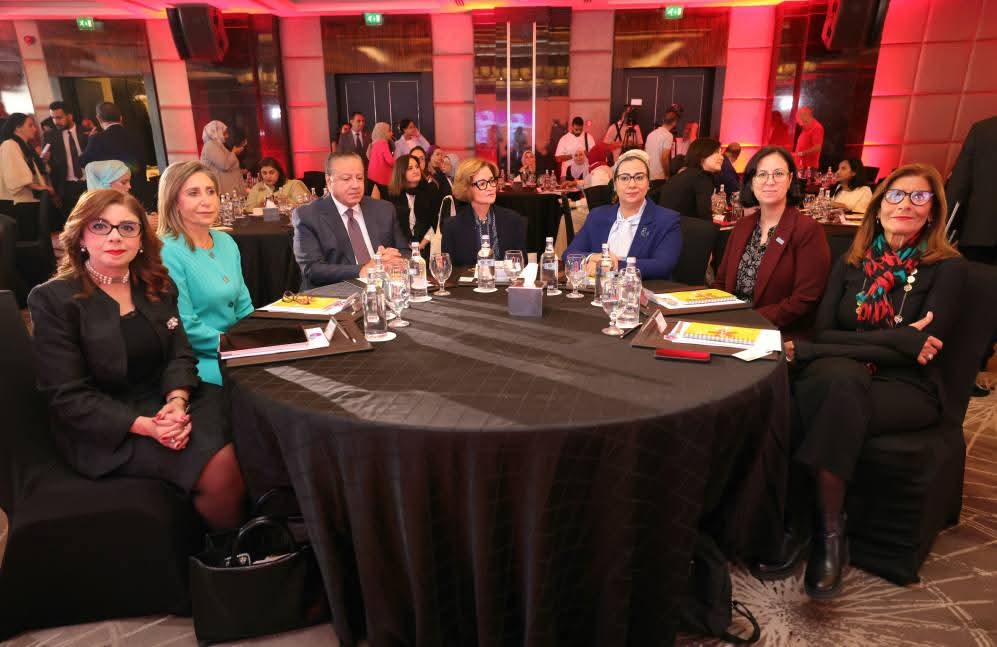

Counselor Amal Mahmoud Atta Ammar, President of Egypt’s National Council for Women (NCW), took part in the opening session of the Arab–Asian Regional Forum on Intellectual Property and Women Entrepreneurs, hosted in Cairo. The high-level forum was organized by the World Intellectual Property Organization (WIPO) in collaboration with the NCW, Egypt’s Intellectual Property Authority, and with support from the Japan Patent Office (JPO).
Regional and Global Representation
The event brought together senior officials and experts from Arab and Asian countries, highlighting the role of intellectual property (IP) in advancing women-led entrepreneurship and sustainable development.

From the Egyptian side, notable participants included Dr. Marianne Azer, former Member of Parliament and expert in digital transformation; Counselor Dr. Marian Kaldas, a member of the National Council for Women; Dr. Mervat Abou Ouf, a leading media expert and council member; Ms. Noha Morsi, Head of the Central Administration for Branches and Committees at the NCW; and Ms. Mai Mahmoud, General Manager of the Women’s Skills Development Department at the council.
International attendees included Mr. Ryo Nitta, Director of International Policy Planning at the Japan Patent Office; Dr. Beatrice Amorim-Borher, Senior Director of the Development Sector at WIPO; Ambassador Amira Fahmy, Deputy Assistant Foreign Minister for Specialized Agencies and Global Issues; and Dr. Hesham Azmy, President of the Egyptian Intellectual Property Authority.
Egypt’s Legal and Institutional Leadership in IP
Ammar emphasized Egypt’s longstanding legal commitment to intellectual property, dating back to the early 20th century. This commitment was solidified through the introduction of Law No. 82 of 2002, which unified the country’s IP framework. The law has since undergone several updates to ensure alignment with global best practices. She highlighted the recent milestones, including the launch of Egypt’s National Strategy for Intellectual Property in 2022 and the establishment of the Egyptian Intellectual Property Authority in 2023, to centralize and modernize the country’s IP infrastructure.
In her remarks, Ammar noted that intellectual property is not only a legal necessity but also a strategic tool for economic empowerment—particularly for women. Through IP, women entrepreneurs can legally protect their creations, enter broader markets, and convert innovation into sustained economic value. This approach aligns closely with Egypt Vision 2030, the country’s national development strategy, which integrates women’s empowerment as a central pillar.
Empowerment Through Trademarks and Traditional Crafts
Justice Ammar also spoke about the NCW’s pioneering work in connecting IP to women’s economic empowerment on the ground. In 2024, the council launched a collaborative project with WIPO focused on supporting female artisans working in Egypt’s traditional craft of “tally” embroidery. As a result of this initiative, the NCW facilitated the registration of Egypt’s first collective trademark for handmade crafts under the name “Tally Shandweel”, protecting the heritage and identity of the art form.
The project also helped 18 women entrepreneurs register individual trademarks for their craft-based businesses. In addition, through partnerships with UN Women and the European Union, the NCW supported over 500 women-led business ventures, 90 of which resulted in the formal creation of companies or cooperatives with registered trademarks. These initiatives demonstrate the power of IP tools in enabling grassroots economic inclusion and formalization for women entrepreneurs.
Exhibition: “IP for Her”
On the sidelines of the forum, Justice Ammar visited the exhibition titled “IP for Her”, which showcased a wide array of creative and commercial products developed by women entrepreneurs from both Arab and Asian countries. Exhibitors included women from Egypt, Pakistan, Bangladesh, Bahrain, Indonesia, Jordan, Vietnam, Sri Lanka, Morocco, Tunisia, and Nepal.
The exhibition displayed a diverse collection of products including “Tally Shandweel” embroidered textiles, linen crafts from Qena, leather handbags, handcrafted jewelry, cosmetics, and ceramic items. The showcase not only celebrated cultural heritage but also highlighted the potential of women-led creative industries when supported by proper legal protection and business training.
IP for inclusive economic growth
The Arab–Asian Forum underscores the strategic importance of cross-regional cooperation in leveraging IP for inclusive economic growth. It serves as a platform for exchanging experiences, building partnerships, and exploring innovative policies that can enhance the global competitiveness of women-led enterprises.
Ammar’s participation and leadership signal Egypt’s commitment to advancing gender equality, innovation, and regional dialogue. By integrating legal, cultural, and economic dimensions, Egypt aims to position itself as a hub for empowering women in the knowledge economy.
The message is clear: investing in women’s innovation and protecting it through intellectual property is a national and international imperative. Through sustained policy efforts and multilateral cooperation, the region can unlock the full potential of women as drivers of creativity, resilience, and growth.