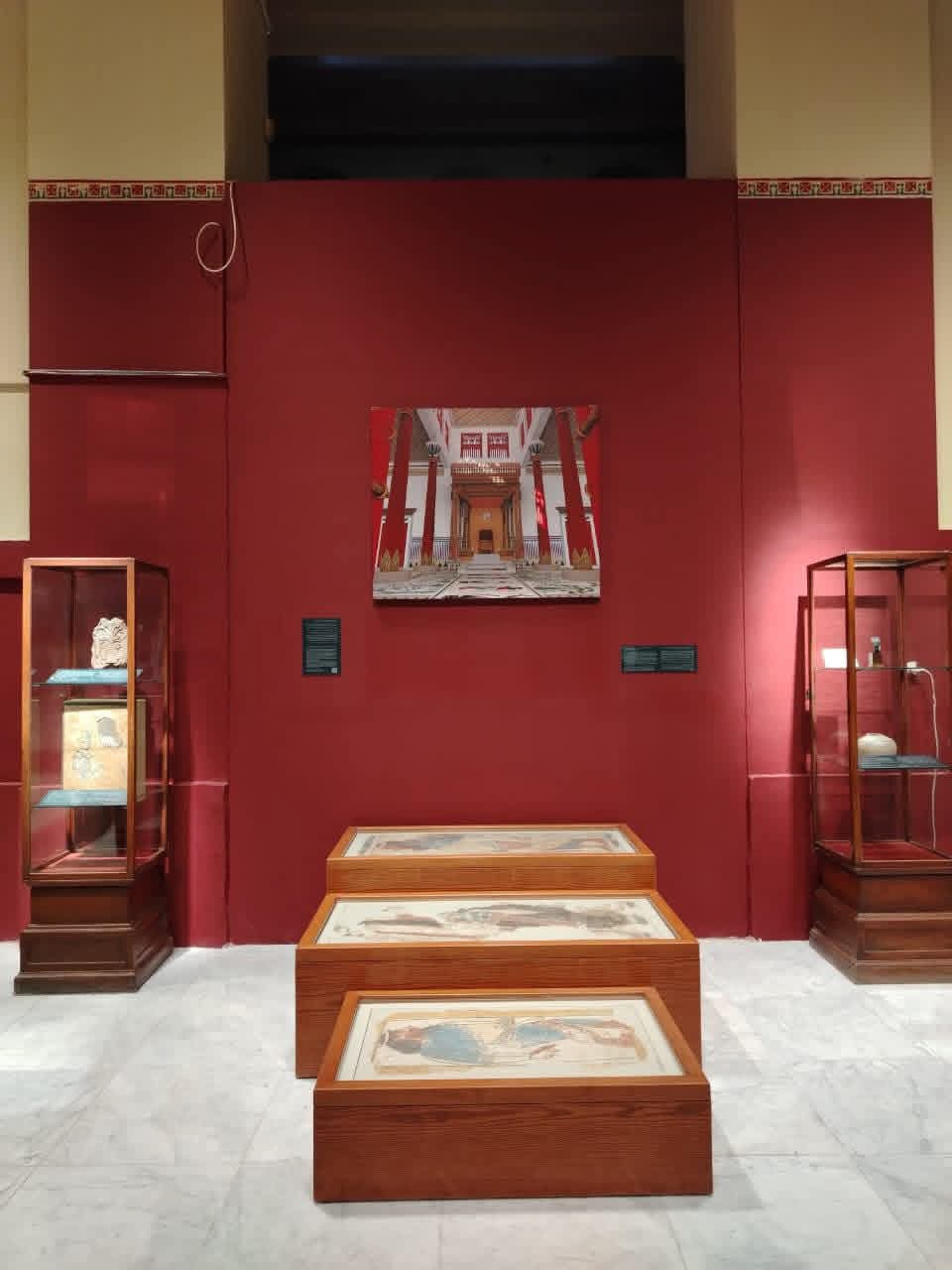

In a landmark event for Egypt’s cultural heritage, the Egyptian Museum in Tahrir has officially opened a new permanent exhibition featuring the restored wall paintings from the palace of King Amenhotep III—one of the most celebrated rulers of ancient Egypt’s 18th Dynasty. The exhibition marks the first time these murals have been displayed together in one location since their discovery at Malqata, west of Luxor, in the late 19th century.
The exhibition was inaugurated by Dr. Mohamed Ismail Khaled, Secretary General of the Supreme Council of Antiquities, and Mr. Andreas Fiedler, Head of Cultural Affairs at the German Embassy in Cairo. The restoration and curation were made possible through a collaborative effort between the Egyptian Museum, the University of Munich, and the American Research Center in Cairo (ARCE), which also funded the project.

A Major Milestone in Museum Development
The exhibition is part of the broader initiative to modernize and redevelop the Egyptian Museum in Tahrir, updating its galleries and storytelling approach while preserving the building’s historic significance. This initiative aims to elevate the museum’s status as a cultural beacon and an essential repository of Egypt’s ancient legacy, even as the country prepares for the imminent opening of the Grand Egyptian Museum.
Dr. Khaled emphasized that this exhibition is more than just an aesthetic or academic contribution: “It is a living testament to the museum’s enduring role as an institution of education, culture, and national identity. These murals, restored with meticulous care, reconnect us with the grandeur of Egypt’s artistic past and the legacy of its kings.”
He further noted that the opening of the Grand Egyptian Museum in November will not reduce the significance of the Tahrir museum. Instead, it will complement it.
Rediscovering the Splendor of Malqata
The newly restored murals are now on display in Room 13, located behind the iconic statues of King Amenhotep III and Queen Tiye on the museum’s ground floor. Characterized by their vivid colors, symbolic motifs, and unique artistic style, these wall paintings once adorned the walls, ceilings, and floors of Amenhotep’s palace—a sprawling royal residence constructed to host the king’s Sed Festival, a jubilee celebrating royal renewal.
According to Dr. Ali Abdel Halim, Director General of the Egyptian Museum, these murals are visual narratives of royal authority, divine connection, and architectural innovation. As early examples of what would evolve into Amarna art, they also illuminate the transition in artistic expression that reached its height under Akhenaten.”
In addition to the murals, the exhibition includes significant artifacts that contextualize Amenhotep III’s reign:
- A statue of the royal scribe Amenhotep, son of Hapu
- A head of Queen Tiye, one of the most powerful women in ancient Egyptian history
- A vessel inscribed with Tiye’s name
These objects, combined with the murals, offer visitors a multi-dimensional view of the aesthetics, politics, and spiritual life of the New Kingdom.
An International Collaboration in Heritage Preservation
The exhibition opening was attended by a host of distinguished guests, including Dr. Ahmed Hemeida, Head of the Museums Sector; Dr. Yasmin El-Shazly, Deputy Director of ARCE; Dr. Regina Schulz and Dr. Martina Ullmann from the University of Munich; and Mr. Tobias von Gielsa, Head of Culture and Education at the German Embassy.
Mr. Fiedler hailed the exhibition as a milestone in Egyptian-German cultural cooperation, calling it: “A culmination of shared respect for history and a commitment to safeguarding heritage for future generations.”
Echoing this, Mr. von Gielsa noted that the exhibition not only enriches the Egyptian Museum’s offerings but also deepens the cultural dialogue between the peoples of Egypt and Germany.
Dr. El-Shazly highlighted ARCE’s commitment to archaeological research and preservation, stressing the importance of projects like this in revealing unknown dimensions of ancient Egyptian art.
Drs. Schulz and Ullmann delivered a detailed presentation outlining the murals’ discovery, condition, and multi-phase restoration process—from early documentation to their final installation in the new gallery.
A Second Step in a Long-Term Vision
Dr. Hemeida described the exhibition as the second major phase of the Egyptian Museum’s renewal project. It follows the successful launch of a permanent exhibition of wall paintings from the Temple of Wadi el-Seboua in Aswan two years ago. Future plans include displays of pottery collections spanning multiple eras of Egyptian history.
Amenhotep III’s palace at Malqata remains the most thoroughly documented royal residence of ancient Egypt. Commissioned in the final years of the king’s reign, the palace was a grand complex of courts, gardens, audience halls, and ceremonial spaces, richly decorated with painted plaster walls and floors that conveyed themes of nature, power, and divine kingship.