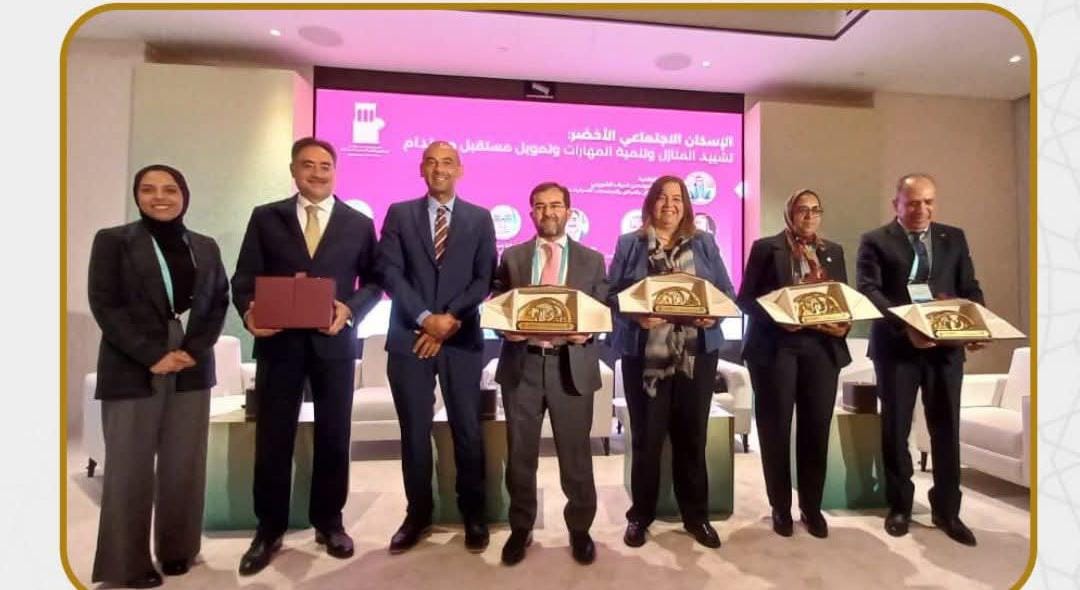

Egypt is accelerating its push toward sustainable urban development, with plans to construct more than 68,000 environmentally friendly social housing units, according to Mai Abdel Hamid, chief executive of Egypt’s Social Housing and Mortgage Finance Fund.
Abdel Hamid outlined the strategy during Egypt’s participation in the Sixth Arab Ministerial Forum on Housing and Sustainable Urban Development, held in Doha on the sidelines of the Council of Arab Ministers of Housing and Reconstruction. She spoke at a technical session focused on green social housing, bringing together senior officials and experts from across the Arab world to discuss sustainable construction, skills development, and innovative financing.

Egypt’s shift toward green social housing began in 2020, in cooperation with the World Bank, when the fund launched its first initiative targeting 25,000 affordable, environmentally friendly housing units. A second phase followed in 2022, expanding the target by an additional 30,000 units. Rising domestic demand for housing has since prompted the government to raise the total target to more than 68,000 green units nationwide.
According to Abdel Hamid, thousands of units have already received sustainability certifications. More than 25,000 units have been approved under Egypt’s Green Pyramid Rating System, while over 14,000 units have been certified under the EDGE international green building standard in cooperation with the International Finance Corporation. An additional 28,000 units are expected to receive international certification in the next phase.
The green housing model emphasizes reducing energy consumption and carbon emissions through environmentally friendly construction materials, thicker exterior walls to improve insulation, rooftop thermal insulation, energy-efficient LED lighting, and the use of solar power for public lighting in residential areas.
Private-sector participation is also playing a growing role. Abdel Hamid said nearly 1,200 green housing units have already been completed with private partners, while more than 53,000 units are under construction and close to 14,000 additional units are being prepared for launch.
Financing remains central to the program’s expansion. Egypt is relying on a blended financing model that combines World Bank funding with mortgage financing provided by local banks, ensuring steady cash flow to support continued construction. The fund is also studying the issuance of backed green bonds, a move that would align Egypt’s housing strategy with global sustainable finance trends.
To keep housing affordable for low- and middle-income citizens, units are sold at cost, without profit margins or land and utilities charges. The program also includes smart subsidy mechanisms, interest-rate support on mortgage loans, and direct cash subsidies that can reach up to 160,000 Egyptian pounds for eligible beneficiaries.
Urban planning is another pillar of the strategy. About 85 percent of social housing projects are now being developed in new cities, compared with just 15 percent in existing urban centers. Officials say the shift helps curb unplanned urban expansion, protect agricultural land, and reduce congestion in densely populated areas of the Nile Delta.
Each housing project is designed as an integrated community, Abdel Hamid said, incorporating schools, healthcare facilities, transportation links, and essential services. Special consideration is also given to female breadwinners and informal workers, ensuring broader social inclusion.
The initiative reflects Egypt’s broader effort to align housing policy with sustainability goals, balancing affordability with environmental responsibility as the country grapples with rapid population growth and mounting climate pressures.