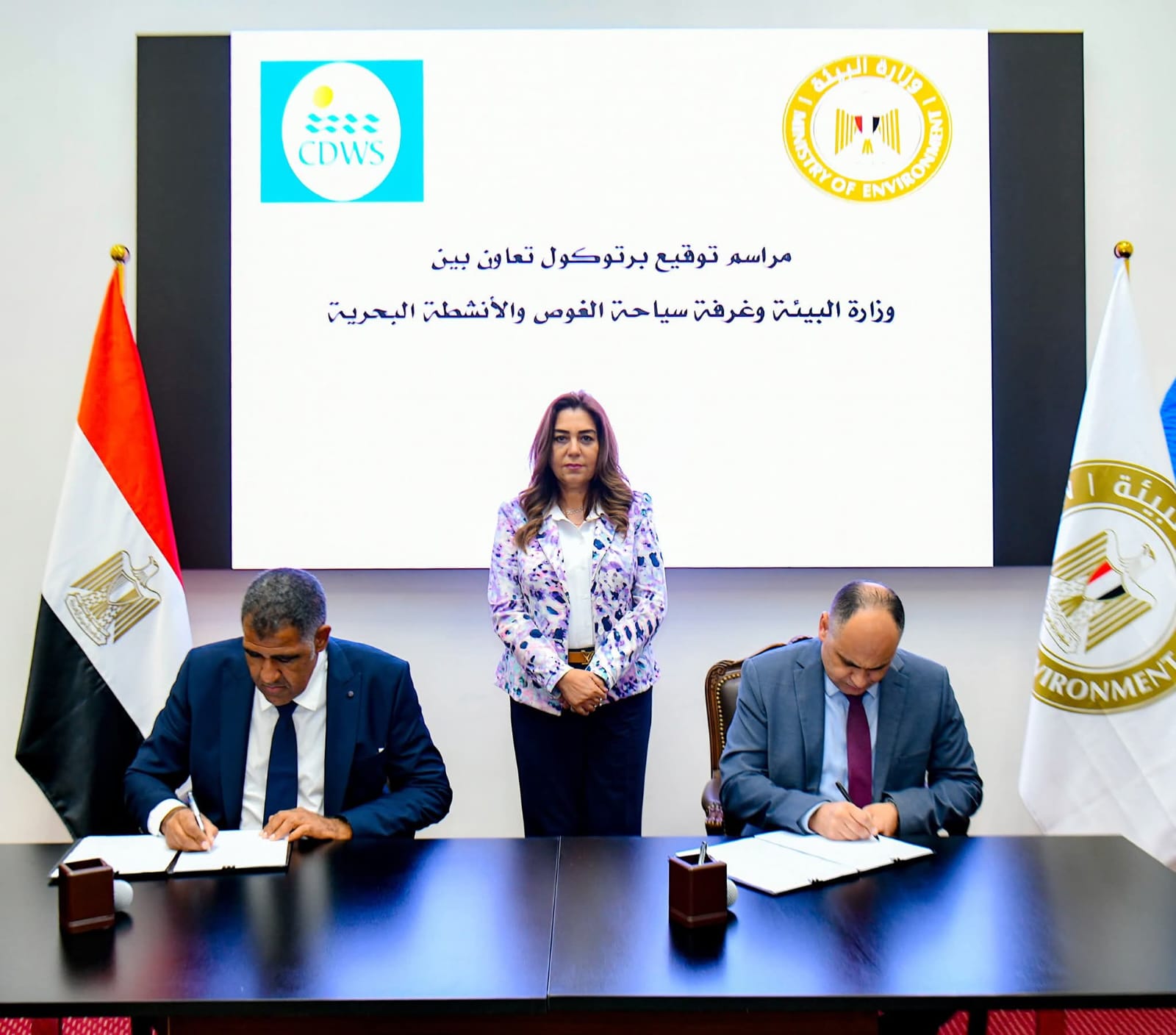

In a move to strengthen Egypt’s efforts to protect its marine ecosystems and ensure the sustainability of natural resources, Dr. Manal Awad, Minister of Local Development and Acting Minister of Environment, witnessed the signing of two cooperation protocols between the Egyptian Environmental Affairs Agency (EEAA) and the Chamber of Diving and Water Sports (CDWS).
The agreements aim to enhance joint efforts to protect the marine environment, ensure sustainable use of natural resources, and establish a specialized unit for the maintenance and installation of mooring buoys in South Sinai. The protocols were signed by Dr. Ali Abu Sena, CEO of the EEAA, and Mostafa Farouk Hefny, Chairman of the CDWS, during a ceremony held at the Ministry of Environment’s headquarters in the New Administrative Capital.

Also attending were Hoda El-Shawadfy, Assistant Minister for Ecotourism, Maj. Gen. Khaled Abbas, Head of the Nature Protection Sector, Saber El-Kilani, Board Member and Head of the Environmental Committee, and Karim Yasser, Executive Director of the Chamber of Diving and Water Sports.
Digital integration and coastal management plan
Dr. Awad emphasized that the signing of the two protocols reflects the government’s ongoing commitment to protecting the environment and natural resources, ensuring their sustainable use, and safeguarding the rights of future generations. She noted that the initiative aligns with Egypt’s national strategy for sustainable resource management, biodiversity protection, and climate resilience through partnerships with public and private institutions.
Under the first cooperation protocol, the two sides will link the CDWS marine trip notification application with the EEAA’s electronic ticketing system, creating a unified digital platform for monitoring and managing marine activities. The collaboration will also support the development of an integrated coastal management plan to protect coral reefs and regulate diving and snorkeling activities according to each site’s ecological capacity.
Data collected through the marine trip application will help the Ministry monitor site usage, assess environmental impact, and ensure that operators adhere to approved carrying capacities. The partnership will also facilitate data sharing to update site profiles for diving and marine activities on both institutions’ websites.
Joint Marine Protection Framework
Dr. Awad explained that the protocol also establishes a joint framework for reporting environmental violations and marine incidents, ensuring that all licensed entities conducting marine activities operate legally, both inside and outside protected areas in South Sinai and the Red Sea.
The agreement includes provisions for awareness campaigns on marine life conservation and sustainable diving practices, as well as underwater clean-up initiatives at activity sites. It also aims to improve waste management systems on safari and daily yacht trips, emphasizing waste separation, reducing nonessential waste generation, and eliminating single-use plastics onboard.
New unit for buoy maintenance and coral reef protection
The second cooperation protocol focuses on establishing a specialized unit for the maintenance and installation of mooring buoys in South Sinai, headquartered at the Chamber of Diving and Water Sports. The unit will ensure diver safety, environmental protection, and the proper use of moorings across diving sites.
Under the agreement, the EEAA will handle the necessary permits, coordinate with relevant authorities, and provide materials and marine units from South Sinai protectorates. The Chamber will supply yachts, maintenance equipment, materials, and qualified technical personnel, ensuring adherence to quality and environmental standards.
The unit will conduct regular inspections and maintenance—at least three times a month—reporting to a technical committee that will evaluate buoy conditions and recommend improvements.
Dr. Awad concluded that these protocols mark a significant step toward sustainable marine tourism and environmental protection in Egypt. “This partnership between the public and private sectors embodies our shared responsibility to preserve Egypt’s marine biodiversity and ensure that our natural treasures endure for generations to come,” she said.