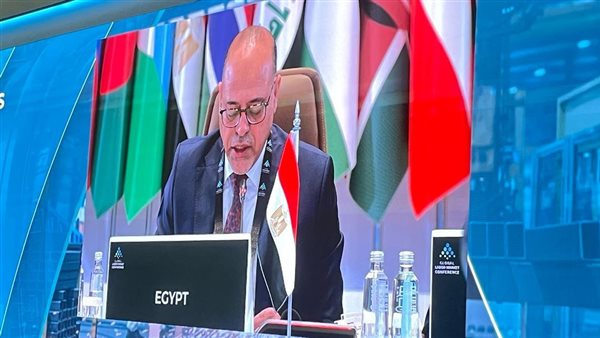

Egypt’s Minister of Manpower, Mohamed Gibran, said Egypt’s participation in the Global Labor Market Conference (GLMC) reflects a deeply rooted belief that work is the primary engine of comprehensive development and that investing in people is the cornerstone of sustainable progress.
Speaking at the opening session of the conference’s third edition, held in Riyadh, Saudi Arabia, Gibran highlighted the issuance of Egypt’s new Labor Law No. 14 of 2025, describing it as a historic milestone in modernizing the country’s labor system. The law, he said, aims to strike a fair balance between the rights of workers and employers, align with international labor standards, and create an investment-friendly work environment.

New labor law aligns with global standards
Gibran noted that the timing of the conference is particularly critical, as global labor markets are undergoing rapid transformations driven by technological advancement, demographic shifts, and mounting economic challenges worldwide.
He reaffirmed Egypt’s firm commitment to social protection, non-discrimination, and equal opportunity, stressing that supporting women’s participation, sustainability, and advancement in the labor market is a national priority.
Building a modern labor market in Egypt
The minister outlined the state’s efforts to build a modern and dynamic labor market by expanding employment opportunities, implementing national development projects, and updating labor policies and legislation to enhance job security and boost productivity.
He emphasized Egypt’s focus on strengthening the link between education, vocational training, and labor market needs, expanding technical and professional training programs, and deepening partnerships with the private sector. Particular attention, he said, is being given to future-oriented and digital skills to prepare the workforce for evolving economic realities.
Smart labor inspection and digital transformation
Gibran also pointed to the development of Egypt’s labor inspection system through the “Smart Inspection” initiative, which relies on digitalization and data analysis. The initiative aims to protect workers’ rights while simultaneously encouraging domestic and foreign investment.
As part of broader employment reforms, he announced that Egypt is preparing to launch a National Employment Strategy focused on youth empowerment and combating unemployment, in line with directives from the country’s political leadership. The strategy seeks to create sustainable job opportunities for young people across multiple sectors.
Global employment platform and women’s empowerment
The minister revealed plans to launch a global electronic employment platform designed to connect employers with job seekers both locally and internationally, facilitating labor mobility and access to opportunities.
Economic empowerment of women, he said, remains a central pillar of Egypt’s labor agenda. This includes expanding training and employment opportunities, supporting female entrepreneurship, and promoting flexible work arrangements that enable greater workforce participation.
Gibran concluded by affirming that Egypt is moving steadily toward building a modern labor market capable of achieving sustainable development and meeting future demands, under the leadership of President Abdel Fattah El-Sisi.