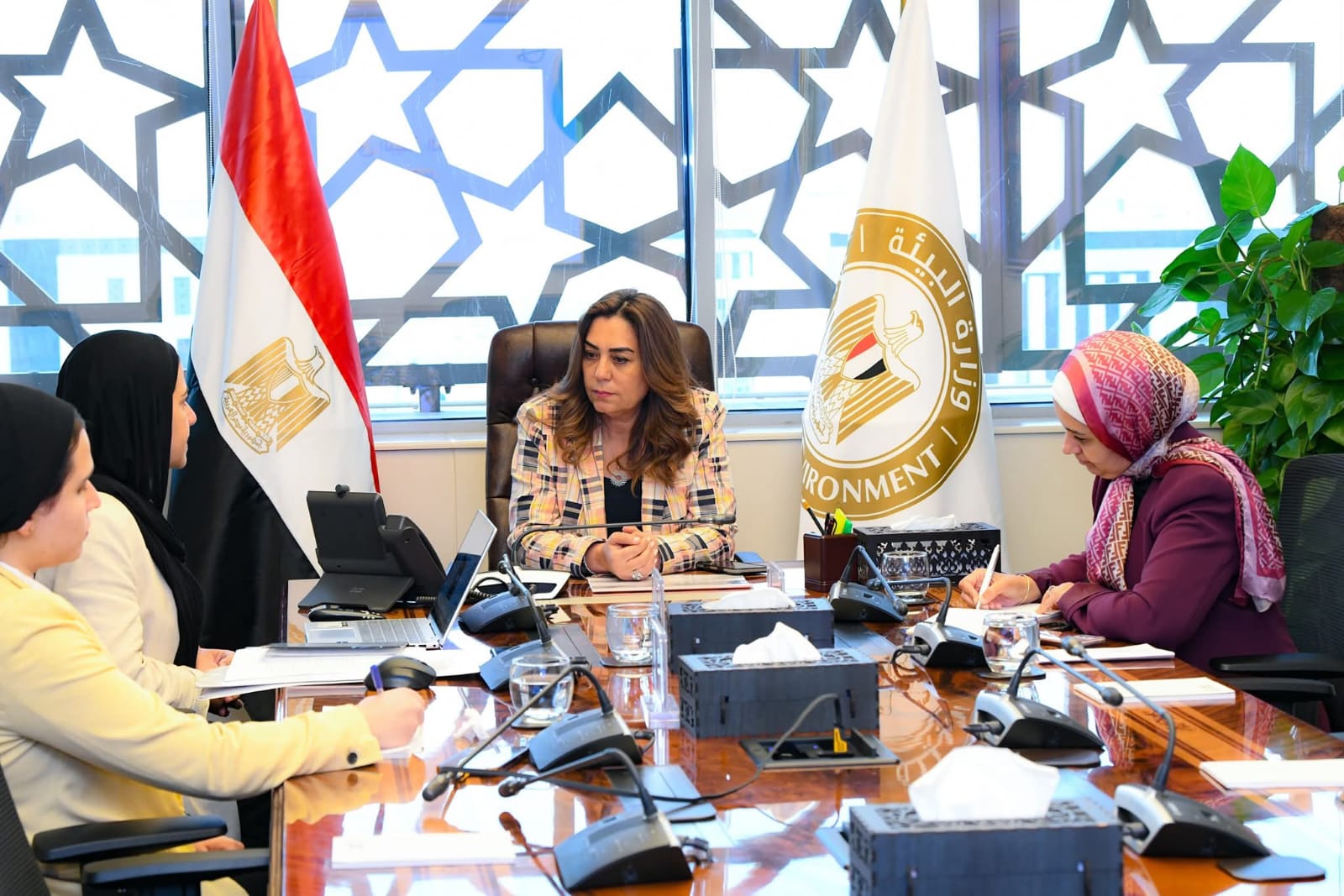

Egypt has strengthened its environmental policy framework and global partnerships under the leadership of Dr. Manal Awad, Minister of Local Development and Acting Minister of Environment, as the country advances its agenda for sustainable development with the support of the Global Environment Facility (GEF). In a recent high-level meeting held in Cairo, Dr. Awad reviewed the ongoing portfolio of GEF-backed initiatives in Egypt and outlined strategic priorities for the coming phase of cooperation.
During the coordination meeting, which brought together key officials including Hoda El Shawadfi, Assistant Minister for Ecotourism and project lead for GEF initiatives, Dr. Awad reiterated the critical role that the GEF plays as a global financial mechanism. The GEF supports developing nations in meeting their international environmental obligations while accelerating progress toward the United Nations Sustainable Development Goals. Egypt, a long-standing GEF partner, continues to be a prominent recipient of GEF funding due to its multifaceted ecological landscape and strategic positioning in the MENA region.

Since the launch of the GEF’s seventh replenishment cycle (GEF-7), Egypt has secured financing for five key environmental projects that align closely with both national priorities and global commitments. These include a groundbreaking initiative to develop green hydrogen infrastructure, supporting Egypt’s ambition to become a regional energy hub for clean fuels. Another project focuses on the integration of nature-positive renewable energy solutions, aimed at balancing energy production with biodiversity conservation. The country has also launched a program to enhance energy efficiency in low-emission buildings, in addition to a second phase of the HERD initiative, which promotes sustainable rangeland management in arid zones.
Significantly, the Small Grants Programme (SGP)—one of the GEF’s most community-focused instruments—is being implemented to support grassroots organizations and civil society groups engaged in local conservation, climate adaptation, and environmental awareness campaigns. These projects reflect Egypt’s determination to scale up its low-carbon development model and promote inclusive environmental governance.
Dr. Awad highlighted the complexity and strategic importance of the GEF’s institutional structure, which includes a 32-member council representing various regional constituencies. This council meets biannually to review project pipelines, operational frameworks, and funding strategies. Additionally, the GEF’s General Assembly, comprised of 186 member states, convenes every four years to set overarching policies and reform priorities. These governance mechanisms are supported by scientific and advisory bodies such as the Scientific and Technical Advisory Panel (STAP), which evaluates the scientific rationale of proposed projects, and an Independent Evaluation Office, which monitors program outcomes and ensures transparency and accountability.
The Minister further emphasized that the GEF’s financial and technical support spans a broad range of focal areas. These include biodiversity conservation, climate change mitigation and adaptation, the fight against land degradation and desertification, the sustainable management of international waters, and the control of persistent organic pollutants and hazardous chemicals. A growing focus on capacity building ensures that beneficiary countries can institutionalize environmental best practices and mobilize additional funding sources.
Unlike traditional aid models, GEF projects are structured around a tripartite partnership model. Implementation is carried out by 18 accredited international agencies—including the UNDP, UNEP, and the World Bank—working in close coordination with national governments and the GEF Secretariat. This model ensures that projects are both contextually relevant and globally coherent, combining local knowledge with international technical expertise.
In her remarks, Hoda El Shawadfi noted that Egypt’s current GEF portfolio demonstrates the country’s ability to navigate complex funding frameworks and translate them into practical, results-oriented environmental action. She highlighted the growing importance of integrated, cross-sectoral projects, especially those combining energy, agriculture, and biodiversity, which are increasingly supported under GEF’s multi-focal area funding window.
Beyond the GEF’s core financing, Egypt is also leveraging several complementary instruments administered by the facility. These include the Global Biodiversity Framework Fund (GBFF), which supports countries in meeting post-2020 biodiversity targets, as well as the Special Climate Change Fund (SCCF), which finances adaptation efforts, technology transfer, and institutional resilience.
Looking ahead, Dr. Awad confirmed that Egypt will continue to expand its engagement in GEF’s upcoming eighth replenishment phase (GEF-8), prioritizing high-impact initiatives that address both immediate environmental threats and long-term sustainability objectives.
About the Global Environment Facility (GEF):
The GEF is the world’s largest multilateral fund for the environment, having provided over $23 billion in grants and mobilized $129 billion in co-financing for more than 5,000 projects across 170+ countries since 1991.
.